

 Back
Back










Table of Contents

The intersection of healthcare and technology is transforming the way investments are made in the industry. This momentum is reflected in recent funding data. In 2025, U.S. digital health startups secured $14.2 billion, a 35% increase from 2024. This surge underscores growing confidence in technology-driven healthcare transformations. It sets the stage for sustained innovation and investor interest.
Digital health technology, with its innovative solutions, is reshaping patient care, streamlining operations, and creating new opportunities for growth. From telemedicine platforms to wearable health devices, these advancements are not only improving outcomes but also attracting significant financial backing.
The comprehensive perspective in how to secure funding for healthcare startups provides a foundational context that enriches your exploration of digital health technology investments. This surge in healthcare investments highlights the growing confidence in technology-driven solutions to address critical challenges.
In this blog, we’ll explore the driving forces behind these investments, analyze emerging trends, and provide actionable strategies for stakeholders. Let’s get started!
Digital Health Funding Outlook: Trends and Projections
Digital health technology is driving healthcare investments by enabling innovation, attracting global funding, and shifting investor priorities toward emerging, scalable solutions.
Globally, 2025 showed continued strength. Global digital health funding reached $28.8 billion, up 9% from 2024. Europe’s 15% growth outpaced other regions. This data highlights international momentum and expanding opportunity.
Notably, the United States accounted for 70% of this funding and saw a 4% uptick in early-stage investments. This signals a shift in investor focus toward emerging startups and technologies.
These figures reflect ongoing investment trends in healthtech. By prioritizing interoperability (the ability of systems to work together and share data)...
Leveraging Mergers and Acquisitions for Growth
Building on projected investment trends, many digital health startups are turning to mergers and acquisitions as a strategic path to growth. This approach enables companies to quickly acquire new technologies, expand market reach, and strengthen their competitive position. M&A also serves as a survival mechanism in a consolidating sector, allowing smaller firms to join forces and weather market pressures. Understanding these dynamics can help founders and investors identify new opportunities in an evolving investment landscape.
Navigating Federal Grant Opportunities in Digital Health
- Federal grants often prioritize projects that demonstrate clear potential for clinical impact and patient safety improvements.
- Successful applications typically highlight innovation, feasibility, and the ability to address unmet healthcare needs.
- Applicants must show strong alignment with evaluation criteria, such as commercial potential and rigorous validation plans.
- Engaging principal investigators with relevant expertise can strengthen proposals and increase funding likelihood.
- Understanding agency-specific requirements helps tailor submissions for maximum competitiveness and compliance.
Prioritizing Workflow Integration for Provider Adoption
This shift in investor focus is closely tied to the growing influence of healthcare providers in digital health adoption. Solutions that integrate deeply with electronic health records and clinical workflows are more likely to secure enterprise contracts. By addressing operational needs and demonstrating measurable ROI, startups can align with provider priorities and increase their chances of successful market entry. Focusing on workflow compatibility is now essential for attracting both funding and adoption.
The emphasis on technology is clear in deal composition. In 2025, health AI companies attracted 54% of total sector funding, underscoring AI's dominant influence on investment priorities.
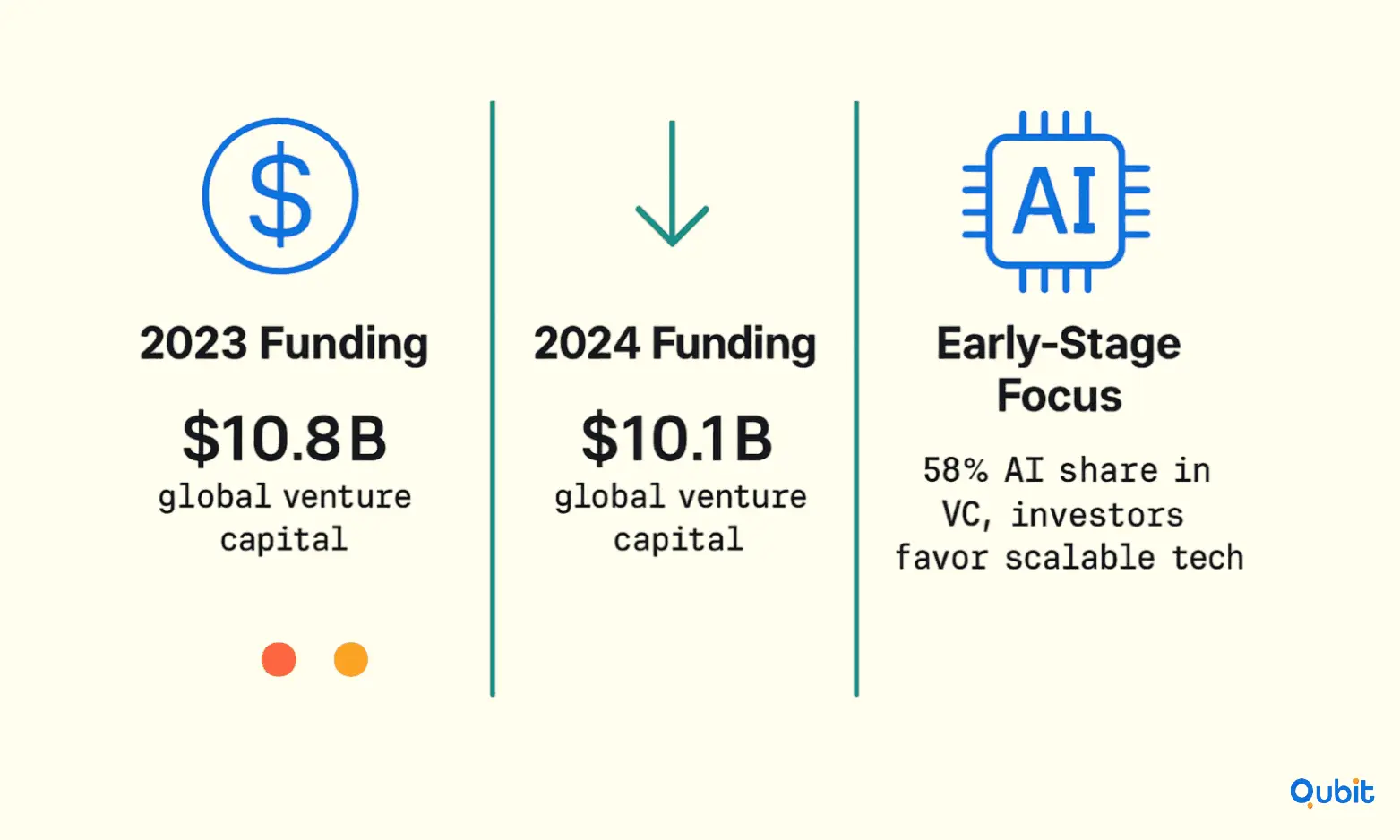
2024-25: Years of Adjustments in Digital Health Funding
The year 2024 marked a recalibration in digital health venture capital. Total funding levels, while significant, reflected a tempered enthusiasm compared to the record highs of prior years.
For instance, digital health venture funding hit $10.1 billion in 2024, a slight dip from $10.8 billion in 2023. This adjustment underscores a more cautious approach among investors, as highlighted in the HSBC report on health tech venture capital, which described the market as a “mixed bag” of optimism and caution.
Funding structure continues to evolve. In 2025, overall digital health funding rose 19% year-over-year to $22.3 billion, and average deal size climbed 29% to $20.3 million. These shifts signal selective confidence in larger, high-potential ventures.
Despite this moderation, the focus on early-stage investments has grown. Investors are increasingly prioritizing startups with scalable solutions, particularly in areas like artificial intelligence (AI) and TechBio (technology-driven biotechnology).
AI alone captured 58% of total digital health venture funding in 2024, as noted in Galen Growth’s analysis. This trend highlights the sector's pivot toward technologies that promise transformative impacts on healthcare delivery and outcomes.
Real-world funding impacts are evident beyond aggregate figures. The Blue Cross Blue Shield Association made headlines by reimbursing $2 million for a single digital therapy, its first such case. This action highlights changing payer readiness to directly support innovative treatments, impacting both patients and industry standards.
- Identify priority tech segments (AI, telehealth)
- Evaluate region-specific investment opportunities
- Assess early-stage startup potential
- Verify regulatory compliance and data governance requirements
Regional Highlights and Global Trends
The United States continues to dominate the digital health investment landscape, contributing the lion's share of funding. However, other regions are also making strides. Europe, for example, secured $701 million in AI-related digital health funding in 2024, reflecting growing interest in region-specific innovations. Globally, the $25.1 billion in funding underscores the sector's broad appeal and the diverse opportunities it presents for investors.
Europe’s expansion stands out. In 2025, European digital health investment surged by 15%, outpacing global averages and reflecting robust government support and accelerating regional innovation.
Emerging markets are leveraging digital health and health tech funds to overcome infrastructure gaps and improve access to care.
Emerging markets are also gaining traction, with startups in Asia and Latin America attracting attention for their localized solutions to healthcare challenges. These regions are expected to play a more significant role in the coming years, as highlighted in the BVP State of Health Tech 2024, which provides a comprehensive review of the health tech ecosystem.
Future Projections: What to Expect in Coming Years
Looking ahead, 2025 is poised to be a pivotal year for digital health investments. Key technologies such as AI-driven diagnostics, remote patient monitoring, and personalized medicine are expected to attract substantial funding. According to the Technologies to Watch in 2025, innovations like wearable biosensors and blockchain for healthcare data security are set to redefine the sector.
Additionally, the shift toward early-stage funding is likely to continue, with investors seeking to capitalize on the next wave of disruptive technologies. This trend aligns with the broader movement toward sustainable and scalable healthcare solutions, as evidenced by the growing interest in telehealth and digital therapeutics. For a deeper dive into telehealth's role in this evolution, explore the telehealth funding outlook.
Startups like yours already closed their rounds with us.
Founders across every stage and industry. Here's what it took.
- Raised $7.6M for Swiipr Technologies
- Raised $0.5M for Ap Tack
- Raised €0.5M for Ivent Pro

Proactive Care Strategies & Healthcare Innovation Funding
The healthcare industry is undergoing a transformative shift, with proactive care models gaining traction over traditional reactive approaches. By emphasizing early detection and direct-to-consumer healthcare solutions, these strategies aim to improve patient outcomes while reducing long-term costs.
Healthcare innovation funding supports the development of these proactive care models.
The Rise of Proactive Care Models
Proactive care models prioritize prevention over treatment, focusing on identifying potential health issues before they escalate. This approach is becoming increasingly popular, driven by advancements in digital health platforms and a cultural shift toward personalized care. For example, digital solutions now offer tools for continuous monitoring, empowering individuals to take charge of their health.
The surge in preventive solutions is evident across various sectors, including chronic disease management and musculoskeletal health. Companies like Hinge Health and Livongo have demonstrated how early detection strategies can deliver measurable results, improving both patient satisfaction and financial outcomes.
Regional and Demographic Drivers
- North America leads the market, but Europe is rapidly expanding due to aging demographics, government initiatives, and technological adoption.
- Europe’s expansion stands out. In 2025, European digital health investment surged by 15%, outpacing global averages and reflecting robust government support and accelerating regional innovation.
- Emerging markets are leveraging digital health and health tech funds to overcome infrastructure gaps and improve access to care.
- Chronic disease prevalence and rising healthcare costs globally are accelerating the adoption of these technologies
Early Detection Strategies in Action
Early detection strategies are at the heart of proactive care models. Increased digital health funding has accelerated the development of technologies like wearables and AI-driven analytics for early risk identification.
Case Study: Hinge Health
Hinge Health exemplifies the power of proactive care in musculoskeletal health. With over 1 million patients enrolled in its digital therapeutic intervention program, the company boasts a 90% satisfaction rate as of 2025. This success stems from its focus on prevention and continuous engagement, supported by robust partnerships and funding from digital health foundations.
Case Study: Livongo
Livongo, a digital health platform specializing in chronic disease management, highlights the financial benefits of shifting from treatment to prevention. By offering tools for continuous monitoring and personalized coaching, Livongo achieved a 17% reduction in diabetes-related medical spending in 2020. This approach not only improved patient health but also delivered measurable cost savings.
Direct-to-Consumer Healthcare: Empowering Patients
Direct-to-consumer healthcare solutions are reshaping the patient experience by making preventive care more accessible. These platforms eliminate traditional barriers, such as lengthy appointment wait times, by providing on-demand services and real-time health insights.
This model aligns with the growing demand for personalized care, allowing individuals to tailor their health management strategies to their unique needs. As investment trends continue to favor prevention-focused solutions, direct-to-consumer healthcare is poised to play a pivotal role in the future of medicine.
Connecting Proactive Care to Remote Patient Monitoring
Proactive care models often integrate remote patient monitoring to enhance early detection strategies. Focused insights on remote patient monitoring funding reveal how capital flows are supporting these innovations, enabling healthcare providers to deliver personalized, preventive solutions at scale.
Driving Efficiency Through Digital Transformation
Healthcare organizations are embracing digital transformation to overcome operational bottlenecks and enhance productivity.
1. Addressing Budget Constraints and Workforce Challenges
Healthcare providers face mounting pressure to do more with less. Budget limitations and workforce shortages have created a need for solutions that maximize efficiency without compromising care quality. Digital transformation healthcare initiatives, such as AI-powered tools, offer a way forward by reducing administrative burdens and enabling staff to focus on patient-centric activities.
Major digital transformation ventures attract significant resources. In 2025, average deal sizes for digital health funding rose by 29% to $20.3 million. This signifies growing investor belief in scalable, efficiency-focused solutions.
2. Automating Administrative Tasks with AI
AI solutions are revolutionizing healthcare operations by automating time-consuming tasks. Tools like AI scribes are designed to assist medical staff with clinical documentation, reducing physician burnout and improving the overall efficiency of healthcare delivery.
Emerging applications of generative AI integration (AI systems that can create new content) are seen in clinical documentation and patient communication. These advances demonstrate significant growth potential.
| Driver | Impact on Investment | Examples / Trends |
|---|---|---|
| Artificial Intelligence (AI) | Attracts major VC and corporate investment; enables diagnostics, predictive analytics, and personalized care | Medical diagnostics, health management, and research solutions saw $4B+ in Q1 2025 funding |
| Remote Patient Monitoring | Reduces hospital costs, improves chronic disease management, and expands access | Wearables, IoT-enabled devices, telehealth platforms |
| Mobile Health Apps | Drives consumer engagement and preventive care, creating new business models | Appointment scheduling, medication adherence, fitness tracking |
| Data Analytics & EHRs | Enables real-time clinical decision-making, operational efficiency, and regulatory compliance | Electronic Health Records and cloud-based analytics |
| M&A Activity | Consolidates innovation and accelerates market access for startups | 51 M&A deals in Q1 2025, up 21% year over year |
Overcoming Ethical and Data Governance Challenges
While AI adoption offers immense benefits, it also raises ethical and data governance concerns. Healthcare organizations must navigate issues related to patient privacy, data security, and algorithmic bias to ensure responsible implementation.
Ensuring Ethical AI Deployment
Transparency and accountability are essential when deploying AI in healthcare. Organizations must establish clear guidelines for data usage and algorithmic decision-making to maintain trust and compliance.
Strengthening Data Governance
Robust data governance frameworks are critical for safeguarding sensitive health information. By prioritizing interoperability (the ability of systems to work together and share data) and secure data-sharing practices, healthcare systems can unlock the full potential of digital transformation while mitigating risks.
For a deeper understanding of how funding opportunities can support data-sharing initiatives, explore health data interoperability funding.
Why Investors Are Bullish on Digital Health
- Scalability: Digital platforms can reach large populations quickly, making them attractive for both returns and impact. Robust digital health funding continues to drive investor confidence in this space.
- Cost Efficiency: Remote monitoring and AI-driven triage reduce the need for costly in-person care.
- Regulatory Support: Governments and health systems are prioritizing digital transformation, creating favorable environments for investment.
- M&A and Exit Opportunities: Robust acquisition activity signals healthy exit options for investors and founders
Health tech funds are increasingly active in facilitating these opportunities.
Regulatory Support: Governments and health systems are prioritizing digital transformation, creating favorable environments for investment. These factors contribute to positive investment trends in healthtech.
Conclusion
Staying ahead in the dynamic world of digital health investments requires a clear understanding of digital health funding trends, proactive care models, and operational efficiency.
Integrating innovative technologies enhances patient outcomes and provides a competitive edge. Investors should prioritize forward-thinking solutions.
Investors can download our healthtech investment trends checklist, while founders can consult our digital innovation readiness guide.
If you’re looking to align innovation with clinical and operational ROI, at Qubit we understand outcomes evidence, workflow fit, and scaling plans. Build your roadmap with our fundraising assistance for healthcare startups and schedule a discovery session.
Key Takeaways
- Healthcare organizations prioritize operational efficiency to address budget constraints and workforce shortages.
- AI solutions, such as AI agents and AI scribes, automate administrative tasks, reducing workload and improving accuracy.
- Ethical considerations and data governance are critical for responsible AI adoption in healthcare.
- Health technology funding for digital transformation healthcare initiatives enhances productivity and enables staff to focus on patient care.
- Funding opportunities for health data interoperability can support secure and efficient data-sharing practices.
Get your round closed. Not just pitched.
A structured fundraising process matched to your stage and investor fit.
- Fundraising narrative and structure that holds up
- Support from strategy through investor conversations
- Built around your stage, model, and timeline
Frequently asked Questions
How can startups secure digital health funding?
Startups can secure digital health funding by leveraging early-stage investor interest, demonstrating innovation in proactive care, and focusing on scalable technologies.