

 Back
Back










Table of Contents

The e-commerce sector is undergoing a remarkable transformation, with projections indicating it will account for 41% of global retail sales by 2027, up from just 18% in 2017. This rapid growth underscores the increasing appeal of e-commerce ventures to corporate venture arms and retail strategic investors. These entities are not only fueling innovation but also reshaping the competitive landscape through targeted investments.
Your examination of funding channels is enhanced by insights from ecommerce startup fundraising strategies, which outlines a broad perspective on capital acquisition for e-commerce ventures.
This blog explores how corporate venturing and retail innovation intersect to drive growth, offering actionable insights for entrepreneurs and investors alike.
The Role of Ecommerce Corporate Venture Capital
Corporate venture capital and retail strategic investors drive e-commerce growth by providing startups with funding, partnerships, and operational support. Ecommerce corporate venture firms are investment arms of large corporations. These firms invest in startups that align with their strategic priorities.
CVC activity occurs within a robust funding landscape. In 2024, total global VC investment reached $368.5 billion, up 5.4% from 2023. This growth supports expanded strategic capital deployment into e-commerce startups by leading corporates.
Aligning Funding Stage and Investor Expertise
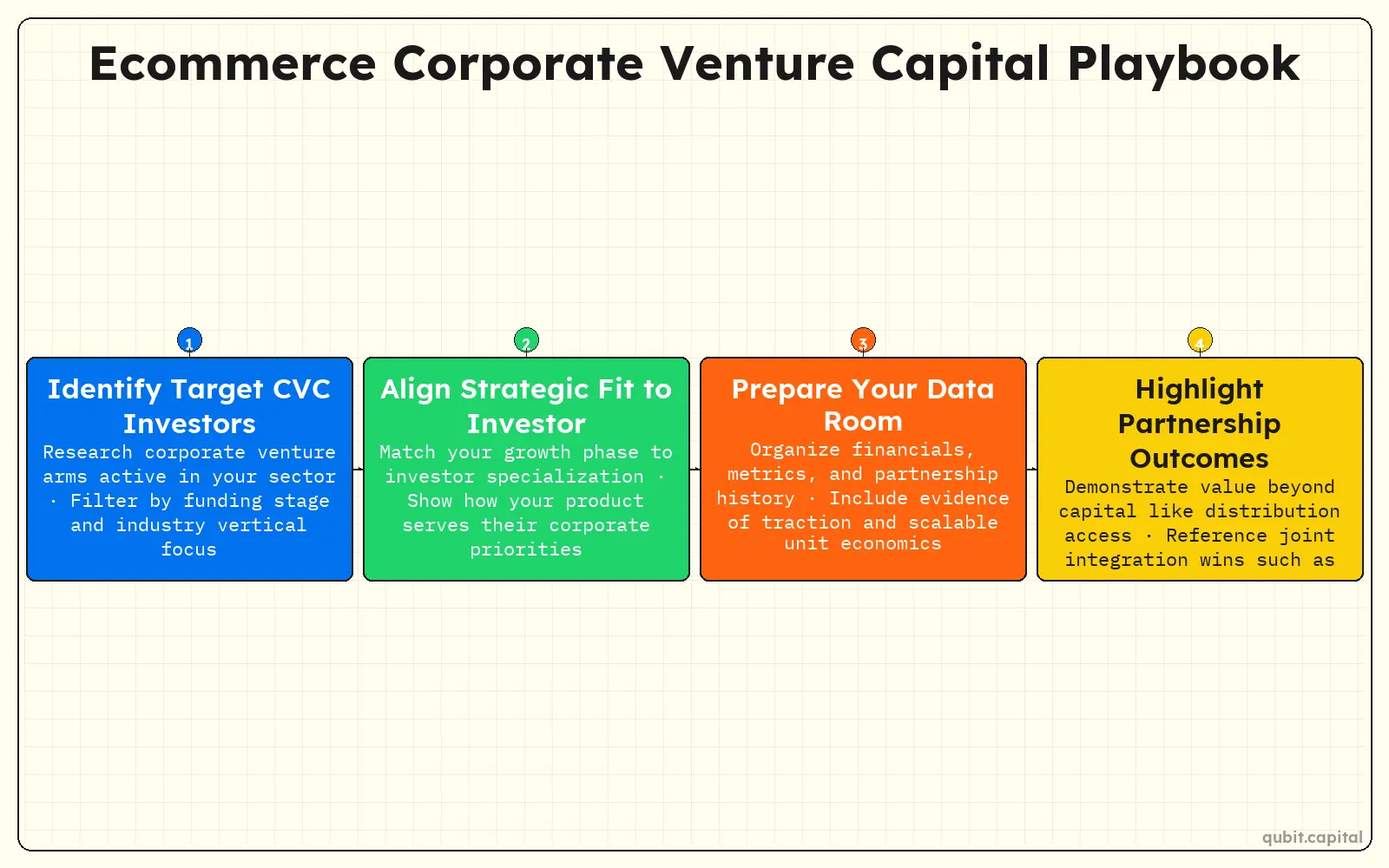
This approach requires founders to align their startup’s funding stage and sector with the investor’s expertise. CVCs and strategic investors often specialize in certain growth phases or industry verticals. Choosing partners with relevant experience ensures targeted support and increases the likelihood of successful collaboration. This alignment can accelerate growth and improve the odds of achieving strategic milestones.
Corporate venture capital (CVC) arms bring more than just money: For example, an AI logistics startup partnered with Shopify Ventures and saw its customer base triple through joint integrations.
- Identify target CVCs
- Align your startup’s strategic fit
- Prepare data room
- Highlight partnership outcomes
Startups like yours already closed their rounds with us.
Founders across every stage and industry. Here's what it took.
- Raised $7.6M for Swiipr Technologies
- Raised $0.5M for Ap Tack
- Raised €0.5M for Ivent Pro

Key Ecommerce VC & Strategic Retail Investors
1. Shopify Ventures
Shopify’s corporate venture arm invests in startups that enhance the Shopify ecosystem—focusing on automation, logistics, personalization, and tools that help merchants grow. Shopify Ventures has backed companies in AI-powered retail tech, inventory optimization, and omnichannel commerce, often integrating these solutions directly into their platform1.
2. Amazon & Walmart Corporate VC
Both Amazon and Walmart deploy strategic capital into startups. These investments are designed to complement their vast retail ecosystems.
Last-mile delivery refers to the final step of the delivery process from a distribution center to the end customer. Their investments focus on logistics optimization, supply chain technology, last-mile delivery, and AI-driven analytics. These corporations are especially interested in startups that can help improve operational efficiency, customer experience, and data-driven personalization1.
Other Notable Corporate Venture & Strategic Retail Investors
Target Accelerators & Target Takeoff: These e-commerce investors run accelerator programs and invest in early-stage brands and retail tech startups that can scale within their stores and digital channels.
- Unilever Ventures: Focuses on consumer brands and e-commerce platforms, often providing global distribution support.
- LVMH Luxury Ventures: Invests in luxury e-commerce, digital marketplaces, and tech that enhances the premium retail experience.
- Alibaba Entrepreneurs Fund: Backs e-commerce and logistics startups, especially those expanding into Asia or leveraging Alibaba’s infrastructure.
- Rakuten Ventures: Invests in e-commerce, fintech, and logistics platforms, with a focus on cross-border commerce.
- JD.com and Tencent: Both are active in e-commerce, logistics, and retail tech investments in Asia and globally.
Regional activity also drives innovation. In Q2 2024, Quebec recorded 29 VC deals totaling CAD $641 million, a 24% growth from Q1. Expanding regional participation reflects the broadening opportunity for startups.
Strategic Investment Trends
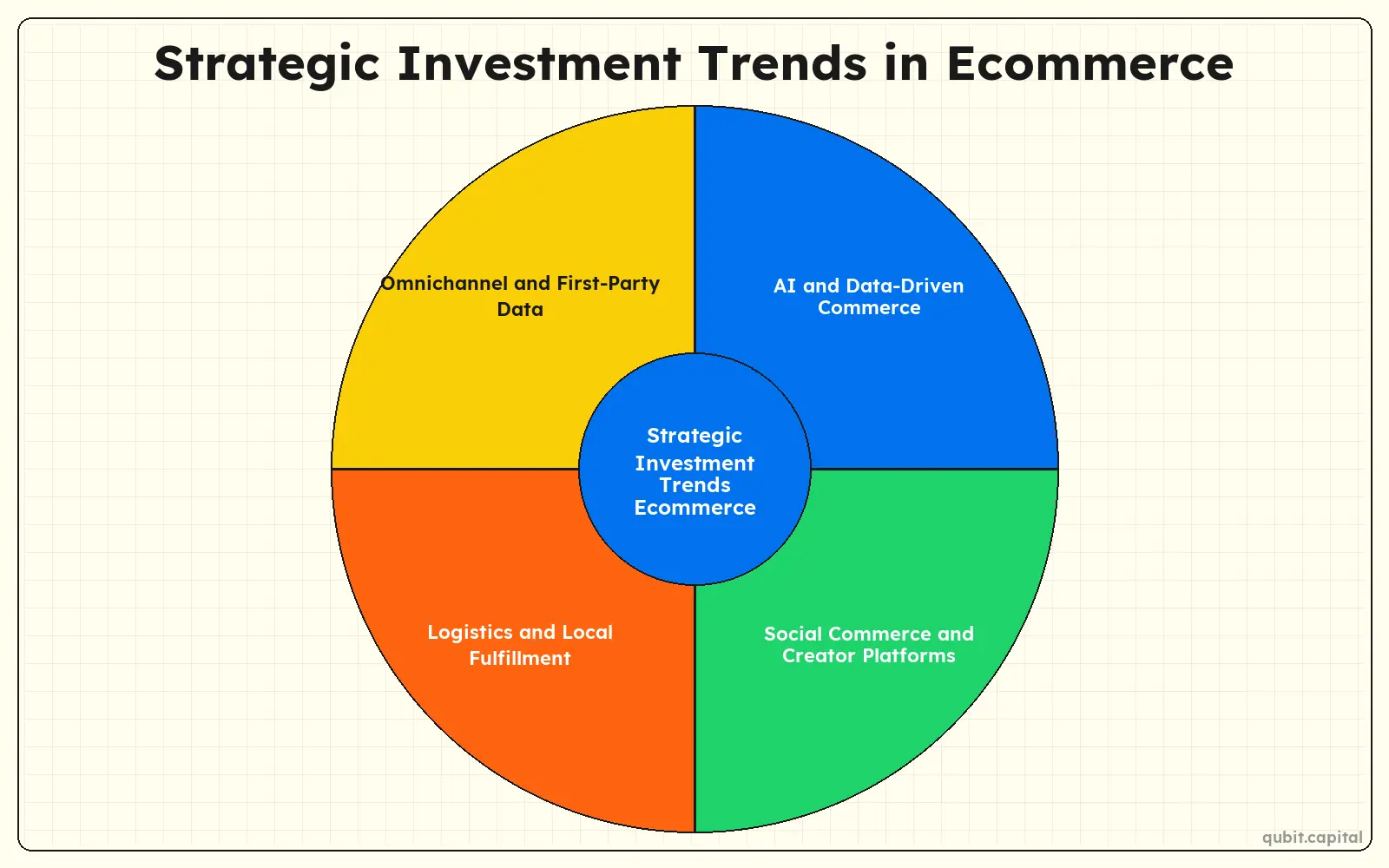
1. AI, Automation, and Data Intelligence
Ecommerce corporate venture investors and strategic retailers are prioritizing startups that leverage AI and automation for inventory forecasting, personalized recommendations, and logistics.
Strategic focus grows alongside increased funding. In Q1 2025, global VC investment rose from $118 billion to $126 billion. This surge demonstrates investor confidence in transformative e-commerce trends. Startups leveraging these themes benefit from greater capital availability.
2. Social Commerce and Creator-Led Platforms
As platforms like TikTok Shop, Instagram Shopping, and YouTube’s integrated checkout mature, corporate investors are backing startups that merge content, community, and commerce. This includes AI-driven video commerce, influencer-powered marketplaces, and tools for creator monetization1.
3. Logistics and Local Fulfillment
With global supply chain uncertainty, CVCs are interested in startups offering micro-warehousing, regional fulfillment, and on-demand manufacturing. These solutions help brands reduce lead times and improve customer experience, a top priority for large retailers1.
4. Omnichannel and First-Party Data
Regulatory headwinds and platform dependency risks are driving investment in omnichannel commerce solutions and first-party data strategies. Startups enabling brands to own customer relationships and diversify channels are especially attractive to strategic investors.
Beyond corporate arms, independent funds also play a significant role, see our overview of top ecommerce venture capital firms shaping the sector today.
How CVCs and Strategic Investors Operate
Ecommerce VC firms typically follow a structured investment process similar to traditional VCs, but with added emphasis on strategic fit:
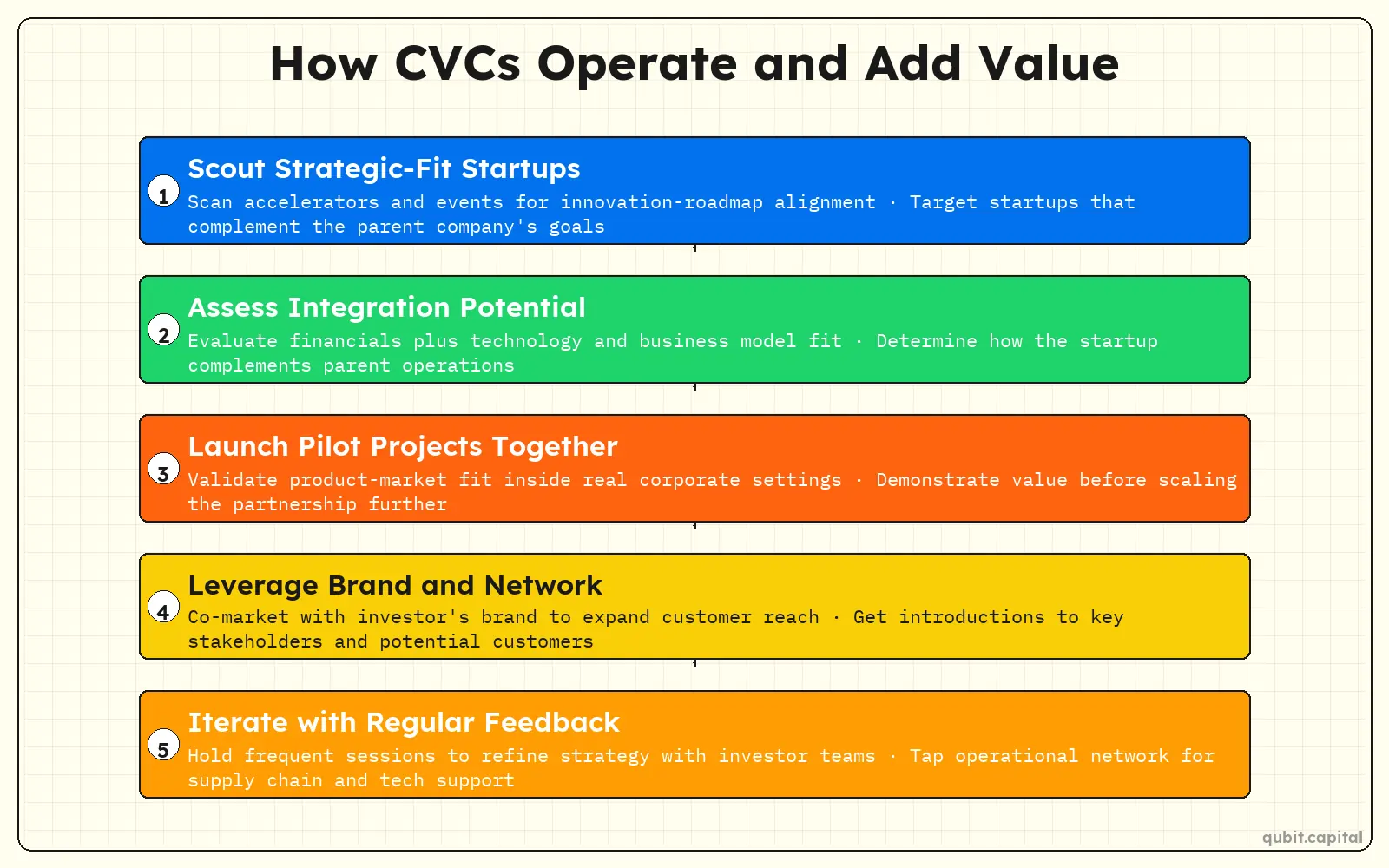
- Deal Sourcing: CVCs actively scout startups that align with their parent company’s innovation roadmap, often through accelerators, partnerships, and industry events.
- Due Diligence: They assess not just financials and growth potential, but also how a startup’s technology or business model can integrate with or complement the parent company.
- Post-Investment Support: Beyond capital, CVCs provide introductions, pilot opportunities, co-marketing, and sometimes direct integration into the parent’s operations.
Maximizing Post-Investment Support from CVCs
- Initiate pilot projects with the corporate partner to validate product-market fit and demonstrate value within real-world settings.
- Collaborate on co-marketing campaigns to leverage the investor’s brand recognition and expand customer reach efficiently.
- Tap into the investor’s operational network for supply chain, logistics, and technology support to accelerate scaling efforts.
- Request introductions to key industry stakeholders and potential customers through the investor’s established relationships.
- Engage in regular feedback sessions with investor teams to refine strategy and address operational challenges promptly.
To move efficiently through these stages, startups should have a structured approach to building an investor pipeline for e-commerce that tracks outreach, meetings, and follow-ups in one place.
Why Startups Choose Corporate & Strategic Investors
- Access to Customers: Venture capital for ecommerce can help startups land major retail partnerships or pilot programs, accelerating go-to-market.
- Distribution Power: Strategic investors can put products in front of millions of customers quickly.
- Operational Expertise: Startups gain insights into supply chain, fulfillment, and scaling challenges from industry leaders.
- Potential for Acquisition: Many CVC-backed startups are later acquired by their corporate investors, providing a clear exit path.
Risks and Considerations
While CVCs offer many advantages, founders should be mindful of potential drawbacks:
- Strategic Alignment: Ensure your vision aligns with the corporate investor’s goals to avoid conflicts.
- Exclusivity Clauses: Some CVCs may seek exclusivity or right of first refusal, which can limit future partnerships.
- Longer Decision Cycles: Corporate investment committees can be slower than traditional VCs.
- Potential for Acquisition-Only Mindset: Some CVCs may invest primarily to acquire, which may not align with every founder’s exit goals.
Risks of Investor-Startup Misalignment
Beyond these risks, founders should consider the impact of misaligned growth stage or sector focus with investors. When a startup’s needs do not match the investor’s expertise, critical opportunities for support and growth may be missed. This misalignment can also create strategic friction, slowing progress and complicating future fundraising. Careful evaluation of investor fit is essential to avoid these issues.
Founders weighing CVC exclusivity clauses may also want to explore angel investors backing DTC brands as an alternative funding path with fewer strategic constraints.
Notable Deals & Activity in 2025
Recent deal activity is occurring at record scale. By Q2 2024, average deal size reached $14.4 million, marking a 17% increase from 2023. Larger rounds empower startups to integrate advanced solutions into major platforms.
- Shopify Ventures invested in multiple AI-driven ecommerce startup funding deals, integrating their solutions into the Shopify App Store.
- Amazon and Walmart have each backed logistics optimization startups and last-mile delivery platforms, seeking to maintain their edge in fulfillment speed and efficiency.
- Target Accelerators have helped several DTC brands scale into national retail and omnichannel distribution.
- Alibaba and JD.com continue to invest in cross-border commerce and logistics infrastructure, especially for brands expanding into Asia.
What’s Next for Corporate & Strategic Investment in E-Commerce?
The strategic role of ecommerce corporate venture is expected to grow, with more corporations launching venture arms and deepening their involvement in the start-up ecosystem. The focus will remain on:
- Automated logistics platforms
- Personalization engines powered by first-party data
- Creator monetization infrastructure
- Verticalized commerce platforms (e.g., fashion, gaming, wellness)1
Startups that can reduce customer acquisition costs, improve average revenue per user, and demonstrate sticky user behavior will continue to attract the lion’s share of strategic capital.
Partner with Leading Corporations
Venture commerce collaborations between startups and established corporations have become a driving force for innovation. These partnerships create opportunities for startups to access resources, networks, and expertise while enabling corporations to stay ahead in competitive markets. Corporate partnerships often lead to transformative investments, fostering growth and mutual success.
Successful ventures like these demonstrate the power of aligning innovative ideas with corporate infrastructure. Startups bring agility and fresh perspectives, while corporations contribute scale and operational excellence. Together, they unlock new possibilities, from groundbreaking technologies to market expansion strategies.
For startups seeking impactful growth, partnering with industry leaders can be a game-changer. It’s not just about funding; it’s about creating synergies that propel both parties toward shared goals.
Conclusion
Ecommerce corporate venture and retail strategic investors are shaping the future of e-commerce by backing startups that bring innovation, operational excellence, and new customer experiences.
At Qubit Capital, we are committed to helping businesses accelerate their corporate venture initiatives. If you’re looking to connect with strategic investors and enhance your venture strategies, we invite you to explore our ecommerce fundraising assistance. Let us help you identify the right opportunities to propel your business forward.
Book a call with a Qubit Capital advisor to tailor your funding approach with strategic investors.
Key Takeaways
- Corporate venture arms drive innovation and sustainability in retail.
- Strategic partnerships enhance market competitiveness and accelerate growth.
- Sector expertise across Ag & Food, Built World, Healthcare, Industrial, and IT & Media is crucial.
- Data-driven insights and real-world case studies solidify best practices.
Get your round closed. Not just pitched.
A structured fundraising process matched to your stage and investor fit.
- Fundraising narrative and structure that holds up
- Support from strategy through investor conversations
- Built around your stage, model, and timeline
Frequently asked Questions
How does ecommerce corporate venture funding work?
Large retail and ecommerce companies invest directly in startups that align with their strategic goals through dedicated venture arms. The process typically includes deal sourcing, due diligence focused on strategic fit, and structured investment rounds that come with operational support, pilot programs, and access to the corporate parent’s distribution channels.