

 Back
Back












Table of Contents

Building a pitch deck that actually gets read starts with one decision that quietly shapes everything else: do you use a template, or do you go custom?
Templates are the fastest way to get a clean, structured deck out the door. They are simple, cost-friendly, and great when you need to move quickly without reinventing the wheel. Custom design takes more time, but it lets you build a distinct visual story that matches your brand and makes your message feel intentional, not copied and pasted.
That choice matters more than ever because investor attention keeps getting tighter. Investors spent 22% less time reviewing pitch decks, which means your deck has fewer seconds to land the story, build trust, and earn the next meeting. Startups cannot afford to treat design as a last-minute polish. It is part of the strategy.
And the good news is that even basic decks can level up fast. Pitch deck makeover examples show how small design decisions, like clearer structure, stronger hierarchy, and tighter visuals, can turn an average deck into something investors can scan and remember.
In this blog, we will break down the real pros and cons of templates versus custom design, and help you choose the right approach for your stage, budget, and goals.
Pros of Using Pitch Deck Templates
Choosing between a pitch deck template and custom design depends on your need for speed, cost, or brand uniqueness.
1. Fast and Practical: Templates for Quick Pitch Decks
Creating a compelling pitch deck can often feel like a race against time, especially when deadlines are tight or budgets are limited. This is where pitch deck templates step in as a fast and practical solution. A pitch deck template is ideal for startups needing a professional presentation quickly.
Templates offer speed and simplicity. They are ideal for startups seeking quick solutions.
2. Why Templates Are a Time-Saver
Recent findings reveal meaningful time investments for high-quality decks. Among skilled presenters, 47% spend over 8 hours on design. Templates help compress this timeline, removing the need for lengthy formatting sessions.
They act as a shortcut to professional-looking presentations. With pre-designed layouts and placeholders, they eliminate the need for extensive design work, enabling rapid completion of projects. For startups or small teams juggling multiple priorities, this efficiency can be invaluable. Tools like the SlideEgg Template offer professional presentation designs that accelerate the creation process without compromising quality.
3. Cost-Effective Design Without the Hassle
Hiring a designer or investing in custom designs can be expensive. Templates provide a budget-friendly alternative, offering polished visuals at a fraction of the cost. For example, using a pro template can save both time and money, ensuring your pitch deck is ready to impress stakeholders without draining resources.
4. The Risk of Generic Designs
While templates offer speed and affordability, they come with a potential downside: generic aesthetics. Because templates are widely accessible, there’s a risk your pitch deck might resemble others, especially if competitors use similar designs. This lack of uniqueness can dilute your brand’s personality and make your presentation less memorable.
5. Balancing Efficiency and Originality
To mitigate the risk of generic designs, consider customizing templates to align with your brand identity. Adjusting colors, fonts, and imagery can transform a standard slide deck template into something uniquely yours. This approach strikes a balance between efficiency and originality, ensuring your pitch deck stands out while still benefiting from the convenience of templates.
Templates are undeniably practical, but they’re not a one-size-fits-all solution. By understanding their strengths and limitations, you can use them strategically to create impactful presentations that resonate with your audience. They also give you the option to use the best tools for creating pitch decks.
Startups like yours already closed their rounds with us.
Founders across every stage and industry. Here's what it took.
- Raised $7.6M for Swiipr Technologies
- Raised $0.5M for Ap Tack
- Raised €0.5M for Ivent Pro
Pros of Custom Design for Pitch Decks
Custom designs are more than just aesthetics, they’re a strategic tool for creating a standout identity. Much like a bespoke (custom-made) outfit tailored to fit perfectly, custom designs adapt to a brand's unique style and needs. For startups, this approach is particularly impactful, as it allows them to move away from generic templates and embrace a presentation style that truly reflects their vision.
1. Tailored to Individual Style
Custom designs offer the flexibility to align with a brand’s personality and goals. A custom design helps your pitch deck stand out and reflect your brand’s unique style. Instead of settling for pre-made solutions, startups can craft visuals that resonate with their audience. This tailored approach ensures that every element, from color schemes to typography—works cohesively to communicate the brand’s message effectively.
2. Enhancing Brand Identity
A unique design is more than just visually appealing; it’s a powerful tool to establish and reinforce brand identity. Custom solutions allow startups to differentiate themselves in competitive markets, ensuring their pitch deck or presentation doesn’t blend into the crowd. Whether it’s a bold color palette or innovative layouts, these designs help brands leave a lasting impression.
3. Functionality Meets User Experience
Investing time in custom design isn’t just about appearances—it’s about functionality. Thoughtfully crafted designs enhance user experience by ensuring clarity, ease of navigation, and engagement. For startups pitching their ideas, this can mean the difference between capturing investor interest and losing it.
For those leaning toward custom designs, graphic design resources for pitch decks provide the tools needed to enhance visual appeal and tailor presentations to specific audiences.
4. Resonating with the Audience
Custom designs also provide the opportunity to connect directly with the intended audience. By understanding their preferences and expectations, startups can create visuals that speak their language. This connection fosters trust and engagement, making the pitch deck not just a presentation but a conversation.
The benefits of custom designs extend far beyond aesthetics. They empower startups to showcase their individuality, enhance functionality, and build meaningful connections with their audience—all while reinforcing their brand identity.
5. Building Connections That Last
A well-crafted custom design goes beyond aesthetics, it builds a deeper connection with the audience. When visuals are thoughtfully aligned with your brand's story, they evoke emotions that make your message memorable. This emotional resonance can be the difference between a fleeting glance and meaningful engagement. Examining pitch deck makeover examples reveals how thoughtful design choices can elevate even the most basic presentations into compelling visuals.
6. Driving Engagement and Sales
Despite best efforts, the conversion rate remains low in fundraising. Only 1% of pitch decks actually attract investment. This demonstrates the rarity of successful outcomes, stressing the value of highly tailored, strategic presentations.
Custom designs are not just visually appealing; they are strategically impactful. By creating engaging and tailored materials, businesses can spark interest and drive sales. A personalized approach to design ensures that your audience feels valued, increasing the likelihood of positive responses. For instance, a business pitch deck template designed with unique branding elements can captivate investors and stakeholders, making them more likely to invest in your vision.
7. Adaptability for Growth
As businesses evolve, their design needs change. Custom designs offer the flexibility to adapt and scale alongside growth. Whether you're expanding your product offerings or entering new markets, tailored visuals can seamlessly evolve to meet new demands. This adaptability is especially crucial in the rapidly changing digital landscape, where staying relevant requires constant innovation.
8. Scalable Solutions for Dynamic Needs
Custom designs are not static; they grow with your business. They provide scalable solutions that can be adjusted to fit new goals, ensuring your brand remains consistent and impactful. Whether you're updating a google slides pitch deck template or revamping your website, custom designs allow for smooth transitions that maintain your professional image.
Recent fundraising results spotlight the impact of compelling presentations. For example, in September 2024, Artisan raised $12 million. Their standout pitch deck played a key role in securing this largest funding round among top Y Combinator grads.
By investing in custom design, businesses can create materials that not only impress but also adapt to their journey. From fostering connections to driving sales, tailored visuals are an essential tool for success.
Choosing a Pitch Deck Template or Custom Design
When creating a compelling presentation, the decision to use a pitch deck PowerPoint template or invest in custom designs can significantly impact your results. Each approach has its strengths, and understanding when to use one over the other is key to aligning your presentation with both immediate needs and long-term goals.
Comparing Template, Custom, and Hybrid Approaches
Templates: Speed and Simplicity for Immediate Impact
The stakes for pitch deck effectiveness are high. 92% of firms fail to secure follow-on funding due to poor presentation materials. Investing in the right design approach directly influences your company’s growth trajectory.
Templates are an excellent choice when time is tight, and you need a polished presentation quickly. A pitch deck template offers a pre-structured format, saving time and ensuring a professional look. A well-designed slide deck template provides a pre-structured format, allowing you to focus on content rather than design. This approach is particularly useful for startups or businesses preparing for a last-minute pitch or internal meeting.
- Time-Saving: Templates eliminate the need to start from scratch, enabling faster turnaround times.
- Cost-Effective: They are typically more affordable than custom designs, making them ideal for smaller budgets.
- Consistency: Many templates come with cohesive design elements, ensuring a professional look without requiring advanced design skills.
However, while templates offer convenience, they may lack the unique branding elements necessary to stand out in competitive settings.
- Some investors expect custom designs and may discount templated decks.
- Template files might not be compatible with all presentation software platforms.
- Heavily customized templates can become difficult to update efficiently.
Custom Designs: Crafting a Unique Brand Narrative
For businesses aiming to leave a lasting impression, custom designs are the way forward. Unlike templates, custom designs are tailored to your brand’s identity, ensuring that every slide reflects your unique story and values.
- Brand Alignment: Custom designs allow you to incorporate your brand colors, typography, and messaging seamlessly.
- Investor Appeal: A professionally designed deck signals attention to detail and commitment, which can resonate strongly with investors.
- Long-Term Value: While the upfront cost is higher, custom designs can be reused and adapted for future presentations, offering a better return on investment over time.
A notable example of the power of custom designs is their role in securing significant funding. Custom pitch decks have been instrumental in raising over $500M for startups, with one standout deck alone helping to secure this amount.
Decision-Making Framework: Choosing the Right Approach
To determine whether a template or custom design is the best fit for your needs, consider the following steps:
- Assess Your Timeline: If you’re working with a tight deadline, a pitch deck PowerPoint template is likely the better option. For long-term projects, custom designs offer more flexibility and impact.
- Evaluate Your Budget: Templates are budget-friendly, while custom designs require a larger investment. Align your choice with your financial resources.
- Define Your Goals: If your goal is to make a quick impression, templates suffice. For building a strong brand narrative or impressing high-stakes investors, custom designs are essential.
- Seek Professional Guidance: Collaborating with a design agency ensures your presentation aligns with your brand story and meets investor expectations.
Understanding how to create a pitch deck lays the foundation for deciding between templates and custom designs, ensuring the presentation aligns with funding goals.
Balancing Short-Term Needs with Long-Term Goals
Ultimately, the choice between templates and custom designs depends on your immediate requirements and long-term aspirations. Templates provide a quick, cost-effective solution for immediate needs, while custom designs offer a tailored approach that strengthens your brand identity and enhances your storytelling.
Whether you opt for a template or a custom design, the key is to ensure your presentation communicates your message effectively and resonates with your audience.
Finding the Sweet Spot: Blending Templates with Customization
Often overlooked is the option to strategically combine templates and custom design, leveraging the advantages of both without fully committing to one approach. Startups can benefit from the speed and convenience of templates, while selectively applying customizations to reflect their brand’s unique identity.
Using a pitch deck template as a base lets startups quickly build presentations and then add custom elements. For instance, you might use a professional pitch deck template as your foundational structure, then layer customized graphics, color schemes, or unique data visualizations to enhance originality.
Custom design elements can be layered onto templates for a unique and professional pitch deck. This hybrid strategy provides a practical way to produce visually appealing decks quickly while maintaining originality.
Branded Custom Template Systems for Consistency
Building on the hybrid approach, startups can develop branded custom template systems maintained internally. This method enables non-designers to create polished, on-brand presentations efficiently. By standardizing layouts, colors, and visual elements, organizations ensure every pitch deck aligns with their identity. Over time, this strategy supports scalability and consistency as teams grow or presentation needs diversify.
Steps to Customize Templates Effectively
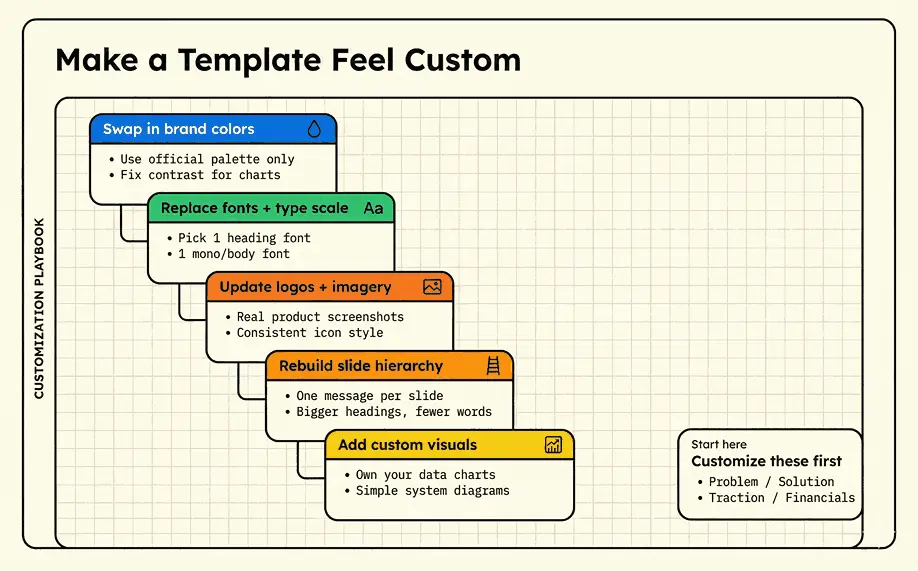
- Start by replacing default colors and fonts with your brand’s official palette and typefaces for immediate visual alignment.
- Update all logos, icons, and imagery to reflect your company’s unique style and reinforce brand recognition throughout the deck.
- Adjust slide layouts to prioritize your key messages, ensuring each section supports your narrative and storytelling goals.
- Incorporate custom graphics or data visualizations that highlight your product’s strengths and differentiate your pitch from competitors.
- Review the entire deck for consistency, checking that every slide maintains a cohesive look and supports your brand identity.
Another advantage of this blended approach is cost efficiency. Rather than investing heavily in fully customized presentations, startups can allocate resources strategically, focusing on customizing the most impactful slides, such as problem statements, value propositions, and financial projections.
Tools like Canva or Figma facilitate this process, enabling even teams without extensive design experience to adjust templates to better match their vision. By thoughtfully integrating templates and customization, startups achieve a compelling pitch deck that balances practicality, affordability, and visual impact. This approach not only communicates professionalism but also demonstrates adaptability, a quality investors appreciate as indicative of a startup's potential for growth.
Conclusion
Choosing between templates and custom designs for your pitch deck boils down to your startup's unique goals and audience. Templates provide speed and cost-efficiency, making them ideal for early-stage startups or those with tight deadlines. On the other hand, custom designs allow you to craft a distinctive narrative that resonates deeply with investors, ensuring your brand story stands out
Ultimately, aligning your design choice with your brand identity and investor expectations is key. A well-crafted pitch deck, whether templated or custom, should communicate your vision clearly and persuasively. Take the time to assess your resources, timeline, and the message you want to convey.
If you're ready to secure funding with a transformative pitch deck, we at Qubit Capital can help. Our Startup Pitch Deck Creation service is tailored to meet your needs. Let’s turn your vision into a compelling story that drives results.
Key Takeaways
- Use templates when you need speed, low cost, and a clean structure for fast investor conversations.
- Choose custom design when the meeting is high stakes and brand perception really matters.
- A hybrid approach keeps the template skeleton but customises colors, typography, and key slides for your brand.
- Design choices should follow your stage, timeline, and audience, not personal taste or the latest template trend.
- A strong deck still needs the right eyes on it, which is where focused outreach and startup scouting services come in.
Need a pitch deck investors actually read?
A deck built to answer real investor questions. Clear story, strong positioning, investment-ready slides.
- Structure your narrative and core messaging
- Fix clarity gaps and investor objections
- Investor-grade design and structure
Frequently asked Questions
When should a startup use a pitch deck template?
Startups should use a pitch deck template when they need a fast, cost-effective solution. Templates are ideal for early-stage pitches or tight deadlines.