

 Back
Back









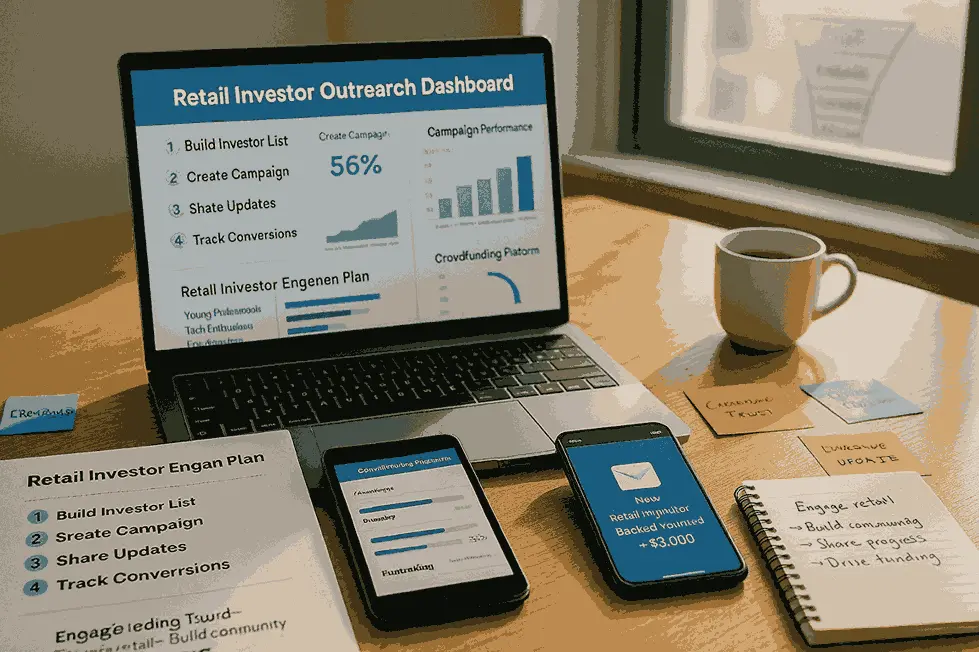
Table of Contents

The retail industry is undergoing rapid transformation, presenting immense opportunities for start-ups. According to the Infosys The global retail market is expected to reach a staggering $35.2 trillion by 2025, growing at an annual rate of 7.65%. This growth highlights the potential for innovative retail start-ups to thrive, provided they secure the right investors to fuel their journey.
Securing funding is not just about finding capital; it’s about identifying investors who align with your vision and understand the nuances of the retail sector. A review of retail vc firms provides nuanced insights into venture capital approaches tailored for the retail environment, reinforcing your understanding of specialized investor dynamics.
This article will guide retail start-up founders in pinpointing investors who match their strategic goals and capital needs.
Retail Investors: Meaning and How They Differ From Angels and VCs
Retail investors, also known as individual investors, are individuals who invest smaller amounts of capital into startups. Typical investments range from $100 to $10,000.
Recent survey findings show the vast reach of retail investing. 19 million UK adults hold retail investment products. These products range from direct equities to diversified funds. This quantifies the broad base of individuals influencing capital markets and underscores why startups should understand retail participation.
Unlike angel investors or venture capitalists who conduct extensive due diligence and often take board seats, retail investors participate through streamlined processes on equity crowdfunding platforms. Institutional vs retail investors: Institutions conduct deep due diligence, while retail investors use simpler crowdfunding processes.
The distinction matters because each investor type brings different expectations and engagement levels to your cap table. Here's how they compare:
| Investor Type | Typical Investment Size | Due Diligence Depth | Involvement Level |
|---|---|---|---|
| Retail Investors | $100 – $10,000 | Light, based on standard platform-provided documents and data | Low to moderate, focused on community engagement |
| Angel Investors | $25,000 – $100,000 | Moderate to deep | Moderate to high, often in an advisory role |
| Venture Capitalists | $500,000+ | Extensive | High, including board seats and strategic direction |
Retail investors often discover your startup through crowdfunding platforms rather than personal networks or referrals. They're driven by personal interest in your product, mission, or industry rather than institutional investment mandates. This changes how you pitch, communicate, and maintain relationships after closing your round.
Startups like yours already closed their rounds with us.
Founders across every stage and industry. Here's what it took.
- Raised $7.6M for Swiipr Technologies
- Raised $0.5M for Ap Tack
- Raised €0.5M for Ivent Pro

Why Retail Capital Is a Strategic Advantage for Startups
Retail investors provide strategic advantages by becoming brand advocates with financial skin in the game.
Behavioral Risks in Retail Fundraising
These advantages come with unique risks, as retail investors are often influenced by behavioral biases like momentum and herding. Such tendencies can lead to unpredictable investment patterns, amplifying volatility during fundraising campaigns. Founders should anticipate that retail sentiment may shift rapidly, requiring clear communication and proactive engagement. Addressing these risks helps maintain stability and trust throughout the fundraising process.
Consider what this means for your business:
- Negotiating leverage: Diversifying your cap table with retail capital means less dilution to a single VC
Understanding how investors work helps founders leverage retail capital for better negotiation outcomes.
- Market validation: Real customers investing their own money signals genuine product-market fit to future institutional investors
- Customer acquisition: Retail investors often become early adopters who provide feedback and referrals
The Role of Financial Education in Retail Advocacy
Building on this engagement, startups can offer financial education resources to retail investors, fostering informed participation. Educational initiatives reduce common behavioral pitfalls and encourage disciplined, long-term support. This approach strengthens investor loyalty and enhances the overall fundraising experience. Proactive education also positions the startup as a trusted partner in the investor’s journey.
- Brand amplification: A community of supporters shares your story across their networks organically
Retail investors also bring diverse perspectives from various industries and backgrounds. This diversity can spark insights about market positioning, feature development, or expansion opportunities that homogeneous institutional investors might miss. You might find that a retail investor working in healthcare spots a use case for your SaaS product that your tech-focused advisors overlooked.
Retail investor activity now moves markets at scale. Investors traded a record $6.6 trillion in stocks in only six months of 2025. Young and first-time participants power these volumes. This momentum demonstrates retail capital’s direct role in shaping competitive environments, benefiting startups that activate broad support.
Legal Pathways to Raise Retail Funds Without Trouble
Legal frameworks for retail investors allow startups to raise funds while remaining compliant with securities regulations.
Reg CF Basics
Regulation Crowdfunding (Reg CF) allows startups to raise up to $5 million annually from both accredited and non-accredited investors. Retail investing under Reg CF enables startups to access a broad pool of non-accredited investors. You conduct the offering through an SEC-registered funding portal like Republic, Wefunder, or StartEngine, which handles much of the compliance burden for you.
These portals streamline retail startup funding while ensuring regulatory compliance. Investment limits protect retail investors from overexposure. Those earning less than $124,000 can invest the greater of $2,500 or 5% of their annual income or net worth. The process requires filing Form C with the SEC and providing financial statements, though audit requirements vary based on the amount you're raising.
Reg A Mini IPO Overview
Regulation A+ functions as a “mini-IPO” for startups seeking to raise between $5 million and $75 million. Tier 1 offerings (up to $20 million) face state-by-state review, while Tier 2 offerings (up to $75 million) enjoy federal preemption but require audited financials and ongoing reporting.
The “testing-the-waters” provision lets you gauge investor interest before incurring full compliance costs. This pathway works particularly well for consumer brands with existing traction, as the marketing flexibility exceeds what Reg CF allows.
EU And UK Crowdfunding Rules
European startups operate under the European Crowdfunding Service Providers Regulation, which harmonized rules across EU member states in 2021. The UK's Financial Conduct Authority (FCA) maintains separate guidelines through platforms like Crowdcube and Seedrs, with investment limits and disclosure requirements similar to US frameworks.
Industry bodies also play a key role in broadening investor access. Investment Association Council adopted new recommendations in September 2025, guiding regulatory frameworks for UK retail investor access to private market assets. These proactive steps shape inclusive capital markets and reinforce compliance standards for founders.
Regulatory Protections: Retail vs. Institutional Investors
| Protection Type | Retail Investors | Institutional Investors |
|---|---|---|
| Regulatory oversight | SEC, FINRA, Reg BI apply | SEC, industry-specific rules |
| Disclosure requirements | Enhanced transparency mandated | Standard reporting obligations |
| Suitability standards | Brokers must prioritize best interest | Assumed sophisticated, less protection |
Recent EU reforms spotlight the evolution of retail investor regulations. European Parliament and Council informally agreed on a Retail Investment Strategy package in December 2025. This coordinated action empowers consumer choice and enhances capital markets accessibility, reinforcing the strategic context for compliant fundraising pathways across Europe.
Matching Investor Profiles with Startup Strategies
Understanding the nuances of investor profiles enables startups to tailor their pitches effectively. For instance, founders seeking larger rounds for scaling might prioritize investors. Here's a quick overview:
Investor profiles include financial investors such as retail, angel, and institutional backers. Startups must recognize the differences between institutional vs retail investors when tailoring pitches.
1. Laurent Parmentier (SignalFire)
Laurent Parmentier, a prominent investor at SignalFire, exemplifies a focus on larger seed and Series A rounds. His sweet spot investment amount is $12.5M, with a broader range spanning $5M to $20M. Founders targeting significant funding for scaling operations or entering new markets can benefit from aligning with SignalFire’s priorities.
2. Eyal Baumel (NFX)
In contrast, Eyal Baumel at NFX specializes in smaller, early-stage investments. His sweet spot is $100K, with a typical range of $50K to $100K. Startups in their nascent stages, particularly those testing product-market fit, may find Baumel’s approach ideal for securing initial capital.
To complement this exploration, analyses of top retail PE firm investors offer perspectives on private equity strategies within the retail sector. These insights can be found. Additionally, examinations of corporate venture retail investments provide a detailed view of how corporate entities approach retail funding, adding depth to the assessment of diverse investment sources.
Channels To Reach And Engage Retail Investors
Retail investors seek opportunities through various channels, making a multi-channel approach essential for startup fundraising. The most successful founders treat fundraising like a product launch, with coordinated outreach across platforms.
Coordinated outreach across platforms helps attract both retail and individual investors.
Equity Crowdfunding Platforms
Platforms like Republic, SeedInvest, and StartEngine provide built-in investor audiences actively seeking opportunities. These platforms are popular destinations for retail startup investing.
Your platform selection influences your success as much as your pitch. Review recent campaigns in your sector to identify trends. Look at recent campaigns in your sector. Note which platforms generated the most engagement and fastest funding velocity.
Community Driven Social Media Campaigns
LinkedIn, Twitter, and niche Reddit communities offer direct access to potential investors without platform fees. Share your founder journey authentically by discussing the challenges, pivots, and small wins that humanize your startup beyond the polished pitch deck.
However, securities regulations restrict promotional activities during certain periods, so coordinate your social strategy with legal counsel. You'll want to build community before launching your campaign, establishing credibility and interest that converts once you go live.
Email And Newsletter Outreach
Building an email list of interested investors before your campaign launches dramatically improves your funding velocity. Many successful campaigns reach 30-40% of their goal within the first 48 hours by activating their email list immediately.
Segment your list based on engagement level and investment capacity. Your most engaged subscribers receive early access or special terms, creating urgency and social proof that attracts later investors who fear missing out. Even subscribers who don't invest themselves often forward your campaign to friends who might participate.
Live Events And Demo Days
Virtual webinars and in-person pitch events let you showcase your product while building personal connections with potential investors. The Q&A portion often addresses concerns that written materials can't fully resolve, particularly around technical feasibility or market timing.
Pitch competitions and accelerator demo days also attract angel investors who might anchor your round, providing the credibility that encourages retail investors to follow. Even if you don't win, the exposure and feedback refine your messaging for the actual campaign.
For retail startups, managing investor relations effectively is crucial. Learn more about building an investor pipeline retail startup to integrate this process into your broader funding framework.
Case Studies: Investor Impact on Growth
1. Flagship’s Cross-Pacific Expansion
Flagship, a visual merchandising platform, leveraged a $6M seed round led by Coreline and Veridical Ventures to scale its operations in the U.S. market. The investment resulted in a 70% optimization in in-store decision rates and expanded the team from 12 to 16 members. This case illustrates how specialized early-stage firms can accelerate market entry and operational growth.
2. Warby Parker’s Market Disruption
Warby Parker disrupted the eyewear industry by breaking Luxottica’s monopoly through a direct-to-consumer model. Strategic investors played a crucial role in fostering this innovative approach, culminating in a $1.4B valuation by 2018. This success story underscores the transformative potential of aligning with the right investors.
Insights for Founders
Retail investor profiles are not one-size-fits-all. By analyzing segmentation data, sweet spots, and case studies, founders can strategically target investors whose priorities align with their startup’s stage and vision. Whether seeking early-stage support or scaling capital, understanding these profiles is key to unlocking growth opportunities.
For startups exploring alternative pathways for early-stage support, discussions centered on retail accelerators incubators highlight viable options.
Smart Investor Acquisition & Fundraising Strategies
Retail investing strategies are essential for startups seeking to scale with diverse investor support. Securing the right investors is a pivotal step in scaling your startup. This section explores actionable strategies to identify, engage, and secure investors, ranging from angel investors to venture capitalists and corporate VCs.
Fundraising momentum accelerates following recent global trends. Global private equity and venture capital dealmaking rebounded 25% in value during 2024. This signals renewed investor appetite and increased capital flow, benefiting startups ready to leverage industry optimism.
Finding the Ideal Investors for Your Retail Startup
Identifying the right investors goes beyond financial backing; it’s about finding partners who align with your vision and can provide strategic value.
Effective retail startup funding depends on identifying investors aligned with your business goals.
Evaluate Industry Expertise
Investors with deep knowledge of your industry can offer invaluable insights and connections. For example, retail startups might benefit from investors familiar with retail media monetization trends, where brands use first-party data for targeted advertising, a market projected to reach $50 billion by 2026, according to Kamino Retail.Assess Network Capabilities
A strong investor network can open doors to partnerships, talent acquisition, and market expansion. Founders exploring early-stage support can utilize resources like the Top 100+ Global Accelerators List, which categorizes accelerators by vertical, location, and criteria.Prioritize Strategic Support
Beyond funding, investors should contribute to your startup’s growth strategy. Corporate VCs, for instance, often provide access to their parent company’s resources, enabling startups to scale faster.
Structuring Your Fundraise
A well-structured fundraising round sets the foundation for long-term success.
Define Clear Term Alignment
Ensure that all parties involved share a mutual understanding of the terms. Misaligned expectations can lead to conflicts down the line. Using tools like the Gunderson Dettmer Sample Term Sheet can help founders evaluate clarity and fairness in prospective investor agreements.Importance of Lead Investor Roles
A lead investor often sets the tone for the round, attracting other investors and negotiating terms. Their involvement can signal credibility to the broader investor community.Explore Innovative Fundraising Models
Diversifying funding sources can appeal to investors seeking innovation. For instance, crypto-based fundraising platforms are gaining traction, as demonstrated by Friends of Bonobos raising $240,000 via blockchain-enabled donations.
For additional insights into securing funding, explore retail startup fundraising strategies, which provide targeted guidance for retail-focused ventures.
Spotting Red Flags in Term Sheets
Term sheets are critical documents that outline the terms of an investment. However, they can sometimes contain clauses that disadvantage founders.
Beware of Excessive Control Clauses
Clauses granting investors disproportionate control over decision-making can hinder your ability to run the business effectively.Watch for Dilution Risks
Pay attention to terms that could lead to excessive equity dilution, especially in future funding rounds.Seek Transparency
Ambiguities in term sheets can lead to misunderstandings. Using illustrative tools like the Gunderson Dettmer Sample Term Sheet ensures clarity and fairness.
By addressing these red flags early, founders can protect their interests and foster healthier investor relationships.
Post Raise Investor Relations That Drive Advocacy
Effective post-raise communication with retail investors is crucial for building long-term advocacy. Closing your retail round marks the beginning of investor relations, not the end. The way you engage your retail investors determines whether they become advocates who support future rounds or silent shareholders who feel ignored.
Reporting Cadence Templates
Establish a consistent communication rhythm like monthly email updates and quarterly detailed reports. Your updates balance transparency about challenges with optimism about progress, avoiding both sugarcoating and unnecessary alarm.
Transparent communication encourages continued retail startup investing and advocacy. Include specific metrics like revenue, user growth, and product milestones alongside qualitative updates about team expansion, partnership negotiations, or market developments. Retail investors invested in your story, so continue telling it as it unfolds.
Community Perks And Rewards
Non-financial benefits deepen investor engagement without diluting equity further. Offer product discounts, beta access, investor-only events, or branded merchandise that makes them feel like insiders.
- Product discounts: 15-30% off for investor-customers creates loyalty and word-of-mouth marketing
- Beta access: Early feature testing makes investors feel like partners in product development
- Exclusive events: Virtual Q&As or annual investor meetups strengthen community bonds
These perks cost relatively little but generate disproportionate goodwill. An investor wearing your company's hoodie or using your product at a discount becomes a walking advertisement to their network.
Re Investment Campaigns
Your existing retail investors represent your warmest audience for future fundraising. They've already conducted due diligence, believe in your mission, and want to see their initial investment succeed.
Give them early access to subsequent rounds with favorable terms or allocations. This loyalty rewards them for early support while ensuring you hit momentum targets quickly in future campaigns, which attracts new investors who want to join a “hot” round.
Accelerate Your Retail Fundraise With Qubit Capital
Finding and engaging the right retail investors requires sophisticated data analysis and targeted outreach that most founders lack time to execute manually. Qubit Capital's AI-powered platform streamlines investor discovery by analyzing thousands of potential backers based on investment history, sector preferences, and engagement patterns.
Acquiring financial investors is essential for scaling your retail startup. Rather than spending months building lists and crafting individual messages, you can focus on product development and customer acquisition while we handle investor relations infrastructure.
Our Investor Discovery and Mapping service is designed to help you pinpoint the perfect match for your vision. Let us support you in turning your fundraising goals into reality.
Key Takeaways
- Retail start-ups must align investor selection with stage, sector, and strategic needs.
- Detailed investor profiles and case studies provide actionable insights into funding ranges and sweet spots.
- Effective fundraising strategies require clear structures, lead investor roles, and vigilance against unfavorable term sheets.
- Utilizing curated resources and internal links can guide founders to the right investors while avoiding common pitfalls.
- Embracing innovative trends like retail media monetization and crypto-based fundraising can open further funding avenues.
Get your round closed. Not just pitched.
A structured fundraising process matched to your stage and investor fit.
- Fundraising narrative and structure that holds up
- Support from strategy through investor conversations
- Built around your stage, model, and timeline
Frequently asked Questions
What are the main benefits of retail investors for startups?
Retail investors provide strategic advantages such as market validation, networking opportunities, and increased brand advocacy. Their small investments help build community and credibility.