

 Back
Back








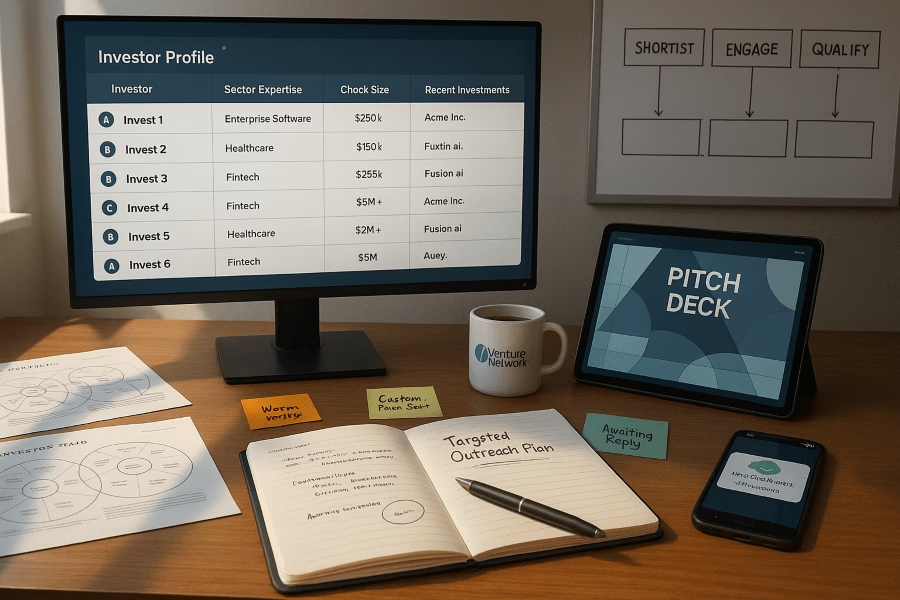
Table of Contents

Global VC funding hit about $126.3 billion in Q1 2025, proving that capital has not disappeared, it has become more selective. Investors are still deploying money, but only into businesses with clear traction, strong fundamentals, and credible growth stories.
This shift means founders must move beyond generic pitching and focus on finding investors who truly align with their stage, sector, and vision. Understanding who funds what, why they invest, and how they evaluate opportunities is now essential, not optional.
In this article breaks down how startup fundraising really works in today’s market and what investors expect before writing checks.
Let’s dive into actionable strategies that will empower your startup to attract the right investors and secure the funding it needs to thrive.
Types of Startup Investors: From Informal to Institutional
Startup investors vary widely in how they deploy capital, assess risk, and support growth. Understanding these differences helps founders approach the right backers at the right stage. Each investor type comes with distinct expectations around control, timelines, and returns, making alignment critical from the start.
1. Friends and Family Investors
Early-stage startups often turn to friends and family for initial funding. While these rounds may seem informal, it is crucial to treat them with legal rigor. This helps prevent future disputes. Resources like SEC Info provide guidance on compliance, ensuring these investments align with regulatory standards.
2. Angel Investors
Angel investors and angel investment networks typically fund startups during their seed stage, offering smaller amounts of capital in exchange for equity.
3. Venture Capital Investors
Venture capital investors often bring valuable mentorship and industry connections, making them ideal for startups seeking both financial and strategic support.
4. Institutional Investors
Institutional investors, such as private equity firms and pension funds, typically engage in later-stage funding rounds. These entities bring significant capital and often demand a proven track record of growth and profitability.
For startups looking to refine their approach, learning how to find investors for startups is essential. This pillar connects seamlessly with the super pillar, offering detailed guidance on identifying and connecting with investors.
Startups like yours already closed their rounds with us.
Founders across every stage and industry. Here's what it took.
- Raised $7.6M for Swiipr Technologies
- Raised $0.5M for Ap Tack
- Raised €0.5M for Ivent Pro

Funding Strategies: How to Invest in Startups
Navigating funding stages requires understanding capital benchmarks. In 2024, average Series C round size reached $50 million. This reflects robust investor commitment at advanced growth stages. Knowing these benchmarks helps founders set realistic targets and structure their fundraising strategy effectively.
1. Seed Funding
Seed funding is the initial capital raised to develop a product or service. Startups often secure seed funding from angel investors or friends and family. For instance, Airbnb’s $7.2M Series A funding helped scale its operations globally, eventually leading to an $86.5B IPO valuation in 2020.
Be aware that not all startups are suited for venture capital, and some may face restrictive term sheets or rapid scaling challenges.
2. Venture Capital Rounds
Venture capital is a form of financing provided by investors to startups with high growth potential. Th venture capital rounds are structured funding stages, including Series A, B, and beyond. These rounds are designed to support startups as they scale operations, enter new markets, or develop advanced technologies.
3. Growth Capital
Growth capital is aimed at scaling established businesses. This funding often comes from institutional investors and is used for large-scale expansions, acquisitions, or product diversification.
4. ESG-Focused Funding
Emerging trends like Environmental, Social, and Governance (ESG) mandates are driving investments in climate tech. In Q3 2023 alone, $7.6B was invested in ESG-focused vehicles, highlighting the growing importance of sustainable business practices.
Legal and Strategic Considerations
Securing funding involves more than just pitching to investors. Legal compliance, strategic planning, and growth forecasting are critical components of the process. Using resources like SEC Info ensures startups adhere to regulatory requirements, particularly during informal rounds.
By understanding the nuances of investor types and funding strategies, startups can make informed decisions that align with their growth objectives.
Get Your Business Ready for Investors
A well-crafted business plan is the cornerstone of this process, showcasing your company’s vision, market strategy, and financial projections. Startup investors want to see a roadmap that highlights growth opportunities and addresses potential risks with actionable solutions.
Transparency in financials is equally critical. Ensure your financial records are accurate, up-to-date, and easily accessible. This builds trust and allows private investors to confidently decide whether to invest in startups like yours.
Conducting due diligence on your own operations before presenting to investors can further enhance credibility. This includes verifying compliance with legal regulations, assessing intellectual property rights, and ensuring all contracts are in order. A well-structured pitch deck not only communicates your company’s strengths but also addresses investor concerns effectively.
Finally, don’t underestimate the value of attending investor networking events. These gatherings provide a platform to connect with investors and refine your readiness. An analytical discussion explores the dynamics of investor networking events, detailing how these gatherings can expand your circle of potential backers.
How to Find and Choose the Right Investors
Learning how to find investors for startups begins with understanding your startup’s unique needs and goals.
- Define your funding needs
- List target investor profiles
- Evaluate track records
- Set expectations
- Prepare relationships roadmap
Streamline Investor Outreach with AI Tools
Building on these relationship strategies, founders can use AI-powered platforms to identify and connect with investors more efficiently. These tools analyze investor profiles, funding history, and sector interests to suggest the best matches for your startup.
Automated outreach features enable personalized communication at scale, saving time while increasing response rates. Integrating these digital strategies can help founders reach a broader pool of relevant investors with greater precision.
Traditional vs. AI-Driven Investor Discovery
| Characteristic | Traditional Search | AI-Driven Platforms |
|---|---|---|
| Research Process | Manual review of investor lists and networks | Automated matching based on startup profile |
| Outreach Personalization | Custom emails crafted individually | Automated, personalized messaging at scale |
| Efficiency | Time-intensive and slower response rates | Faster identification and higher engagement |
How to Make the Most of Co-Investment Deals
Co-investment deals not only provide access to larger pools of capital but also connect startup investors with private investors who bring deep industry expertise.
1. Shared Risk and Extended ROI Horizons
One of the primary benefits of co-investment is the ability to share risks across multiple stakeholders. This approach is particularly valuable in early-stage rounds, where startups often require extended periods to deliver returns. For instance, even the most successful startups typically have a minimum ROI period of 10 years, making shared risk an essential strategy for long-term growth.
2. Collaborative Investment Strategies
Co-investment deals thrive on synergy. By pooling resources and insights, investors can collectively identify promising opportunities and mitigate potential pitfalls. Platforms like accelerator programs further enhance these opportunities by showcasing group-based investor interest. Learn more about the benefits of accelerator programs to explore synergistic co-investment avenues.
3. Analytical Tools for Stake Comparison
Understanding participation stakes is crucial for making informed decisions in co-investment deals. Tools like the Cap Table Viewer simplify this process by enabling investors to compare co-investor stakes and evaluate their positions within the investment structure. This transparency ensures that all parties are aligned and helps optimize decision-making.
Co-investment deals offer a unique blend of shared expertise, reduced risk, and strategic collaboration. By utilizing tools and platforms designed for systematic investment strategies, startup investors can maximize their potential for success while building valuable connections with other investors.
This strategy aligns with survival trends: 65.3% of startups fail within 10 years according to 2024 data, making shared risk essential for investor resilience. Effective co-investment can mitigate exposure and increase the probability of long-term ROI.
Find Investment Advice on Specialized Platforms
Digital investment platforms have transformed how investors and entrepreneurs connect with investors, offering tailored resources that simplify the discovery process. These platforms provide structured educational tools, including detailed FAQs and curated guides, to help users learn how to find investors for startups. For those seeking venture capital investors, these resources can demystify complex processes, making them more accessible and actionable.
One standout feature of these platforms is their ability to foster networking opportunities. These platforms also connect users with angel investors networks, fostering collaboration and accelerating funding opportunities.
For startup founders, personal branding for startup founders plays a pivotal role in amplifying exposure on these platforms. A strategic assessment discusses the impact of personal branding for startup founders, illustrating how thought leadership builds credibility with investors. This approach not only enhances visibility but also establishes trust, which is crucial in attracting the right investors.
Whether you're exploring venture capital or seeking angel investors, specialized platforms offer a streamlined way to access the resources and connections needed to succeed. By leveraging these tools, users can confidently navigate the investment landscape and unlock new opportunities for growth.
Angel investing opens doors to exciting opportunities for individuals looking to support innovative startups. Unlike traditional funding rounds, angel investors provide early-stage capital, often during the seed phase, to help businesses take their first steps toward growth. This type of investment typically involves higher risk but offers the potential for significant rewards.
Leading investor events demonstrate the power of platform-driven connections. At VivaTech, over 3,200 investors gathered in 2024. This concentration of decision-makers created unmatched opportunities for startups to engage directly with funding sources, illustrating the impact of large-scale networking environments.
Break Down the Essentials of Investment Contracts
Investment contracts are essential for anyone planning to invest in startups and secure funding while aligning with long-term goals.
Understanding the nuances of investment contracts is crucial for startup investors aiming to secure funding while aligning with their long-term goals. These agreements come in various forms, including SAFEs (Simple Agreements for Future Equity), convertible notes, and revenue share agreements. Each type offers unique advantages and risks, making it essential to evaluate them carefully.
SAFEs, for instance, provide a straightforward way to exchange capital for future equity without immediate valuation concerns. Convertible notes, on the other hand, act as debt that converts into equity under predefined conditions, offering flexibility for both parties. Revenue share agreements allow private investors to earn a percentage of a startup’s revenue, aligning returns with performance.
Conclusion
Securing the right startup investors requires a thoughtful approach that balances preparation, strategy, and execution. A compelling pitch deck, built around a clear narrative, can be the cornerstone of your investor outreach. Coupled with strategic connections, it ensures your vision resonates with the right audience.
If you're ready to connect with the right investors, we at Qubit Capital can help. Our Investor Discovery and Mapping service is designed to match you with investors that fit your growth stage. Let us help you take the next step in your journey.
Key Takeaways
• Clearly define your investor profile to attract the right backers.
• Understand options like equity and debt financing.
• Ensure investor readiness with a solid business plan and transparent reporting.
• Leverage coin investment strategies and specialized platforms for greater exposure.
• Make informed choices on contract structures to support sustainable growth.
Want a targeted investor list you can actually use?
A curated shortlist based on your stage, sector, geography, and check size.
- Thesis-aligned investors matched to your round
- Decision-maker contacts with relevant context
- Ready for outreach, not just research

Frequently asked Questions
How can I connect with investors for my startup?
You can connect with investors by leveraging digital platforms, attending investor networking events, and building a solid business plan that showcases your growth potential. Use these strategies to engage with the right startup investors.