

 Back
Back










Table of Contents

The magnitude of today's entrepreneurial activity is staggering. As of 2025, over 150 million startups are active worldwide, with 50 million new ventures launched each year. This rapid proliferation underscores the demand for innovative funding strategies and diverse investor support. Founders must position themselves within this competitive global marketplace to attract the right backers.
From angel investors for startup business ideas to venture capital investors fueling rapid growth, each type of backer plays a unique role in shaping entrepreneurial success. This guide explores the key investor categories, angel investors, venture capitalists, and strategic backers, offering insights into their motivations and contributions.
Whether you're launching a new venture or scaling an existing one, identifying the right investors is the first step toward sustainable growth.
Let’s delve into the world of startup investors and uncover the strategies to connect with them effectively.
What Makes a Startup Unique for Startup Investors?
Startups are often defined by their ability to disrupt industries and scale rapidly. According to the Forbes Startup definition, these are newly established private companies designed with the goal of achieving swift expansion, typically through innovative products or services. This emphasis on innovation and growth sets startups apart from traditional businesses, which often prioritize stability over rapid scaling.
A startup’s age is another distinguishing factor. Most startups fall within the range of 5–10 years old, with many formidable tech companies once belonging to this category during their early years. This relatively short lifespan reflects their dynamic nature, as they either evolve into established enterprises or face challenges that lead to closure.
Startup investors play a crucial role in evaluating these young companies. They often look for groundbreaking ideas and scalable business models that can attract venture capital investors and angel investors for startup business. These funding sources are vital for startups to fuel their growth and innovation, enabling them to compete in competitive markets.
Ultimately, startups are unique because they embody ambition, adaptability, and the potential to redefine industries. Their focus on rapid scaling and innovation makes them a magnet for investors seeking high-risk, high-reward opportunities. For those seeking a broader perspective on investor engagement, a deeper dive into how to find investors for startups frames the complete search process within a diverse investor ecosystem.
How to Become an Expert in Startup Investing
Survival through these defining years remains a major hurdle. According to 2024 research, 20.4% of businesses fail in their first year, and 49.4% fail within five years. This attrition reflects the volatility underlying the startup model.
Startup investing involves purchasing equity in early-stage companies with the goal of achieving significant returns as these businesses grow. This dynamic field attracts individuals and institutions eager to support innovation while capitalizing on high-risk, high-reward opportunities.
Vinod Khosla, a renowned venture capitalist, emphasizes the importance of scrutinizing the founding team’s vision and adaptability. He argues that even the most promising ideas can falter without strong leadership capable of navigating challenges. On the other hand, Scott Kupor, author of Secrets of Sand Hill Road, highlights market size as a critical factor. Kupor advises investors to prioritize startups targeting expansive markets, as these offer greater potential for scalability and profitability.
Early-stage companies often operate with unproven business models, making them inherently volatile. However, the rewards can be substantial for those who identify promising ventures early. A systematic approach is depicted in investor mapping techniques for startups, offering you visual methods to connect investor profiles with your business strategy.
Whether you’re exploring opportunities as an angel investor for startup businesses or considering partnerships with venture capital investors, success hinges on thorough research and strategic decision-making.
How Private Investments Compare to Public Ones
Private investments offer a distinct approach to wealth creation compared to public market trading. While public stocks are traded on exchanges with high liquidity, private market investing often involves longer holding periods, typically ranging from 7-10 years. This extended timeline reflects the nature of private equity, where startup investors and venture capital investors aim to nurture businesses through their growth phases before realizing returns.
The scope of the private tech sector is immense. Recent analysis shows the global tech industry is valued at $5.3 trillion. This scale highlights the opportunities and challenges unique to private investment vehicles. High market value reinforces appeal for both institutional and individual investors.
One key difference lies in the contractual restrictions that private investments impose. For instance, private companies often include clauses such as rights of first refusal, which can significantly impact liquidity. A notable example is Uber's early shareholder agreements, where the company exercised strict control over stock transactions.
According to Fortune Uber, Uber enforced contractual limitations that required shareholders to offer their shares to the company before selling them to external buyers. This practice not only restricted liquidity but also highlighted the complexities of private market investing. Unlike public markets, where stocks can be bought and sold freely, private investments demand a deeper understanding of contractual obligations and exit strategies.
For startup investors, these constraints can be both a challenge and an opportunity. While the lack of liquidity may deter some, the potential for high returns often outweighs the risks. Venture capital investors, in particular, thrive on identifying businesses with long-term growth potential, even if it means waiting years for an exit.
How to Weigh the Risks Against the Rewards in Investing
Startup investments often present a unique mix of high risk and high reward. While the allure of exponential returns can be tempting, the inherent risks demand careful consideration. For instance, statistics reveal that 90% of startups fail, underscoring the challenges of pre-IPO investments. This failure rate highlights the importance of balancing optimism with realism when evaluating opportunities.
However, history has shown that a single successful investment can transform a portfolio. Take Apple, for example. Once a fledgling startup, it has grown into one of the most valuable companies in the world. Early investors who believed in its potential reaped outsized rewards that far outweighed losses from other ventures.
The concept known as the Babe Ruth Effect further illustrates this dynamic. Just as Babe Ruth’s home runs overshadowed his strikeouts, a single “home run” investment can compensate for numerous failures. For startup investors, this principle emphasizes the importance of patience and strategic decision-making.
Where Startup Investors Provide Funding
Funding activity continues to accelerate. In 2024, $89 billion in new capital was raised by startups on Carta platforms, marking an 18.4% increase from 2023. Notably, seed-stage startups experienced a 12.5% decline in capital raised, signaling shifting investor appetite. Founders should adapt their fundraising strategies accordingly.
The options available are diverse, catering to different business models and growth stages. From startup investors like venture capitalists to angel investors for startup businesses, each funding source offers unique advantages.
1. Venture Capital and Angel Investors
Venture capital investors typically focus on startups with high growth potential, offering substantial funding in exchange for equity. On the other hand, angel investors are individuals who provide early-stage funding, often coupled with mentorship and industry connections. These investors are ideal for startups seeking both financial backing and strategic guidance.
2. Syndicates and SPVs for Angel Investment
After exploring angel investors, consider using syndicates or special purpose vehicles (SPVs) to pool smaller investments. These structures allow multiple angels to invest collectively, reducing administrative complexity for the startup. Syndicates and SPVs also help maintain a cleaner cap table, which is attractive to future institutional investors.
3. Crowdfunding Platforms
Crowdfunding has emerged as a popular alternative, enabling startups to raise funds directly from the public. Platforms like Kickstarter and Indiegogo allow entrepreneurs to pitch their ideas to a global audience, often in exchange for rewards or early product access. This approach is particularly effective for consumer-focused businesses.
4. Small Business Loans and Grants
For startups looking to retain full ownership, small business loans and grants are viable options. Loans provide access to capital without diluting equity, while grants—offered by government agencies or private organizations—are non-repayable funds awarded for specific projects or innovations.
5. Legal Compliance When Accepting Non-Accredited Investors
Building on these funding options, founders must understand legal compliance when raising capital from non-accredited investors. Regulations like Rule 506(b) limit the number of non-accredited participants and require specific disclosures. Failing to follow these rules can expose startups to significant legal risks and future fundraising obstacles. Careful documentation and transparency are essential when accepting funds from personal networks.
6. Accelerator Programs
Accelerators combine funding with mentorship, networking opportunities, and resources to help startups grow rapidly. These programs are ideal for early-stage companies seeking structured support and access to industry experts.
A nuanced categorization appears in how to segment investors, which breaks down diverse investor groups to match your startup’s approach. Understanding these options can help entrepreneurs identify the funding source that aligns best with their goals and growth stage.
Comparing Equity and Non-Equity Startup Funding
Proven Strategies to Reach Out to Investors
With more than 50 million new startups launched each year globally, founders must approach investor outreach with focus and preparation. The sheer volume of competitors requires clear differentiation and alignment with investor preferences.
Connecting with startup investors requires a thoughtful approach that combines research, networking, and digital tools. These strategies help founders engage with startup investors who can fuel business growth.
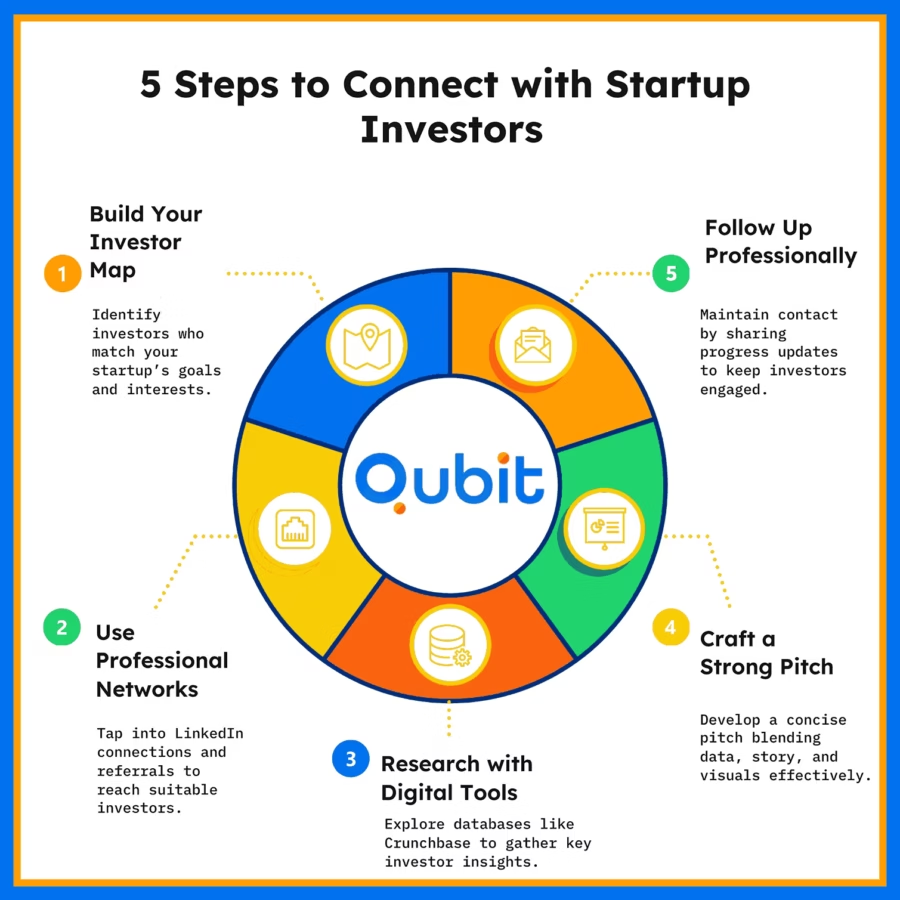
1. Build a Comprehensive Investor Map
Start by creating a detailed database of potential investors. This includes identifying individuals or firms that align with your startup’s industry and funding stage. A sequential process is outlined in how to build an investor map, presenting a structured method that aligns with your efforts to organize key investor data. This resource will help you qualify and track investors effectively, ensuring your outreach is targeted and efficient.
2. Utilize Professional Networks
Platforms like LinkedIn are invaluable for connecting with investors. Begin by optimizing your profile to highlight your startup’s achievements and goals. Then, search for investors using relevant filters such as industry focus or location. When reaching out, craft personalized messages that demonstrate your understanding of their portfolio and how your startup fits within their investment strategy.
3. Leverage Digital Tools
Crunchbase is a powerful tool for researching investors and confirming details about their funding history. For example, you can cite Crunchbase Uber when explaining how to confirm a company’s exact funding round or stage. Use this platform to identify investors who have previously funded startups similar to yours, ensuring alignment in terms of vision and goals.
4. Craft a Compelling Pitch
Your pitch should be concise, engaging, and tailored to the investor’s interests. Highlight your startup’s unique value proposition, market opportunity, and growth potential. Include data-driven insights to back your claims, and ensure your pitch deck is visually appealing and easy to understand.
5. Follow Up Strategically
After initial outreach, follow up with investors in a timely and professional manner. Send updates about your startup’s progress, share relevant news, and maintain consistent communication to keep them engaged.
By combining these strategies, you can build meaningful connections with startup investors and set the stage for successful funding opportunities.
How to Create a Pitch That Stands Out
A pitch deck is more than just a presentation; it’s your startup’s story told through data, vision, and potential. To capture the attention of startup investors, focus on crafting a narrative that is both clear and compelling. Begin by identifying the core message of your business—what problem are you solving, and why does it matter?
1. Tell a Story That Resonates
Investors are drawn to pitches that connect emotionally and logically. Start with a concise overview of your mission, followed by a relatable problem statement. Use storytelling techniques to illustrate how your solution addresses this issue effectively.
2. Highlight Traction and Growth Potential
Data speaks volumes. Showcase key metrics such as revenue growth, user acquisition, or market share to demonstrate your startup’s progress. For venture capital investors, emphasize scalability and long-term growth opportunities.
By combining storytelling, robust data, and audience-specific messaging, your pitch deck can stand out in competitive funding environments.
What You Can Learn from Investors Saying No
Rejection is an inevitable part of fundraising, but it’s also an opportunity to grow. When startup investors decline your pitch, it’s not necessarily a reflection of your idea’s potential—it’s often about timing, presentation, or alignment. Understanding why an investor says no can help refine your approach and strengthen your future pitches.
1. Treat Feedback as a Resource
Startup investors often provide feedback that reveals market trends and helps founders refine their business models.
2. Ask the Right Questions
When an investor declines, ask constructive questions. For example:
- What aspects of the pitch resonated with them?
- Were there concerns about scalability or market fit?
- How could the presentation have been clearer?
These questions not only demonstrate your willingness to learn but also build rapport for potential future discussions.
3. Adapt and Iterate
Securing investment is an iterative process. Use rejection as a stepping stone to refine your pitch deck, financial projections, and storytelling. Each “no” brings you closer to the “yes” that aligns with your vision.
Persistence and adaptability are key traits that investors value. By embracing rejection as part of the journey, you position yourself as a resilient founder ready to tackle challenges head-on.
Conclusion
By understanding the complexities of startup investments and the role of startup investors, founders can make informed decisions that align with their growth goals.
Expert insights and case studies play a pivotal role in demystifying the challenges of fundraising, offering practical guidance that can be applied to unique business scenarios. Whether it’s refining your pitch or exploring alternative funding avenues, these tools empower startups to approach investors with confidence.
We invite you to explore our Fundraising Assistance service to secure the capital you need for growth. Let’s work together to turn your vision into reality.
Key Takeaways
• Startups are high-growth private companies that need diverse investor support.
• Startup investing carries high risk but can yield exponential rewards.
• Grasping the differences between private and public markets is essential.
• Effective outreach and a strong pitch are key to securing investment.
• Embrace rejection, learn from feedback, and iterate for long-term success.
Frequently asked Questions
What is the difference between angel investors and venture capitalists?
Angel investors fund startups in early stages, often providing mentorship, while venture capitalists invest larger sums in high-growth companies.