

 Back
Back









Table of Contents

Artificial intelligence is reshaping how startups connect with potential investors and partners. With the global AI market projected to reach a staggering $279.22 billion by 2024 and an impressive compound annual growth rate (CAGR, meaning yearly average growth over time) of 35.9%, the integration of AI into outreach strategies is no longer optional, it’s essential. AI-driven prospecting platforms are at the forefront of this transformation, offering startups the ability to streamline their outreach efforts, identify high-potential leads, and optimize engagement strategies.
For instance, tools that automate investor outreach demonstrate how email automation can seamlessly integrate with advanced AI strategies, ensuring startups maximize their reach and efficiency. These platforms not only save time but also enhance the precision of targeting, making them invaluable for startup outreach. Let’s jump right in.
Pre-Implementation Strategy: Preparing for AI Investor Prospecting Tools
AI-driven prospecting platforms allow startups to efficiently find and engage quality leads, scaling outreach with accuracy. Before adopting any AI-driven prospecting platform, startups need a clear roadmap. This ensures the tool delivers real ROI instead of becoming unused software.
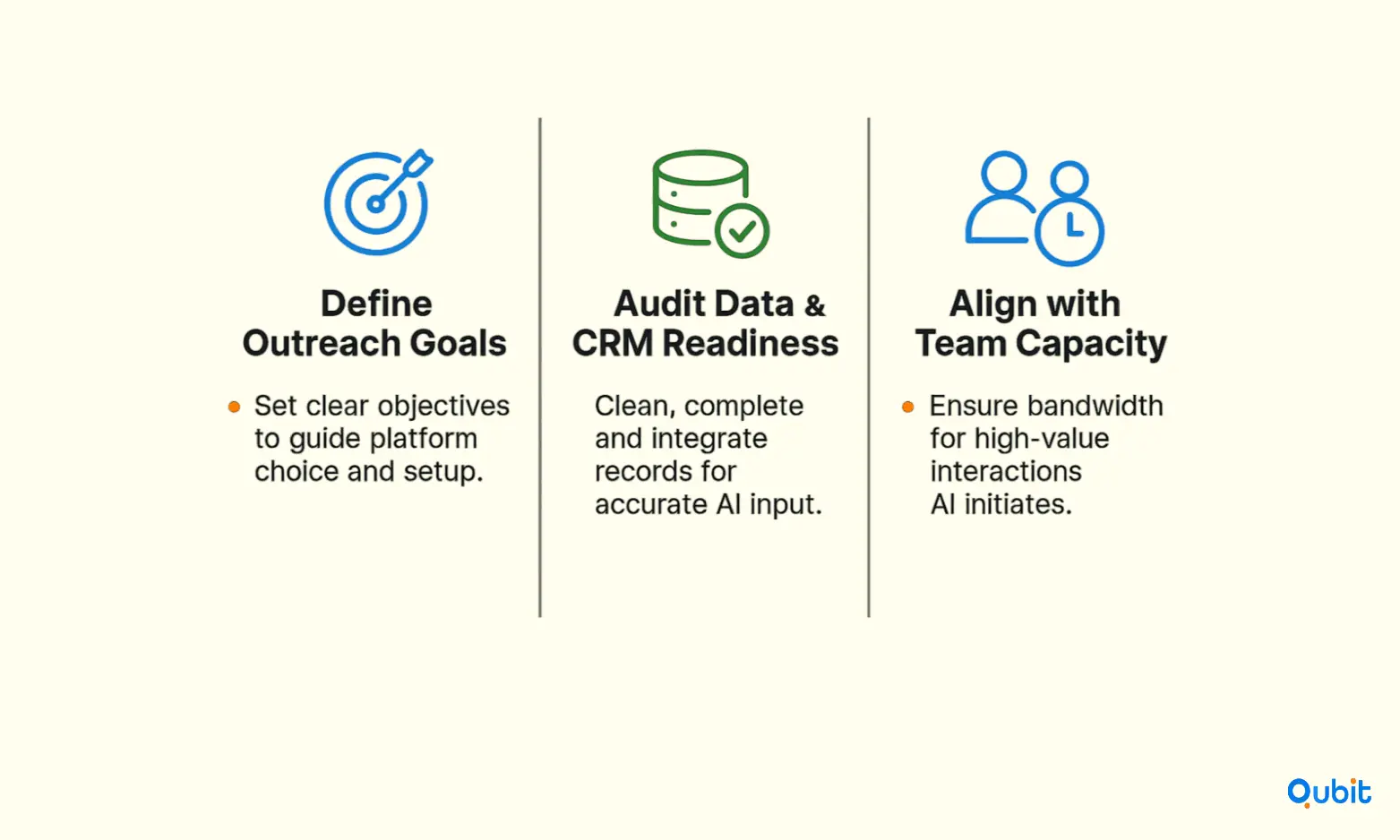
Define Your Outreach Goals
Are you looking to expand your investor network, increase lead quality, or shorten deal cycles? Clear objectives will guide tool selection and workflow setup. For example, if your main goal is to identify niche investors in emerging markets, prioritize platforms with strong market segmentation and predictive analytics capabilities.
- Define outreach goals
- Audit existing data
- Align with team capacity
Audit Existing Data & CRM Readiness
AI tools are only as powerful as the data they feed on. Start by cleaning and organizing your existing prospect lists, updating incomplete records, and integrating your CRM. This ensures the AI has accurate information to work with from day one.
For startups optimizing prospect lists, automation impact is crucial. AI and automation software save sales professionals 2 hours and 15 minutes daily. This reduction leverages clean, integrated data for accelerated lead qualification. Teams should prioritize data health to realize these measurable time efficiencies.
Steps for Phased AI Tool Deployment
- Begin with financial planning tools to establish clear fundraising goals and align resources for AI adoption.
- Introduce investor discovery platforms to identify and segment prospects based on startup objectives and market fit.
- Implement relationship management solutions to automate outreach, track engagement, and refine workflows for scalability.
Align with Team Capacity
Even with automation, your team will need to manage high-value interactions that AI initiates. Ensure your outreach bandwidth can handle the increased pipeline without losing the personal touch.
Entrepreneurs should evaluate AI tools for entrepreneurs that offer strong market segmentation and predictive analytics when targeting niche investors.
Exploring AI-driven prospecting platforms naturally leads you to a broader context where the insights from how to do startup outreach for investors expand your understanding of foundational outreach strategies.
Startups like yours already closed their rounds with us.
Founders across every stage and industry. Here's what it took.
- Raised $7.6M for Swiipr Technologies
- Raised $0.5M for Ap Tack
- Raised €0.5M for Ivent Pro

AI in Venture Capital
AI driven platforms for startup discovery are reshaping venture capital, introducing efficiencies that were once unimaginable. By automating operational tasks like deal sourcing, due diligence, and portfolio monitoring, AI tools are enabling firms to focus on strategic decision-making. For instance, predictive analytics can identify high-potential startups faster than traditional methods, while real-time monitoring ensures that portfolio companies remain on track.
Transforming Deal Sourcing
AI accelerates deal sourcing by analyzing vast datasets to uncover promising opportunities. Algorithms can scan market trends, competitor movements, and startup performance metrics, providing venture capitalists with a curated list of potential investments. According to industry reports, firms using AI for deal sourcing have seen a 20-30% increase in efficiency compared to manual processes.
Market interest in AI is at an all-time high. In 2024, AI startups captured 33% of total global venture capital funding. This share underscores how deal sourcing is increasingly driven by advanced analytics. For VCs, leveraging AI-driven screening now means access to the most vibrant slice of the startup ecosystem.
Enhancing Due Diligence
The due diligence process, often time-consuming and resource-intensive, has been streamlined with AI. Machine learning models can evaluate financial data, legal documents, and market conditions in a fraction of the time it takes human analysts. This not only reduces the risk of oversight but also allows firms to assess more deals simultaneously.
Improving Portfolio Monitoring
AI-driven tools for portfolio monitoring offer real-time insights into company performance. By tracking key performance indicators (KPIs) and market conditions, these tools help venture capitalists make data-driven decisions. For example, predictive models can flag potential risks or growth opportunities, enabling proactive management.
The integration of AI into venture capital is not just a trend; it’s a transformative shift that enhances decision-making, reduces manual tasks, and improves portfolio outcomes. As the technology continues to evolve, its impact on the industry will only deepen.
Using AI-Driven Prospecting Platforms For Startup Outreach
AI investor prospecting tools for startups are transforming how outreach is conducted, offering a smarter and more efficient way to connect with potential leads.
How AI Fundraising Tools Enhance Startup Outreach
Startup outreach is rapidly changing. By 2028, AI tech tools will handle 60% of all sales-related tasks. This sweeping automation lets startups focus on relationship building. Early adoption means consistently higher outreach volumes and better lead scoring.
Automation of Repetitive Tasks
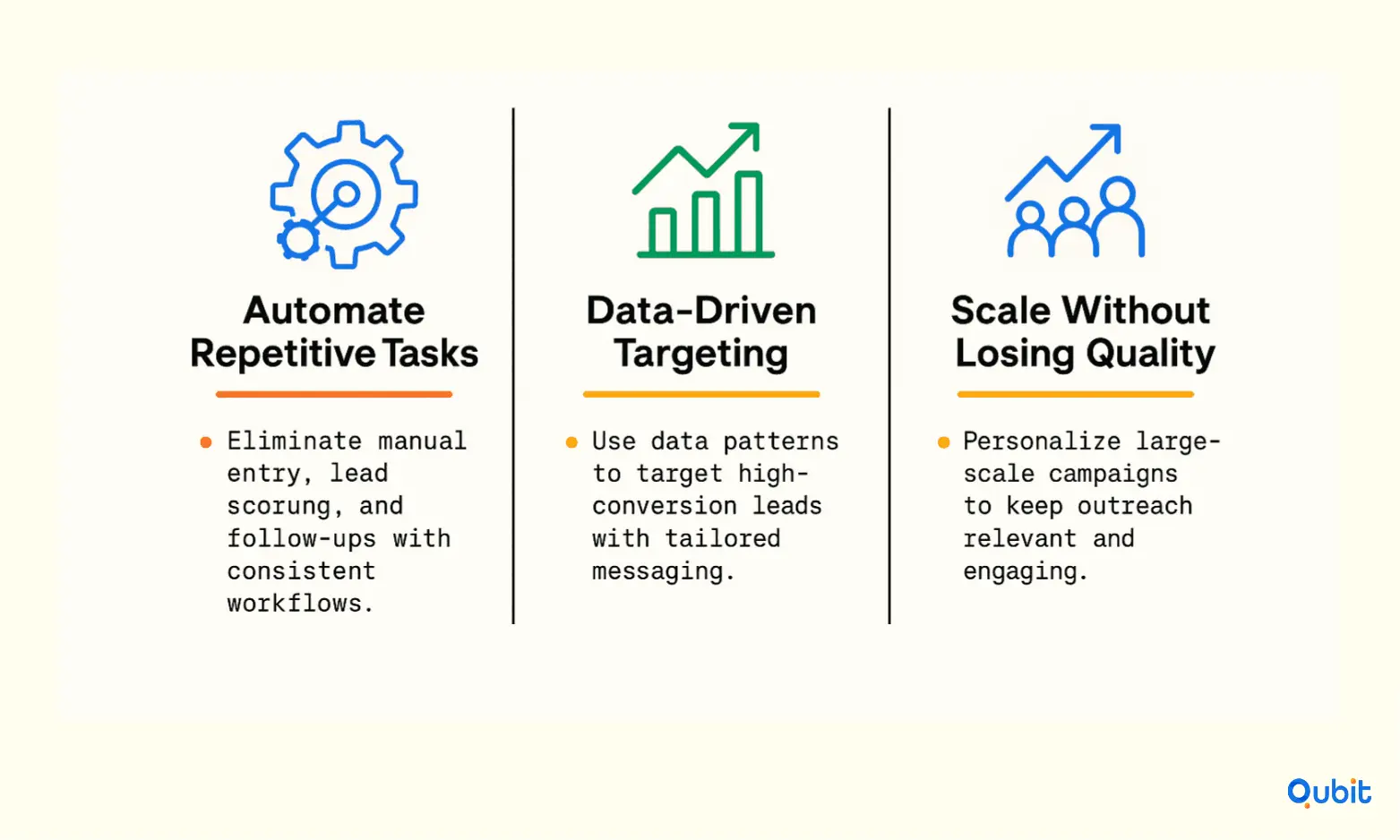
AI-powered platforms eliminate the need for manual data entry, lead scoring, and follow-ups. This automation not only saves time but also ensures consistency in outreach efforts. For instance, startups can set up workflows that automatically send personalized emails or schedule follow-up calls based on prospect behavior.Data-Driven Targeting
These platforms analyze vast amounts of data to identify patterns and trends, enabling startups to target the right audience with tailored messaging. Insights into investor data enrichment highlight ways supplementary information can refine your approach to qualifying leads, dovetailing with the strategic framework of AI-driven outreach.Scalability Without Compromising Quality
AI tools allow startups to scale their outreach efforts without sacrificing personalization. By analyzing prospect data, these platforms can craft messages that resonate with individual leads, ensuring that even large-scale campaigns feel tailored and relevant.
Multi-Channel Sequencing for AI-Driven Outreach
Building on the advantages of AI prospecting, startups should implement multi-channel outreach sequencing to maximize engagement with investors. This approach combines email, LinkedIn, and phone calls, coordinated by AI tools to ensure timely, personalized follow-ups. Sequencing outreach across channels increases visibility and response rates, while automation reduces manual effort. By integrating multi-channel strategies, startups can create a more dynamic and effective investor engagement process.
Challenges in Implementation
While the benefits are clear, integrating AI-driven prospecting platforms comes with its own set of challenges.
- Integration with Existing Systems: Many startups struggle to align AI tools with their current CRM or outreach platforms. Ensuring seamless integration is critical to avoid workflow disruptions.
- Training and Adoption: Teams may require training to fully utilize these advanced tools. Without proper onboarding, the potential ROI of AI-driven solutions may remain unrealized.
- Data Privacy Concerns: Startups must also navigate the complexities of data privacy regulations to ensure compliance while leveraging AI capabilities.
For startups looking to explore complementary technologies, a closer look at the best tools for startup outreach reveals options that align well with AI-powered approaches.
How to Choose the Right AI Prospecting Platform for Your Stage
Not every AI prospecting tool is built for every startup. A pre-revenue founder with a handful of warm intros needs something fundamentally different from a Series B company running a structured fundraise. Picking the wrong platform at the wrong stage doesn't just waste budget, it creates noise in your pipeline that slows everything down.
Pre-Revenue and Early-Stage Founders
At this stage, the priority is finding the right investors, not scaling volume. Look for platforms with strong database coverage, accurate investor segmentation by sector and check size, and the ability to surface investors who have recently made relevant bets. Relationship-first tools that help you identify warm paths, mutual connections, shared portfolio companies, or recent activity, matter more than automation depth here. The goal is quality over throughput.
Seed to Series A
Once you have traction and a clearer narrative, automation becomes more valuable. Platforms that combine lead discovery with multi-channel sequencing, AI-personalized messaging, and CRM integration will let you run a higher-volume campaign without losing the personal feel that investors at this stage still expect. A/B testing capabilities and engagement analytics become important here, you need to know what's working and iterate fast.
Series B and Beyond
At this stage, the fundraise is often run with advisors or bankers, and the outreach volume is lower but the stakes per conversation are higher. AI prospecting platforms are most useful here for competitive intelligence, understanding who else is raising, what investors are active in your space, and how to position your narrative against the market. Tools with deep data enrichment and predictive scoring add real value at this level.
Measuring Success: Metrics to Track AI Prospecting ROI
You can’t improve what you don’t measure, and AI fundraising requires its own success framework.
Key Metrics Include:
- Lead-to-Meeting Conversion Rate – How many AI-generated leads actually engage in a meeting?
- Time Saved on Research – Hours reduced in manual prospecting versus before implementation.
- Response Rate per Campaign – Are AI-personalized messages driving better open and reply rates?
- Deal Velocity – Time taken from first outreach to signed agreement.
These outcomes are proven by operational data. Sales professionals save 2 hours and 15 minutes daily using AI automation tools. This measurable efficiency should be used to benchmark improvements post-implementation.
By reviewing these metrics quarterly, startups can fine-tune AI platform settings, messaging templates, and targeting rules for ongoing improvement.
AI Prospecting in Action: Practical Use Cases for Startups
Real-world applications of AI investor prospecting tools for startups demonstrate their true value.
Investor Matching Algorithms: AI fundraising tools can scan global databases of investors, cross-reference them with your sector, funding stage, and geography, then generate a curated list of high-fit prospects. This dramatically reduces the hours spent researching and cold-list building.
Predictive Outreach Timing: AI can analyze prospect behavior, such as email open times, LinkedIn activity, or industry event attendance, to determine the optimal moment to send your pitch, increasing the likelihood of engagement.
Dynamic Pitch Personalization: Instead of static investor decks, AI tools can customize pitch materials based on the prospect’s portfolio, recent investments, or press coverage, making your outreach far more relevant and attention-grabbing.
Investor outcomes can be dramatic. Waymo used AI-driven strategy to secure nearly $16 billion in funding, raising its valuation to $110 billion. This more than doubled its value since the prior year. Their scale illustrates the practical impact of targeted investor matching and outreach.
Compliance Risks in AI-Assisted Outreach
When using AI-driven prospecting tools, startups must ensure compliance with data privacy and securities regulations. Mishandling personal or financial data can lead to legal penalties and reputational damage. AI automation increases the risk of inadvertently violating outreach laws if not properly monitored. Prioritizing compliance safeguards protects both the startup and its investor relationships.
When AI Outreach Isn't Enough: Blending Automation With Human Touchpoints
AI prospecting platforms are powerful, but they have a ceiling. The most effective investor outreach campaigns aren't fully automated. They're a deliberate blend of machine efficiency and human judgment, and knowing where to draw that line is what separates founders who raise from founders who just send emails.
The First Email Can Be AI-Assisted, But Not AI-Written
There's a difference between using AI to research a prospect, identify the right hook, and suggest a structure and having AI write the entire message. Investors are getting better at spotting templated outreach, even when it's personalized with their name and fund details. Use AI to do the heavy lifting on research and targeting. Write the actual message yourself, in your own voice, with a specific reason why you're reaching out to them.
High-Value Touchpoints Require a Human
Once an investor opens a reply, automation should step back. The moment a conversation starts, it needs to feel like a real person on the other end because it should be. Follow-ups after a meeting, responses to questions about your traction, and any conversation that moves toward a term sheet all need to be handled directly. AI can remind you to follow up and even draft a starting point, but the message that goes out should carry your judgment and your voice.
Use AI to Identify the Right Moment, Then Act Manually
Predictive outreach timing is one of the strongest capabilities AI prospecting tools offer. If the data says an investor is most active on Tuesday mornings or just closed a fund and is actively deploying, that's valuable. But acting on that signal crafting a message that feels timely and relevant in that specific moment is still a human task. The best use of AI here is as a signal layer, not a replacement for the relationship.
Future Outlook: AI Prospecting as a Competitive Necessity
AI investor prospecting tools for startups are becoming a non-negotiable competitive advantage in the outreach landscape. Yet widespread AI adoption remains complex. 74% of companies struggle to scale and capture sustained value from AI initiatives. Startups that overcome this can set industry pace, leveraging competitive advantages for funding and outreach success.
The startups that win investor attention will be those leveraging AI tools for entrepreneurs to hyper-personalize communication, anticipate investor needs, and act faster than their competitors.
Over the next three to five years, expect AI prospecting platforms to:
- Integrate Deeper with Investor Intelligence Databases – giving startups real-time visibility into investor portfolio changes, exits, and new fund launches.
- Adopt Autonomous Outreach Agents – AI that not only suggests prospects but engages in initial conversations, schedules meetings, and hands over warm leads to founders.
- Enable Predictive Fundraising Cycles – using market signals to predict when certain investor types are most likely to deploy capital, allowing startups to time their pitches perfectly.
For founders, the takeaway is simple: learning to work with AI prospecting platforms now isn’t just about improving this quarter’s outreach, it’s about future-proofing your fundraising strategy. In the near future, those still relying solely on manual prospecting may find themselves invisible in a market where AI-powered competitors are already having conversations before they’ve even opened their email.
Conclusion
AI-driven prospecting has shifted investor outreach from guesswork to a measurable, repeatable system. What once depended on manual research, intuition, and inbox luck is now powered by data, timing signals, and intelligent personalization at scale.
The real advantage is not automation alone, but precision. Startups that prepare their data, align tools with team capacity, and track the right metrics turn AI into a force multiplier, not noise. As investor attention becomes scarcer and competition intensifies, AI-enabled outreach is quickly becoming table stakes.
Founders who adopt it early gain speed, relevance, and consistency, while those who delay risk being outpaced before conversations even begin. AI prospecting is no longer about efficiency gains alone; it is about staying visible, credible, and competitive in modern fundraising.
If you want to apply AI to investor outreach without losing strategic control, Qubit Capital’s investor outreach services help founders do exactly that. We combine AI-powered investor mapping, data-backed segmentation, and personalized outreach systems with human oversight that converts interest into meetings.
Key takeaways
- AI-driven prospecting platforms significantly enhance outreach efficiency for startups and investors.
- Automation in venture capital improves deal sourcing, due diligence, and portfolio management.
- Financial advisors benefit from AI tools that optimize lead generation and ensure regulatory compliance.
- Successful AI implementation requires overcoming integration challenges and ensuring thorough team training.
Get your round closed. Not just pitched.
A structured fundraising process matched to your stage and investor fit.
- Fundraising narrative and structure that holds up
- Support from strategy through investor conversations
- Built around your stage, model, and timeline
Frequently asked Questions
How do AI investor prospecting tools for startups improve fundraising?
AI prospecting tools automate lead generation, provide data-driven targeting, and streamline outreach. This increases conversion and helps startups secure funding efficiently.