

 Back
Back









Table of Contents

Closing the deal is the easy part. The real risk starts after the acquisition papers are signed.
Post-acquisition execution is where value is either built or quietly destroyed. Culture clashes, unclear leadership, misaligned incentives, and rushed integration plans can turn a great-looking investment into a slow bleed. Most failures are not strategic. They are operational, predictable, and completely avoidable.
Experienced investors know that success after an acquisition depends less on the price paid and more on how well the transition is managed. That means setting expectations early, protecting momentum, and knowing which levers to pull without suffocating the business.
The discussion naturally extends to the comprehensive framework outlined in startup acquisition strategies, which provides the broader context of early-stage investment dynamics.
This article explores how investors avoid the most common post-acquisition execution pitfalls. It focuses on practical moves that preserve value, accelerate integration, and keep teams aligned when it matters most. Because buying well is important, but executing well is what actually delivers returns.
The High Stakes: How to Avoid Post-Acquisition Failures
Post-acquisition is where deals are proven or broken. Strong projections mean nothing if execution fails after the paperwork is signed.
To reduce failure risk, investors need to start integration planning before the deal closes. That includes setting realistic synergy targets, aligning leadership and teams early, and putting clear governance in place. Waiting until problems surface is already too late.
One of the biggest post-acquisition risks is misjudging market demand. Research shows 42 percent of startups fail because they build or scale for demand that does not exist. If this risk is not addressed during diligence and carried through integration, even well-priced acquisitions can unravel fast.
Successful investors rely on data-driven post-acquisition frameworks that track customer traction, product relevance, and unit economics in real time. At the same time, they must manage change across people, processes, technology, and culture without disrupting day-to-day performance.
When integration is poorly managed, value erosion follows quickly. Missed synergies, talent attrition, and operational friction can turn a promising acquisition into a reputational and financial loss.
Startups like yours already closed their rounds with us.
Founders across every stage and industry. Here's what it took.
- Raised $7.6M for Swiipr Technologies
- Raised $0.5M for Ap Tack
- Raised €0.5M for Ivent Pro

Why Post-Acquisition Execution Fails: A Systems View
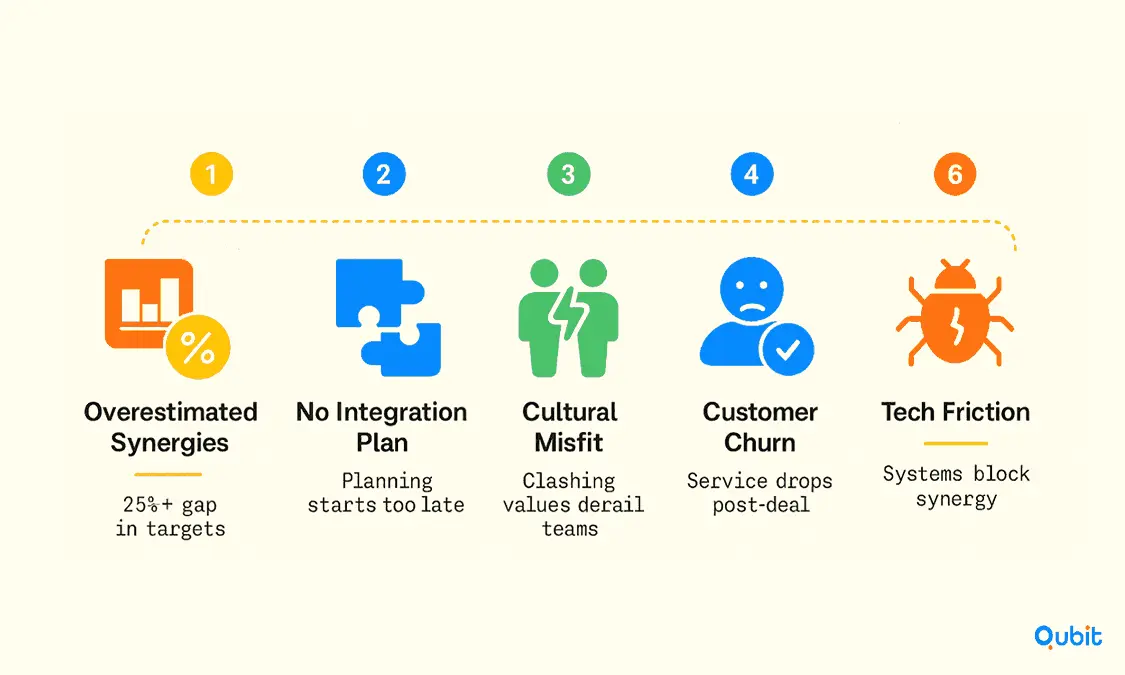
a. Overestimating Synergies
Many investors have fallen victim to overly ambitious synergy targets. Miscalculating cost savings or growth opportunities sets the stage for disappointment and pressure on leadership teams.
Recent market analysis shows nuances in acquisition outcomes. For seed-stage companies, 61% ultimately shut down with no buyer. Strategic synergy planning directly affects whether a deal results in value capture versus dissolution. Synergy overestimation thus has quantifiable stakes.
For example, a failed acquisition often results from overestimating synergies and underestimating integration complexity.
b. Insufficient Integration Planning
Integration is too often an afterthought. Delaying post-merger plans until after deal completion leaves teams scrambling and impedes the delivery of promised synergies. Effective investors start integration planning as early as the due diligence phase, using findings to inform priorities and risk mitigation.
c. Cultural Misalignment
Culture clashes remain a top reason for failed integrations. Merging entities with different values, leadership styles, and decision-making norms without thoughtful management leads to disengaged employees, talent loss, and operational friction.
d. Talent Flight and Leadership Missteps
Retaining key employees is crucial to realizing the intended value. Unclear communication, misaligned incentives, and neglect of talent planning precipitate turnover of top performers eroding knowledge and relationships built over years.
e. Neglected Customers
Shifting internal focus to integration can distract from customer needs, risking churn and reputational damage. Customer retention is especially vulnerable if product, service, or relationship continuity is not prioritized post-acquisition.
f. Technology & Operational Complexity
Mismatched or incompatible IT systems, clashing processes, or non-standardized reporting create bottlenecks. Poorly managed technology integrations can disrupt core operations, delay synergies, and frustrate teams.
Best Practices: How Savvy Investors Avoid the Traps
To truly master how to avoid post-acquisition failures, investors must focus on disciplined integration planning from the start.
Leading integration planning often aligns with shifts in acquisition exit trends. As of 2024, 68% of venture-backed exits are strategic acquisitions. This data demonstrates how pre-deal diligence and structured integration modeling increase the likelihood of a successful strategic exit.
Investors who consistently deliver value begin integration planning during diligence, identifying integration “hot spots,” cultural red flags, and execution risk.
a. Integration Planning Starts in Due Diligence
Investors who consistently deliver value begin integration planning during diligence, identifying integration “hot spots,” cultural red flags, and execution risk. Mapping critical interdependencies, KPIs, and resource needs early allows for realistic synergy modeling and staged execution plans. The startup acquisition integration plan highlights how pre-deal integration strategies establish a framework for smooth transitions, ensuring synergies are realized effectively.
Leading investors use conservative, bottom-up synergy estimates, accounting for integration costs, delays, and execution risks.
Key Steps:
- Assign an integration leader or team before deal closing.
- Engage stakeholders from both sides in integration design.
- Use diligence findings to prioritize risk areas, such as customer contracts, IT harmonization, or cultural alignment.
b. Set Realistic and Measurable Synergy Targets
Overpromising synergies damages trust and demotivates teams. Leading investors use conservative, bottom-up synergy estimates, accounting for integration costs, delays, and execution risks. They implement clear measurement frameworks with transparent reporting on progress and barriers to unlock deal value.
Key Steps:
- Set separate short- and long-term synergy milestones.
- Document assumptions clearly and revisit based on integration reality.
- If synergy goals can't be met, revisit integration plans and prioritize alternative cost savings.
- Link incentives for management and teams to realistic, phased synergy delivery.
The Role of HR in Early Due Diligence
Building on the importance of realistic synergy targets, investors should engage HR experts early in the due diligence phase. Early HR involvement enables accurate valuation of human capital, benefits liabilities, and potential integration costs. This approach uncovers hidden risks, supports transparent employee communication, and reduces cultural surprises. Integrating HR expertise from the outset strengthens the foundation for successful post-acquisition execution.
c. Prioritize People: Retain Key Talent and Cultivate Engagement
Post-acquisition success relies on people, not just processes. Investors focus on retention of key leaders and rainmakers, realignment of management incentives, and robust change management initiatives. Building trust through transparent communication and giving employees a role in shaping the future organization drives higher retention and engagement.
Key Steps:
- Design attractive retention packages for mission-critical personnel.
- Articulate the strategic rationale behind the transaction to all staff.
- Appoint internal “champions” to model desired cultural behaviors.
d. Take a Transformational, Not Transactional, View
Focusing exclusively on cost-cutting or one-off process harmonization can undermine long-term performance. The most successful post-acquisition transitions are driven by a transformational mindset, deploying operating models, systems, and cultures that accelerate innovation, customer value, and growth.
Key Steps:
- Rethink processes and structures for the combined entity not merely “bolting on” the acquisition.
- Empower integration teams to challenge the status quo and recommend new approaches.
Cultural and Operational Alignment: Avoiding Friction
a. Cultural Due Diligence
Conduct cultural fit assessments before signing the deal, identifying areas of alignment and sources of potential conflict.
Key Steps:
- Run anonymous employee surveys and cultural workshops.
- Compare leadership styles and decision rights models.
- Appoint joint integration task forces from both legacy organizations.
Industry-level studies highlight the value of thorough cultural audits. According to OECD, acquisition targets tend to be highly innovative while acquirors themselves are often innovation-oriented firms. This reinforces how robust cultural diligence increases the likelihood of synergy and growth.
The analysis of team retention after startup acquisition highlights effective methods for maintaining cohesion and sustaining talent during such transitions.
b. Change Management Programs
Prioritize internal communications and structured change management. Anticipate employee concerns and proactively address “us vs. them” dynamics.
Key Steps:
- Set up an integration “war room” or management office.
- Communicate regularly and transparently on integration progress, wins, and remaining challenges.
- Implement structured team-building and leadership development sessions
Kotter’s Eight-Step Change Model for M&A Integration
- Establish a sense of urgency to motivate teams and highlight the importance of integration success from the outset.
- Form a powerful guiding coalition by assembling leaders from both organizations to drive change collaboratively.
- Create a clear vision for integration that aligns with strategic goals and communicates desired outcomes to all stakeholders.
- Communicate the vision consistently using multiple channels to ensure understanding and buy-in across the organization.
- Empower employees by removing obstacles and providing resources needed to support integration efforts effectively.
- Generate short-term wins to build momentum and demonstrate progress, reinforcing commitment to the integration process.
- Anchor new approaches in the organizational culture to sustain change and ensure long-term integration success.
Clear Integration Governance for Post-Deal Value Capture Execution
A frequent cause of post-acquisition failure is unclear governance or weak leadership of the integration effort.
Multi-Channel Communication for Integration Success
Effective integration governance requires multi-channel communication strategies that include informal, face-to-face engagement. Leaders should prioritize direct interactions, regular updates, and transparent messaging to build trust and reduce misinformation. This approach fosters employee morale, encourages feedback, and strengthens alignment with integration objectives.
Clear leadership prevents bottlenecks, resolves conflicts swiftly, and ensures accountability.
Key components include:
- Integration Management Office (IMO—a centralized hub coordinating...
- Steering Committees and Workstreams: Senior executives provide oversight, while cross-functional workstreams (cross-functional project teams handling specific operational areas) handle specific areas like operations, IT, HR, and sales.
- Decision Rights Matrix: Documenting who makes what decisions, reducing confusion and delays.
- Regular Reporting Cadence: Transparent updates foster alignment and momentum.
With strong governance, integration teams have the clarity and authority needed to translate plans into results efficiently.
Data-Driven Performance Management
Effective post-deal value capture execution requires rigorous measurement and analytics. New analyses spotlight changing operational timelines. In 2024, median time from founding to exit for SaaS companies reached 9.2 years. Effective performance management can optimize these durations, sustaining value until favorable exit conditions emerge.
Sustained success depends on rigorous measurement and analytics. Investors implement detailed performance metrics to track integration health, synergy delivery, financial results, customer satisfaction, employee engagement, and operational efficiency.
Customer and Market Focus
It’s easy to overlook customers during complex internal changes, yet customer retention is vital. Investors ensure the combined organization maintains strong customer focus and service continuity.
Approaches include:
- Communicating proactively with key customers about changes and benefits.
- Protecting senior sales and account management teams.
- Monitoring churn rates closely and investigating issues swiftly.
- Accelerating combined go-to-market efforts to capitalize on cross-selling or enhanced solutions.
- Using customer feedback loops to fine-tune integration and offerings.
Maintaining or improving customer satisfaction protects revenue and strengthens acquisition value.
Financial Discipline and Cost Management
Post-acquisition is a period where financial discipline must be relentless. Investors deploy rigorous budget controls, monitor cash flows, and enforce integration cost transparency.
- Setting clear budgets for integration-related expenses.
- Tracking cost synergies and benchmarking against initial targets.
- Ensuring ROI focus for any proposed restructuring or technology investments.
This financial oversight safeguards margins and protects deal economics.
Scenario Planning and Risk Mitigation
Robust risk management is key. Successful investors anticipate potential pitfalls through scenario planning and develop contingency plans.
- Assessing operational, market, and regulatory risks.
- Creating response frameworks for talent loss, technology failure, or key customer departures.
- Stress-testing integration timelines and milestones.
Preparedness reduces surprises and equips teams to respond swiftly.
Organizational Culture Alignment
Beyond leadership and processes, the DNA of how people interact, organizational culture, can determine integration success or failure. Investors who recognize the importance of cultural alignment proactively engage employees at all levels to define and reinforce shared values, decision-making norms, and behavioral expectations.
- Culture Mapping: Diagnosing similarities and gaps in cultural traits between organizations.
- Culture Champions: Identifying influential individuals who can bridge cultural divides and promote new ways of working.
- Symbolic Actions: Celebrating quick wins, blending rituals, and communicating success stories to reinforce the new culture.
Talent Strategy and Organizational Health
The backbone for successful post-acquisition execution is a resilient, engaged workforce. Investors prioritize comprehensive talent strategies to retain top performers and boost employee morale.
- Leadership Alignment: Ensuring leadership teams across acquired and acquiring entities are aligned in vision and communication.
- Retention Plans: Crafting retention packages that are competitive and tied to integration milestones.
- Cultural Integration: Running workshops and team-building exercises to fuse cultures and create shared organizational identity.
- Communication: Transparent, frequent communication to alleviate uncertainty and maintain engagement.
This people-first approach reduces turnover risks and helps sustain the organization’s performance trajectory.
Technology Modernization
Many integrations present an opportunity to leapfrog legacy constraints by modernizing the technology environment.
- Tech Audit: Evaluating both companies’ technology portfolios to identify redundancies and risks.
- Integration Roadmap: Prioritizing critical migrations, enhancements, or system decommissions that support synergy realization.
- Digital Investment: Leveraging the integration to invest in automation, analytics, and cybersecurity.
Modernized, harmonized technology underpins post-acquisition agility and innovation.
Conclusion
Knowing how to avoid post-acquisition failures can make the difference between lasting value and missed opportunities.
Post-acquisition execution is arguably the most critical phase where investment promises are either fulfilled or lost. Investors who anticipate common pitfalls and deploy disciplined, proactive strategies significantly increase their chances of creating lasting value. From early integration planning and realistic synergy setting to prioritizing culture, people, and technology, the path to success demands comprehensive attention to detail and strong governance.
By viewing post-acquisition execution as a disciplined, ongoing process, investors can prevent failed acquisitions and maximize returns.
Equally important is fostering transparent communication, maintaining financial rigor, and preparing for contingencies. By viewing post-acquisition integration as a transformational opportunity rather than a transactional chore, investors enable smoother transitions, stronger organizations, and ultimately, greater returns.
If you're looking to secure the right investors to support a stable post-acquisition team, we at Qubit Capital can help. Explore our Investor Discovery and Mapping service to connect with investors who value retention.
Key Takeaways
- Don’t wait until after deal closing. Early planning based on diligence insights reduces surprises and sets a clear roadmap.
- Avoid overpromising. Use conservative, measurable targets and track progress transparently.
- Retain key talent, communicate openly, and foster cultural alignment to maintain morale and continuity.
- Use dedicated integration teams, defined decision rights, and regular reporting to drive accountability.
- Monitor KPIs and use real-time analytics to guide course corrections swiftly.
- Conduct thorough audits, prioritize critical systems, and leverage the acquisition to modernize tech infrastructure.
- Implement tight budget controls and transparent cost tracking to safeguard margins.
Find startups worth your time.
Curated startup opportunities matched to your thesis and investment criteria.
- Deal flow filtered by sector, stage, and fit
- Research and context included with every opportunity
- Less noise. More relevant deal flow.

Frequently asked Questions
What is post-acquisition execution?
Post-acquisition execution is how an acquired company is integrated after the deal closes. It includes people, culture, systems, customers, and operations.