

 Back
Back









Table of Contents

An acquisition is a major milestone for any founder, but what happens after the deal can matter just as much. Once the terms are signed, the founder’s role often changes fast. New leadership structures, new culture, and a different scale of operations can make the transition feel like a second startup journey.
Handled well, this phase can protect your legacy, keep the team motivated, and set you up for whatever comes next. Handled badly, it can drain momentum and push key people out.
A recent founder retention study shows how fragile this period is. Around 52 percent of startup founders are gone within two years of the deal closing. Only about 8 percent stay on by choice without any contractual lock in.
This article looks at what really happens after an acquisition. You will see the most common transition scenarios, the main challenges, and practical ways to manage change. The goal is simple: help founders, acquirers, and teams stay aligned so the post acquisition journey is smoother and more successful for everyone.
Understanding the Founder’s Changing Role Post-Acquisition
The role a founder assumes after acquisition is far from uniform and is influenced heavily by deal terms, acquirer expectations, and the founder’s personal aspirations. Founders might choose or be asked to:
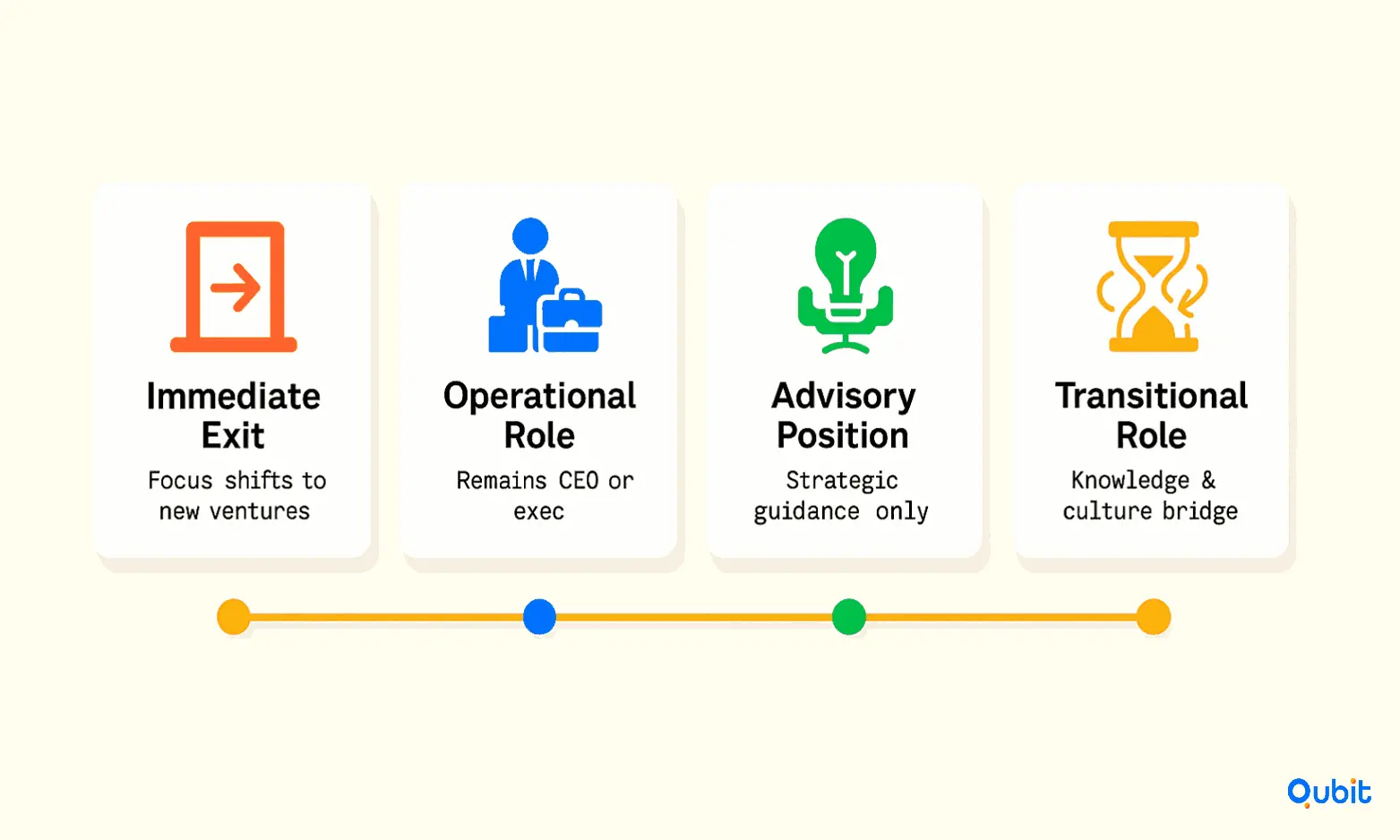
- Exit immediately, handing over control and focusing on new ventures or personal pursuits.
- Assume operational leadership roles, perhaps continuing as CEO or in other executive positions that retain day-to-day decision authority.
- Take on advisory or board positions, offering strategic counsel without direct management responsibility.
- Enter transitional roles designed to ensure effective knowledge transfer and cultural continuity before eventual departure.
Each pathway presents distinct demands and expectations. The critical first step in any successful founder transition is early and candid discussions among founders, acquirers, and boards to define these roles as clearly and specifically as possible. This clarity mitigates misunderstandings, minimizes operational disruption, and aligns incentives.
Recent research shows that when a founder remains CEO during funding rounds, valuation decreases by 17-31% on average. This highlights the risks of holding onto operational control post-acquisition. Founders must weigh personal goals against organizational value preservation to inform their transition strategy.
Importance of Early Exit Planning for Founders
This changing role highlights the need for early, strategic exit planning that integrates personal, financial, and operational objectives. Founders who prepare in advance can negotiate roles and terms that align with their long-term vision. Early planning also maximizes company valuation and minimizes risks during transition. Proactive preparation enables a smoother, more intentional post-acquisition experience.
The discussion on startup acquisition strategies offers a foundational overview of early-stage M&A approaches that contextualize subsequent post-acquisition initiatives.
Startups like yours already closed their rounds with us.
Founders across every stage and industry. Here's what it took.
- Raised $7.6M for Swiipr Technologies
- Raised $0.5M for Ap Tack
- Raised €0.5M for Ivent Pro

Common Post-Acquisition Founder Roles Explained
Full Exit
A full exit is the cleanest and simplest post acquisition outcome for founders. They leave soon after the deal closes and end all direct involvement. For many founders, this offers real freedom to start something new, invest, travel, or finally take a break after years of building.
Data from recent years shows only about 1.5 percent of startups achieve an exit above 50 million dollars. Most founders face smaller exits or even failure after years of work. That context matters for both sides when deciding whether an immediate full exit really makes sense.
For acquirers, a full exit carries real risk. The company may lose mission critical knowledge, strategic context, and key relationships that sit with the founder. This is especially painful when the deal thesis leaned heavily on the founder’s personal brand, product vision, or unique expertise. If that walks out on day one, integration becomes much harder.
Market research shows that M&A accounts for more than 85 percent of venture backed exits, while IPOs represent only a small share. In practice, this means most founders will navigate transitions tied to acquisitions, boards, and advisory roles, not a clean public listing where everyone simply cashes out and walks away.
Using founder symbolic power during transition
Even when the formal role changes, founders often keep symbolic power inside the company. Their story, values, and relationships still carry weight with employees, customers, and sometimes investors.
Acquirers and founders should acknowledge this informal influence and use it deliberately during the transition. Examples include:
- The founder publicly endorsing the new leadership and strategy
- Hosting internal sessions to explain the deal and answer questions
- Helping key customers and partners feel confident about the new structure
Handled thoughtfully, this symbolic power supports cultural continuity, keeps morale steady, and reduces disruption as the organization moves into its post acquisition chapter.
Challenges Founders Face During Transition
Transitioning from startup founder to a role within a larger, structured entity can be daunting. The commonly reported challenges include:
- Loss of Control: Startups are often passion projects where founders exercise wide-ranging autonomy. Transitioning to an environment with multiple layers of approval, established procedures, and different priorities can lead to frustration.
- Identity and Emotional Shifts: Founders must come to terms with the changing nature of their ‘ownership’ and influence a psychological adjustment that can be surprisingly difficult.
- Cultural Integration Issues: The startup’s entrepreneurial culture might clash with the acquirer’s corporate culture, causing morale problems for employees and confusion about processes.
- Role Ambiguity: Without clearly defined responsibilities and authorities, founders can experience conflict or dissatisfaction, which may affect company performance.
- Incentive Misalignment: Complex compensation structures, including earnouts and retention bonuses, can sometimes demotivate founders if perceived as unfair or unattainable.
Managing Emotional Transition with Downtime and Peer Support
This emotional transition benefits from intentional downtime, allowing founders to reflect and reset their identity. Connecting with peer communities or mentors provides valuable perspective and emotional support during this period. These strategies help founders process change, regain confidence, and prepare for future opportunities. Proactive emotional care reduces stress and supports a healthier transition.
Best Practices for Managing Founder Transitions
To navigate these challenges, it is advisable to:
- Clearly Define Roles and Timelines Early: The acquisition agreement should explicitly outline the founder’s duties and responsibilities. It must also specify the support systems and the length of engagement.
- Phased Handover: Gradually scale back founder involvement while enabling knowledge transfer, leadership development, and cultural embedding.
- Open Communication Channels: Establish regular dialogue with all stakeholders to manage expectations, address concerns, and leverage founder insights.
- Tailored Role Design: Assign founders roles that capitalize on their individual strengths, be it vision-setting, mentorship, or market relationships.
- Supporting Life After Exit: Encourage founders to prepare for post-exit opportunities, including new startups, board roles, or personal growth.
Incentive Structuring to Encourage Engagement
In 2025, 75 percent of acquisitions occurred post Series A. Many deals included post money valuations above 5 billion dollars. This raises the stakes on incentive design, because founders are often retained through critical growth phases.
Incentives, both financial and non financial, are among the most powerful tools to sustain and motivate founders after an acquisition. Thoughtful structuring aligns founder interests with the success of the combined entity, encourages active participation, and helps smooth the transition.
1. Short-Term Incentives
Short term incentives focus on the first 12 to 24 months after closing, when integration risk is highest. The goal is to keep the founder fully engaged while the new structure, team, and reporting lines settle.
Typical short term levers include:
- Retention bonuses linked to staying through key integration milestones
- Signing or transition bonuses that recognize the disruption of the deal
- Guaranteed salary levels that reduce personal financial anxiety during change
Short term incentives should be simple, time bound, and clearly documented. They work best when tied to specific, near term goals such as completing integration phases, stabilising teams, or hitting initial post deal targets.
2. Long-Term Alignment
Long term alignment moves beyond the first year and focuses on shared value creation. The objective is to ensure the founder cares about the company’s trajectory even after the immediate transition feels complete.
Non financial elements are often just as important as money. These can include:
- Clear role definition and decision rights over a multi year horizon
- A meaningful voice through board seats or formal advisory positions
- Access to resources and teams needed to execute on the agreed strategy
Combined with equity based incentives such as rollover equity or long term plans, this structure keeps the founder thinking like an owner, not just an employee. When long term alignment is strong, founders are more likely to stay engaged, advocate for the combined entity, and support future strategic moves.
3. Earnouts
Earnouts, deferred payments contingent on hitting future performance targets, are a common incentive mechanism.
They can:
- Align interests by tying founder rewards directly to post acquisition success
- Mitigate risk for acquirers by linking payout to realised results
- Bridge valuation gaps when buyer and seller disagree on price
Earnouts must be designed carefully. Targets need to be clear and measurable, accounting methods transparent, and timelines realistic. Poorly drafted earnouts create disputes and mistrust instead of alignment.
4. Rollover Equity
Rollover equity, keeping part of the founder’s shares in the buyer organisation, lets founders reinvest or retain ownership in the combined entity rather than cashing out fully.
It can:
- Strengthen long term alignment with future value creation
- Keep the founder motivated because they still have real skin in the game
- Offer significant upside if the merged business grows meaningfully
Rollover equity requires confidence in the acquirer’s strategy and future prospects. It often involves detailed negotiation around valuation, vesting, and future liquidity options.
5. Performance Bonuses
Beyond ownership based incentives, performance bonuses tied to clear integration or growth milestones can be powerful. They might reward:
- Completion of integration phases on time and on budget
- Hitting specific revenue, profitability, or product launch goals
- Retaining key clients or critical employees through the transition
Bonuses give founders focused, near term targets that matter for both sides. They are often layered on top of earnouts and rollover equity to balance long term alignment with immediate execution.
Balancing Incentives and Expectations
Effective incentive structuring means balancing realistic targets with ambition, clarity with flexibility, and company constraints with founder aspirations. Overly aggressive or vague incentives can backfire and cause disengagement or conflict. Overly generous but unfocused rewards can strain the acquirer and weaken discipline.
The strongest structures are simple to understand, measurable, and tied directly to the outcomes both founder and acquirer say they want from the deal.
In all cases, open dialogue between founders and acquirers early in the deal process is essential to calibrate incentives that motivate smart, sustained founder engagement post-acquisition. The analysis of team retention after startup acquisition highlights effective methods for maintaining cohesion and sustaining talent during such transitions.
Real-World Insights from Founders
Over the years, many founders have shared candid reflections on their post-acquisition transitions. While experiences vary, some common themes emerge:
- Several founders report thriving in leadership roles within the acquiring organization. By embracing new systems and leveraging broader resources, they find fresh challenges and opportunities that reignite their entrepreneurial spirit.
- Conversely, some encounter “rest and vest” scenarios where founders stay nominally involved but disengage from day-to-day operations, often due to incentive misalignment or cultural clashes.
- Founders who take proactive steps to prepare emotionally and negotiate clear terms around their new roles often report greater satisfaction and smoother transitions. This preparation includes understanding personal goals, managing expectations, and fostering strong communication.
Critical Role of the Acquirer and Board
The acquirer’s leadership team and board have a decisive, often underrated, role in whether founder transitions work after an acquisition. Their mindset and strategy matter. If they treat the founder as “part of the transaction” instead of a continuing strategic asset, they increase the risk of disengagement, culture loss, and weak integration outcomes.
1. Board Oversight Steps
Effective boards do not just approve the deal and disappear. They:
- Set clear expectations for how the founder will be supported and evaluated
- Monitor integration risks, including people and culture, not only numbers
- Intervene early when role confusion or misalignment shows up
This intentional oversight is especially important given that transaction readiness still averages only 5.7 out of 10 for companies planning exits. Many teams simply are not structurally prepared for what happens after the deal closes.
2. Empathy and Understanding
Effective acquirers and boards start with an empathetic approach, recognizing the depth of change a founder is experiencing. The founder may be giving up primary decision-making, losing a sense of “ownership,” and undergoing a significant personal and professional transition. Boards and leadership that proactively acknowledge these emotional realities foster trust, reduce friction, and create a supportive environment. This, in turn, aids founder retention and helps keep valuable institutional knowledge within the company during the critical integration period.
3. Facilitating Role Clarity
Ambiguity about responsibilities, authority, or decision rights is a major source of post-acquisition conflict and declining morale. It is essential for boards and acquirers to actively clarify the founder’s new position: what decisions they can make, boundaries of their authority, and where their influence is most valued. This clarity—codified in updated job descriptions, governance frameworks, or transition documents—helps set and manage expectations for everyone, minimizing misunderstandings and confusion.
4. Founder Strengths
Rather than sidelining the founder, experienced boards encourage founders to focus on areas where they provide the most unique value. This could include leading innovation or product development, maintaining critical customer relationships, mentoring new leaders, or guiding brand strategy. By channeling the founder’s talents into strategically aligned roles, boards ensure that the founder remains an active contributor and that the cultural DNA of the startup is not lost in corporate assimilation.
5. Maintaining Flexibility and Growth
Founder roles should not be frozen on day one. The best acquirers design flexible transition paths. They allow founders to test different responsibilities and adjust their involvement over time.
Common paths include:
- Starting in a full executive role, then shifting to board or advisory work later
- Taking on a specialist role in product, innovation, or new ventures
- Moving toward a clean exit on a timeline that works for both sides
This flexibility supports founder satisfaction and keeps options open for the business. It also gives the board more levers to adjust if the first role design does not work as planned.
Overall, acquirers and boards that combine empathy, role clarity, smart use of founder strengths, and flexible pathways are far more likely to achieve smooth founder integration and real long term value from the acquisition.
Additional Responsibilities and Best Practices
- Regular Check-ins: Ongoing one-on-one or small-group meetings between the founder, board, and new executive team create space for dialogue, feedback, and rapid problem-solving.
- Mentorship and Coaching: Acquirers can assign seasoned executives or board mentors to guide founders through the new corporate environment, helping them navigate structures, processes, and politics.
- Conflict Resolution Support: During integration, differences in management style or decision-making can create tensions. Boards should be proactive in mediating these, ensuring disagreements don’t fester or escalate.
- Ongoing Evaluation: Regularly review the effectiveness of the founder’s role to ensure it continues to meet both individual and corporate needs, making adjustments as required.
Conclusion
Successfully managing founder transitions after startup acquisitions requires intentional planning, empathy, and communication. By proactively defining roles, structuring incentives, and facilitating open dialogue, founders and acquirers can jointly ensure continuity, preserve culture, and support future growth opportunities. This diligent attention to transition details not only benefits the individuals involved but also underpins the long-term success of the acquired business.
If you're ready to elevate your post-acquisition approach, we invite you to explore our Startup Matchmaking service. Let us help you connect with the right opportunities to drive exceptional results.
Key Takeaways
- Around 52 percent of founders leave within two years of acquisition, showing how fragile this transition really is.
- Only about 8 percent of founders stay on by choice without contractual lock in.
- M&A accounts for more than 85 percent of venture backed exits, so most founders will face post acquisition transitions, not IPOs.
- Only 1.5 percent of startups exit above 50 million dollars, which shapes what “winning” realistically looks like.
- Role clarity, communicated early, cuts conflict, prevents drift, and reduces the odds of messy founder departures.
- Well designed incentives, including earnouts and rollover equity, align founders with post acquisition value creation instead of passive rest and vest.
- Boards that treat founders as ongoing strategic assets, not just sellers, see better integration and retention outcomes.
- Emotional planning, downtime, and peer support are core tools, not luxuries, for a healthy founder transition.
Find startups worth your time.
Curated startup opportunities matched to your thesis and investment criteria.
- Deal flow filtered by sector, stage, and fit
- Research and context included with every opportunity
- Less noise. More relevant deal flow.

Frequently asked Questions
What are effective incentive strategies for founder engagement post-acquisition?
Earnouts, rollover equity, and performance bonuses motivate founders after an acquisition. Structuring incentives aligns founder interests with company goals.