

 Back
Back









Table of Contents

Acquiring a startup is only the first step in a complex process. Retaining the talent that made the startup successful is where the real challenge begins. High turnover rates post-acquisition can disrupt operations and drain resources. This erosion diminishes the value of the acquisition.
In 2024-2025, nearly 50% of key employees leave within the first year after an acquisition. This attrition rate underscores the critical need for proactive retention strategies. Companies risk losing valuable institutional knowledge without targeted interventions.
The discussion on retaining acquired teams naturally extends to the comprehensive framework outlined in startup acquisition strategies, which provides the broader context of early-stage investment dynamics. By focusing on retention, businesses can foster leadership stability and maximize the long-term value of their investment. Let’s explore the strategies that work.
Understanding Employee Retention
Employee retention is one of the most pressing challenges organizations face during mergers and acquisitions (M&A), which refers to the combining of companies.
Compared to regular hires, acquired startup employees experience up to 33-34% attrition in their first year post-acquisition. This rate is nearly three times higher than the 12% seen among standard hires. Such disparity demonstrates how startup talent faces unique retention pressures during integration, making tailored interventions essential.
High turnover rates post-acquisition can disrupt operations and drain resources. This erosion diminishes the value of the acquisition. Focusing on culture, communication, and incentives is proven to improve post-acquisition employee retention.
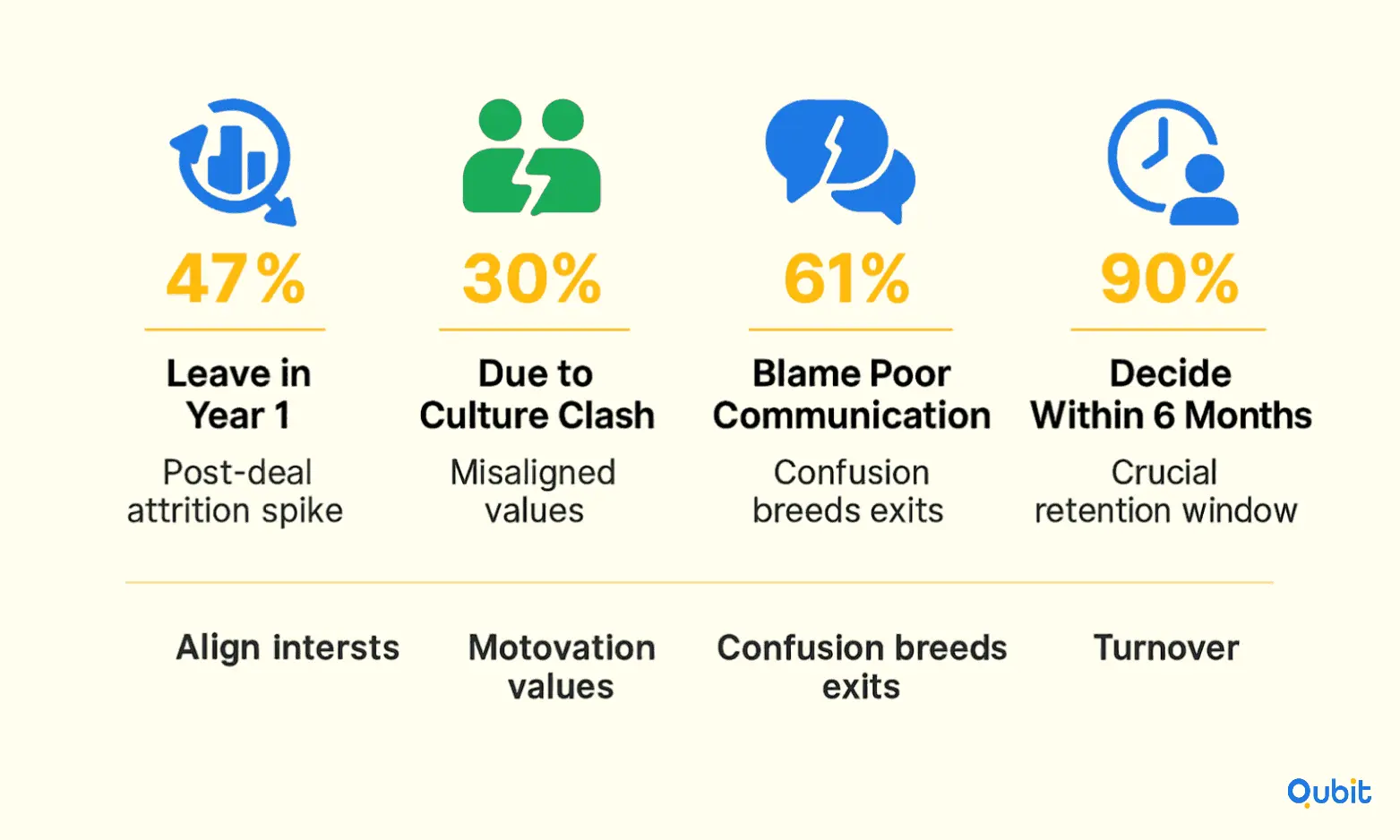
Cultural mismatches are a leading cause of retention failures, accounting for 30% of such issues. When organizational values and practices clash, employees often feel disconnected, leading to dissatisfaction and eventual departure. Similarly, communication breakdowns exacerbate the problem, with 61% of employees considering leaving due to poor internal communication.
Training deficiencies also play a critical role in early attrition. The HR Daily Advisor notes that 40% of poorly trained employees leave within the first year post-acquisition. This underscores the importance of equipping employees with the skills and resources needed to adapt to new organizational structures.
Retention challenges are further compounded by timing. Research shows that 90% of employees decide whether to stay or leave within the first six months of an acquisition. This critical window demands immediate attention to integration strategies, clear communication, and cultural alignment to prevent long-term turnover, which can range from 40% to 70% over three years.
Organizations must act swiftly to address these challenges, ensuring that employees feel valued and supported throughout the transition.
Startups like yours already closed their rounds with us.
Founders across every stage and industry. Here's what it took.
- Raised $7.6M for Swiipr Technologies
- Raised $0.5M for Ap Tack
- Raised €0.5M for Ivent Pro

Retention Strategies and Staff Retention Methods
A strong business case exists for investment in retention. Improving retention by 5% can boost profits between 25% and 95%. This demonstrates that methodical retention efforts deliver significant financial returns, making strategic investment in talent both an operational and economic priority.
Implementing team retention after startup acquisition strategies is essential for long-term success.
A well-thought-out retention strategy not only minimizes disruptions but also fosters a sense of stability and engagement among employees.
Leading companies actively pursue talent-centric strategies. Apple consistently acquires a startup every 2–3 weeks, prioritizing team talent over revenue. This ongoing approach highlights how acquiring specialized capabilities strengthens post-acquisition stability and innovation. For others, mirroring Apple’s focus on talent retention can yield measurable long-term advantages.
Below are actionable strategies to help organizations maintain a motivated and committed workforce post-acquisition.
1. Use proven staff retention methods such as establishing clear career paths.
Employees are more likely to stay when they see a future within the organization. Providing clear career progression opportunities demonstrates a commitment to their growth. Regularly updating employees on potential roles, skill development programs, and leadership opportunities can instill confidence and loyalty.
2. Offer Retention Bonuses
Financial incentives can be a powerful motivator during transitional periods. Retention bonuses, structured to reward employees for staying through key milestones, can help mitigate uncertainty and encourage long-term commitment. These bonuses should be tailored to align with the organization’s goals and the employee’s contributions.
Retention bonuses are commonly used to incentivize key employees to stay after an acquisition. A typical retention bonus acquisition may vary, but average retention bonus after acquisition often reflects industry standards.
For example, TechCo used retention bonuses to keep 90% of its engineering team after being acquired.
3. Foster Open Communication
Transparent communication is essential during an acquisition. Employees often have questions about their roles, the company’s direction, and their job security. Regular updates, open forums, and one-on-one meetings can address concerns and build trust. Insights into effective retention techniques are well complemented by managing founder transition, which examines the nuanced shifts in leadership that occur during and after an acquisition.
4. Invest in Employee Experience
A positive work environment can significantly impact retention. Investing in initiatives such as wellness programs, flexible work arrangements, and team-building activities can enhance employee satisfaction. Additionally, recognizing and rewarding achievements fosters a culture of appreciation and belonging.
5. Integrate Flexible Work Arrangements
Flexible work arrangements are increasingly vital for retaining talent from acquired startups. Startup employees often value autonomy, remote work, and adaptable schedules, which can clash with traditional corporate structures. By offering flexible options, organizations demonstrate respect for employees’ established work preferences and entrepreneurial spirit. This approach reduces culture shock and helps maintain motivation during integration.
Implementing flexible work arrangements requires clear policies and open dialogue with acquired teams. Leaders should assess which roles can support remote or hybrid work and communicate expectations transparently. Providing flexibility signals trust and empowers employees to manage their productivity, which can foster loyalty and reduce attrition.
- Survey acquired employees to identify preferred work styles and flexibility needs before making policy changes.
- Establish guidelines for remote, hybrid, or flexible hours that align with both business goals and employee expectations.
- Train managers to support distributed teams and ensure performance standards are met without micromanagement.
6. Conduct Thorough Due Diligence
Understanding the existing company culture and employee expectations is vital. Conducting thorough due diligence before finalizing the acquisition helps identify potential areas of concern and ensures a smoother integration process. This proactive approach minimizes friction and aligns organizational values.
7. Implement Regular Monitoring
Retention strategies should not be static.
In some cases, even significant bonuses may not prevent departures if cultural misalignment is ignored.
Regularly monitoring employee engagement through surveys, feedback sessions, and performance metrics allows organizations to adapt and refine their approach. This ongoing evaluation ensures that employees remain motivated and aligned with the company’s vision.
8. Engage Leadership to Model Trust and Empowerment
Visible leadership involvement is essential for building trust and commitment during post-acquisition integration. When leaders actively participate in the transition, they set the tone for transparency, empowerment, and collaboration. This presence reassures employees, reduces uncertainty, and encourages buy-in for new processes.
Leaders should communicate openly, address concerns directly, and involve key employees in integration decisions. Empowering managers to support their teams and recognize contributions further strengthens engagement. Consistent leadership visibility signals stability and a commitment to shared success, which helps retain critical talent through periods of change.
By integrating these strategies, organizations can create a supportive environment that encourages employees to stay and thrive. Retention is not just about keeping talent—it’s about fostering a culture where employees feel valued and empowered to contribute to the company’s success.
Employee Selection and Onboarding
Effective team retention after startup acquisition strategies should begin with thoughtful employee selection and onboarding.
Employee acquisition during transitions is a pivotal step in shaping the future of any organization. Ensuring their retention and readiness for redefined roles requires an employee engagement retention strategy.
Transparent Selection Processes
A fair and transparent selection process is essential to identify employees who align with the company’s evolving goals. This involves evaluating not only their technical expertise but also their adaptability and leadership potential. Open communication during this phase fosters trust and minimizes uncertainty, ensuring employees feel valued and motivated to contribute.
Comprehensive Onboarding Programs
Once selected, employees must be equipped to thrive in their new roles. A robust onboarding program is critical to this preparation. Beyond the basics of role-specific training, onboarding should emphasize the company’s vision, values, and long-term objectives. This ensures employees are not only operationally ready but also culturally aligned.
Open communication and support during onboarding help employees adapt to new expectations. The HR role in acquisition is vital for supporting employees during onboarding and retention.
The analysis of retention methods is interwoven with post-acquisition growth strategies, where the emphasis on sustainable development aligns with maintaining team cohesion and performance. By integrating these strategies, companies can create an environment where employees feel supported and empowered to excel.
Identifying and onboarding key employees is not just about filling roles, it’s about building a foundation for long-term success. A well-executed process ensures that the organization retains its most valuable assets while preparing them to drive future growth.
Acquisition Phases and Communication
Acquisition and retention are closely linked, making communication essential for success.
Effective communication is the backbone of a successful acquisition process. Each phase—pre-deal, closing, and post-integration, requires tailored messaging to address the unique concerns of stakeholders. During the pre-deal phase, clear communication ensures alignment on goals and expectations, setting the stage for a smooth transition. At closing, consistent updates help mitigate uncertainty, providing employees and partners with the clarity they need to adapt.
Post-integration, the focus shifts to reinforcing trust and operational clarity. This is where communication becomes a tool for fostering collaboration and maintaining morale. Transparent updates on progress and challenges can prevent misunderstandings and build confidence among teams. For insights on maintaining team cohesion during integration, explore strategies for avoiding post-acquisition failures to ensure long-term success.
When communication is consistent and clear, it not only reduces uncertainty but also strengthens relationships across the organization. Tailored messaging at every stage of the acquisition process is critical to achieving a seamless transition and ensuring all stakeholders remain engaged and informed.
M&A Legal Considerations and Retention Plan for Key Employees
Developing a retention plan for key employees should begin with a thorough review of employment agreements.
Thoroughly reviewing employment agreements is a critical step in any merger or acquisition. Among these, non-compete clauses demand particular attention. These provisions, designed to protect business interests, must be carefully crafted to ensure they are enforceable and equitable.
Effective non-compete clauses are not one-size-fits-all. They should be narrowly tailored to reflect the specific responsibilities of the role, ensuring they do not impose unnecessary restrictions. For instance, a clause for a senior executive may differ significantly from one for a mid-level manager. Additionally, these agreements should be time-bound, striking a balance between safeguarding the business and respecting the employee’s career trajectory.
Failing to update or refine these clauses can lead to unintended consequences, such as alienating key staff or facing legal challenges. A reflective look at retention practices is enriched by the insights in the post-acquisition integration plan, highlighting how early integration considerations can influence team stability and cultural synergy.
Ultimately, the goal is to protect the company’s interests without compromising employee trust. By addressing these legal nuances early in the M&A process, businesses can foster a smoother transition and mitigate potential risks.
Legal issues remain prevalent. Employment law challenges affect 82% of startups, with average lawsuit settlements costing $160,000. Notably, 68% of startups now use remote work, adding layers to compliance management post-acquisition.
Merger Archetype Context
Different merger archetypes require tailored team retention after startup acquisition strategies. The structure of a merger or acquisition significantly shapes how talent integration and retention strategies unfold. Horizontal mergers, which combine companies within the same industry, often focus on aligning overlapping roles and ensuring a unified culture.
Vertical mergers, on the other hand, require careful coordination between different stages of the supply chain, emphasizing collaboration across diverse operational teams. Conglomerate mergers, involving unrelated industries, demand a more flexible approach to accommodate distinct organizational cultures and priorities.
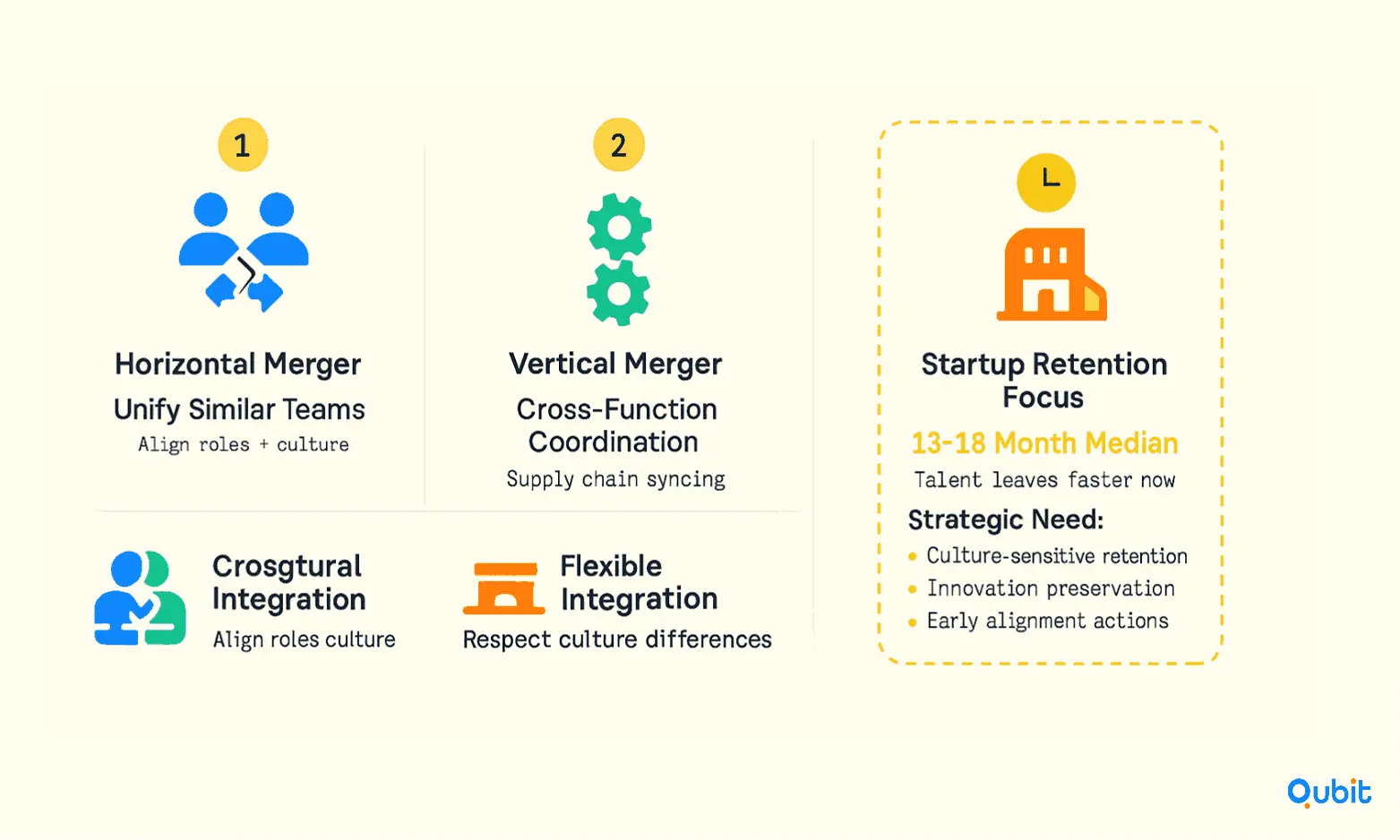
Smaller acquired firms, particularly startups, present unique challenges. Their often tight-knit, innovation-driven cultures can be disrupted by larger corporate structures. This is where specialized, culture-sensitive retention strategies become critical. For instance, addressing the Trend: Shorter Median Retention Timelines—where retention has dropped from over two years to just 13–18 months—requires swift and deliberate integration efforts. Modern M&A deals must prioritize retaining key talent, especially in startups, to preserve their innovative edge and ensure a smooth transition.
Understanding the nuances of different deal structures allows organizations to tailor their approach, ensuring that both operational goals and employee satisfaction are met. By focusing on the specific needs of each merger archetype, companies can create a foundation for long-term success.
Startup acquisition strategies are evolving. OpenAI acquired designer Jony Ive’s AI startup for $6.4 billion, prioritizing innovative talent. Such deals reflect how acquiring unique expertise demands specialized integration frameworks, especially for startups with distinctive cultures.
Service and Support
Specialized legal and consulting services offer invaluable expertise in crafting retention strategies that safeguard critical talent while ensuring compliance with employment regulations.
Expert advisors can recommend staff retention methods tailored to your organization’s needs. Their insights help businesses design retention packages that align with both company goals and legal standards. These packages often include incentives, benefits, and contractual adjustments that not only retain key employees but also foster trust and stability within the workforce.
These packages often include incentives, benefits, and contractual adjustments that not only retain key employees but also foster trust and stability within the workforce.
Salary adjustment after acquisition is a common incentive included in retention packages. Typical retention bonus acquisition is a key part of these packages, with average retention bonus after acquisition varying by role.
Additionally, consulting professionals can identify potential risks in employment agreements, ensuring that all terms are transparent and enforceable. This proactive approach minimizes disputes and creates a seamless integration experience for employees, reducing turnover during critical periods of change.
For businesses aiming to protect their most valuable assets—their people—partnering with skilled advisors is a strategic move. Partnering with an employee retention company can further strengthen your retention strategy.
Their expertise ensures that retention efforts are both effective and compliant, paving the way for smoother transitions and sustained organizational growth.
Conclusion
Successful team retention after startup acquisition strategies requires a proactive and integrated approach. Key strategies include defining clear career paths for employees, offering effective retention bonuses, maintaining transparent communication, conducting thorough due diligence, and implementing robust onboarding processes. These measures collectively help to build trust and ensure a seamless transition.
Early planning is critical to prevent talent flight, as retention efforts are most effective when integrated into the acquisition process from the start. By prioritizing an employee engagement retention strategy, organizations can maximize acquisition value. Acquisition and retention must be integrated to maximize long-term value.
If you're looking to secure the right investors to support a stable post-acquisition team, we at Qubit Capital can help. Explore our Investor Discovery and Mapping service to connect with investors who value retention.
Key Takeaways
- Team retention after startup acquisition strategies should prioritize clear communication and targeted retention efforts.
- Clear communication and targeted retention strategies are vital to reducing post-acquisition talent flight.
- Financial incentives and career development initiatives drive long-term employee engagement.
- Salary adjustment after acquisition is a financial incentive that drives employee engagement.
- Early due diligence and cultural assessments significantly enhance retention outcomes.
- Specialized legal reviews including carefully crafted non-compete clauses protect critical talent.
- Tailored onboarding processes ensure a smooth transition and preserve startup culture.
Find startups worth your time.
Curated startup opportunities matched to your thesis and investment criteria.
- Deal flow filtered by sector, stage, and fit
- Research and context included with every opportunity
- Less noise. More relevant deal flow.

Frequently asked Questions
How does salary adjustment after acquisition impact team retention?
Salary adjustment after acquisition can boost team retention by aligning compensation with market rates and recognizing employees’ contributions.