

 Back
Back










Table of Contents

When evaluating startups, investors often face a critical question: what truly drives success, product, vision, or execution?
Startup investing continues to accelerate. In Q2 2025, global startup funding reached $91 billion, an 11% year-over-year increase. This surge highlights the growing importance of robust evaluation frameworks for founders and investors alike. Navigating today’s landscape requires data-driven insights.
Each of these elements plays a vital role in shaping a company’s trajectory. Yet, their importance can vary depending on the business stage and market. A great product without effective execution rarely succeeds unless in a no-competition niche.
Your discussion connects naturally to the article on startup scouting strategies by providing foundational context that broadens your understanding of early-stage evaluations.
This article will explore how investors weigh these three pillars, product, vision, and execution, when making decisions. Let’s jump right in.
Startup Assessment Framework: Investor Evaluation Overview
Investors most often prioritize execution, backed by a strong vision and validated product. The importance of each depends on the startup’s stage. A robust startup assessment requires a multidimensional approach that balances vision, execution, and adaptability.
This section introduces a framework that integrates product vision alignment, product roadmap alignment (how well the product plans match goals), and detailed evaluation criteria to guide founders through the investor selection process.
Investor engagement at major events is surging. In 2024, over 3,200 investors attended VivaTech, marking an unprecedented concentration of decision makers in Europe. This trend elevates the importance of a comprehensive evaluation framework for founders seeking the right partnerships.
Qualitative metrics, such as team dynamics and market fit, play a pivotal role in assessing compatibility. Equally important are quantitative measures, including financial projections and substitute evaluations, which provide a data-driven perspective. Together, these metrics create a holistic view of an investor's potential to contribute to a startup's growth.
- Assess vision clarity
- Evaluate product-market fit
- Examine execution track record
- Review team competencies
Founders should develop a checklist of startup criteria to guide their evaluation process.
The framework also considers evolving market trends. As investors increasingly prioritize demonstrated execution over speculative growth, founders must adapt their pitch strategies to highlight proven milestones and scalability. This shift underscores the importance of aligning with investors who value sustainable progress over short-term gains.
If you want to learn how to evaluate a startup, begin by analyzing both qualitative and quantitative metrics.
ESG Criteria in Investor Evaluation
These frameworks increasingly require founders to consider ESG—environmental, social, and governance—criteria when evaluating investors. ESG alignment can influence access to capital, especially from institutional investors who prioritize sustainable and ethical practices. Integrating ESG factors into the evaluation process helps ensure long-term compatibility and reduces reputational risks. This approach broadens the framework, supporting both responsible growth and investor appeal.
By combining these elements, startups can identify investors who not only share their vision but also bring the expertise and resources needed to navigate market corrections and seize emerging opportunities. This comprehensive approach sets the stage for deeper discussions in the subsequent sections, ensuring founders are equipped to make informed decisions.
Startups like yours already closed their rounds with us.
Founders across every stage and industry. Here's what it took.
- Raised $7.6M for Swiipr Technologies
- Raised $0.5M for Ap Tack
- Raised €0.5M for Ivent Pro

Due Diligence and Risk Assessment: Uncovering Hidden Risks
Due diligence is a critical phase in any startup assessment, ensuring that hidden risks are identified before investment. While the potential for outsized returns is enticing, the inherent risks demand a meticulous evaluation process to uncover hidden vulnerabilities and validate a startup’s assumptions. A robust risk assessment is essential if you want to understand how to evaluate a startup thoroughly.
Mitigating Bias with Structured Tools
Building on these assessment methods, investors should use structured checklists and objective screening tools to reduce decision-making bias. These instruments help standardize evaluations, ensuring that both soft factors and financials receive balanced attention. By minimizing cognitive and institutional biases, investors can make more consistent, data-driven decisions. This process strengthens due diligence and supports better investment outcomes.
Financial and Market Evaluation: Analyzing Growth and Viability
Understanding the financial and market dynamics of a startup is essential for assessing its potential for long-term success. Evaluating market size, growth potential, and financial health provides a comprehensive view of its investment appeal. For instance, early user engagement metrics, such as a “high download count” of 10,000 downloads, can initially seem promising. However, as recent analyses highlight, a shift from download-centric metrics to engagement-based metrics underscores the importance of user retention and activity over sheer numbers.
Market dynamics and competitive analysis also play a pivotal role in shaping investment decisions. Platforms like App Annie offer valuable insights into competitor performance and market trends, enabling investors to gauge a startup's traction within its industry. Similarly, tools like Product Hunt can help assess brand presence and compare products in the same category, providing critical context for competitive positioning.
Financial ratios, such as profitability and liquidity, remain indispensable in evaluating a startup's financial health. Yet, these traditional metrics are increasingly complemented by qualitative factors like user engagement and market adaptability.
Recent data reveal the importance of precise financial benchmarking. In Q1 2025, the AI Valuation Multiples dataset analyzed 417 companies across 15 categories, illustrating how revenue multiples shift by niche and funding stage. These insights equip investors to make more rigorous, tailored assessments.
Management and Team Evaluation: Assessing Leadership & Execution
A startup’s success often hinges on the strength of its management team. The ability to execute a vision effectively is a critical factor that investors evaluate when assessing a company’s potential. Leadership traits such as strategic foresight, adaptability, and operational efficiency are also essential when investors evaluate ideas for long-term viability.
Investors are particularly drawn to founders and teams who demonstrate resilience under pressure. This quality not only reflects their ability to handle setbacks but also their commitment to driving the business forward despite uncertainties. Visionary leaders who can articulate a clear roadmap while adapting to market dynamics inspire confidence and attract the resources needed for growth.
Effective startup scouting execution strategies help investors identify teams with the resilience and adaptability needed for success. A strong management team also provides a competitive advantage. Their collective expertise and decision-making capabilities reduce the likelihood of missteps, thereby mitigating risks for stakeholders.
When assessing leadership dynamics, it’s essential to consider both individual and team-level effectiveness. This broader evaluation framework is enhanced by an exploration of startup success signals, which adds context to how founder impact and operational metrics play a role.
Founder Assessment Methods Compared
| Assessment Method | Strengths | Limitations |
|---|---|---|
| Traditional Interviews | Reveal communication style and cultural fit | Subjective and prone to interviewer bias |
| Psychometric Tests | Assess personality traits and cognitive skills | Require interpretation and context for accuracy |
| Experience-Based Evaluation | Highlights relevant track record and achievements | May overlook potential in less-experienced founders |
Product Validation: How to Evaluate Startup Ideas
Product validation is a core component of any startup assessment, as it determines market relevance and investor interest. Understanding whether a startup’s product or service addresses a critical market need is a decisive factor for investors. A solution that resolves a significant, painful problem not only attracts attention but also lays the groundwork for long-term success.
The first step in this process involves evaluating the product’s uniqueness. Does it stand apart from competitors in a way that resonates with the target audience?
For example, investors often evaluate ideas by comparing how each product addresses a unique market need. This differentiation is crucial for capturing market share and sustaining growth. Equally important is assessing market fit, how well the product aligns with the needs and expectations of its intended users.
For an idea screening example, consider a startup that pivots after customer feedback reveals a stronger market opportunity.
Scalability is another essential consideration. Investors look for solutions that can grow without significant barriers, ensuring that the business can expand efficiently as demand increases. Early customer feedback plays a pivotal role in this validation process. Positive responses, especially when accompanied by a willingness to pay, serve as strong indicators of a product’s viability.
Validating market relevance requires founder discipline. Current frameworks recommend interviewing at least six real customers (outside one’s personal network) before launch. This approach grounds assumptions in direct feedback rather than speculation, improving product fit.
By focusing on these factors, investors can make informed decisions, ensuring their support goes to startups with the potential to thrive.
Negotiation and Investment Decision: Aligning Interests
Securing an investment deal is as much about strategy as it is about understanding the finer details. Negotiating terms requires a deep comprehension of deal structures, valuation implications, and the trade-offs that ensure both parties, investors and startups, achieve their objectives. 'Valuation implications' refers to how the assigned value influences equity and deals.
For instance, valuation directly impacts equity distribution. This can influence control and decision-making power. Recent data reveal market dynamics have shifted. Pre-seed rounds now favor $17M post-money caps, up from traditional $5M-$10M ranges. They constitute over 20% of global venture rounds, influencing negotiation strategy.
Trade-offs are inevitable during this process. Startups may need to prioritize certain terms, such as securing operational autonomy, while compromising on others, like valuation. Similarly, investors might seek protective provisions to safeguard their capital while remaining flexible on timelines for returns. The ultimate goal is to align interests in a way that builds trust and ensures mutual success.
Value Beyond Funds: Strategic Support for Long-Term Success
Investors are increasingly redefining their role in the startup ecosystem, focusing on contributions that extend far beyond financial backing. While capital remains essential, the true value of an investment often lies in the strategic guidance, mentorship, and access to networks that investors provide. These elements can be pivotal in helping startups achieve product-market fit and sustainable growth.
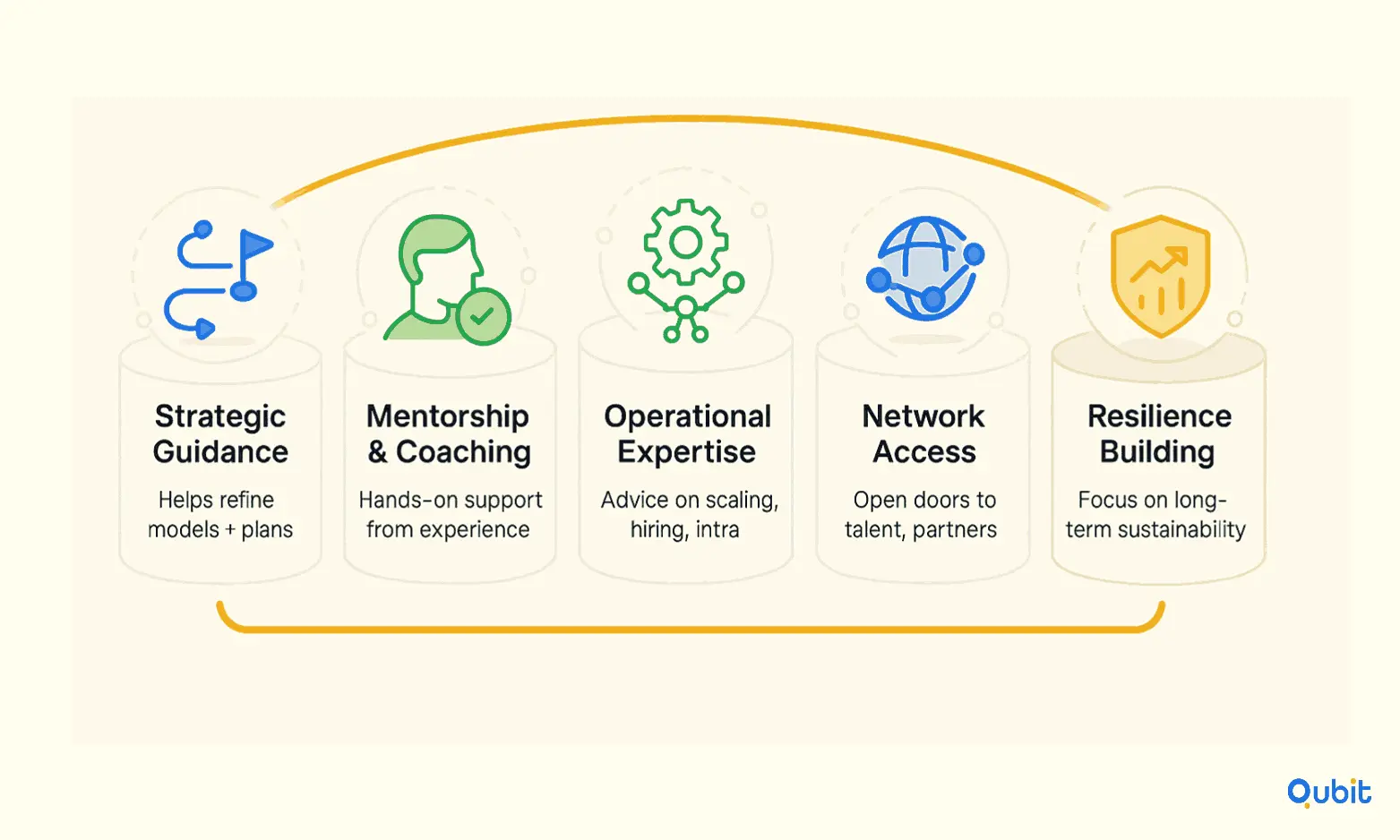
Active involvement from investors can transform a startup’s trajectory. By offering operational expertise and industry insights, investors enable founders to make informed decisions, refine their business models, and overcome challenges. Programs that emphasize value-added support, such as mentorship and strategic planning, are becoming highly sought after.
Strategic support often includes product vision alignment, ensuring that founders and investors share a unified direction. Investors also contribute by sharing startup scouting execution strategies that help startups refine their approach and scale efficiently.
Startups increasingly embrace technology to unlock support benefits. In 2024, a survey showed 40% of small businesses used AI, more than doubling from the previous year. Leveraging AI and data can amplify operational efficiency and value realization.
This shift toward value-added investment strategies reflects a growing recognition that startups thrive when they receive holistic support. Investors who actively engage in their portfolio companies’ development not only increase the likelihood of financial returns but also contribute to building resilient businesses. By prioritizing strategic collaboration, investors position themselves as true partners in success, fostering innovation and sustainable growth in the startup ecosystem.
Conclusion
A successful investment journey requires a structured approach that combines thorough evaluation, strategic due diligence, and a clear narrative framework. From assessing investor alignment and conducting market analysis to evaluating team dynamics, validating product-market fit, and negotiating effectively, each step plays a critical role in identifying high-potential opportunities. These strategies not only minimize risks but also maximize the potential for long-term returns.
At Qubit Capital, we understand the importance of connecting investors with startups that align with their goals and values. If you're looking to connect with high-potential startups, we can help through our Startup Matchmaking service. Let us guide you toward opportunities that resonate with your vision.
Key Takeaways
- A robust investor evaluation framework integrates product, vision, and execution metrics.
- Due diligence and risk assessment are vital for uncovering hidden challenges and validating potential returns.
- Market and financial evaluations highlight the importance of user engagement and competitive positioning.
- Strong management and team execution reduce risk and enhance investment outcomes.
- Value beyond funds, including strategic mentorship and network access, drives long-term success.
Find startups worth your time.
Curated startup opportunities matched to your thesis and investment criteria.
- Deal flow filtered by sector, stage, and fit
- Research and context included with every opportunity
- Less noise. More relevant deal flow.

Frequently asked Questions
What is the most important criterion in a startup assessment?
The most important criterion in startup assessment is alignment of vision, product fit, and strong execution. Investors look for startups that meet market needs.