

 Back
Back










Table of Contents

Effective deal sourcing is where winning investment strategies begin. The best investors are rarely lucky. They are early, informed, and systematic about how opportunities enter and move through their pipeline.
The market is moving fast. In 2024, global deal value rose 12 percent to $3.4 trillion, expanding the opportunity set while raising the bar for how deals are identified, evaluated, and prioritized. More volume does not mean better outcomes unless sourcing and pipeline management evolve with it.
Spotting high-potential opportunities early is only half the equation. What separates top-performing investors is how those opportunities are tracked, analyzed, and advanced through a disciplined pipeline. Structure brings speed. Speed brings conviction.
This article breaks down how digital tools can strengthen deal sourcing and pipeline management, from discovery to decision-making. Whether you are building your first investment funnel or refining a mature process, these insights will help you move faster, think clearer, and invest smarter.
Understanding Deal Sourcing Strategies
Deal sourcing strategies are essential for identifying and acquiring high-potential investment opportunities in venture capital and private equity. Private equity firms face intense competition in deal sourcing. On average, 80 investment opportunities are evaluated for every deal closed, resulting in a 1.25% conversion rate. This data highlights the importance of a strategic, selective pipeline.
This systematic approach fuels the investment pipeline. It also helps firms gain a competitive edge in the market. For firms operating in the high-stakes world of venture capital, sourcing quality deals is paramount. Private equity deal sourcing also demands rigorous processes to identify quality investments and maintain a competitive edge.
To achieve this, many firms adopt proactive measures to build a strong deal pipeline. Evaluating proactive sourcing maneuvers naturally reveals how to create a deal sourcing strategy by outlining systematic approaches for engaging with high-potential startups. These strategies often involve leveraging networks, utilizing technology, and maintaining a consistent presence in industry events to ensure a steady flow of opportunities.
VC vs. Private Equity Deal Sourcing Approaches
| Characteristic | Venture Capital | Private Equity |
|---|---|---|
| Target Companies | Early-stage startups | Mature, established firms |
| Sourcing Channels | Networks, events, accelerators | Proprietary outreach, industry contacts |
| Due Diligence Focus | Market potential, innovation | Financials, operational strength |
Startups like yours already closed their rounds with us.
Founders across every stage and industry. Here's what it took.
- Raised $7.6M for Swiipr Technologies
- Raised $0.5M for Ap Tack
- Raised €0.5M for Ivent Pro

Defining Your Investment Thesis and Deal Strategy
An investment thesis serves as the cornerstone of a successful investment strategy, acting as a precise filtering mechanism to identify opportunities that align with your goals. By clearly defining your thesis, you ensure that your focus remains on deals that not only match your strategy but also reflect broader market trends and technological advancements.
- Set your investment goals
- Analyze target sectors
- Define risk tolerance
- Align with market trends
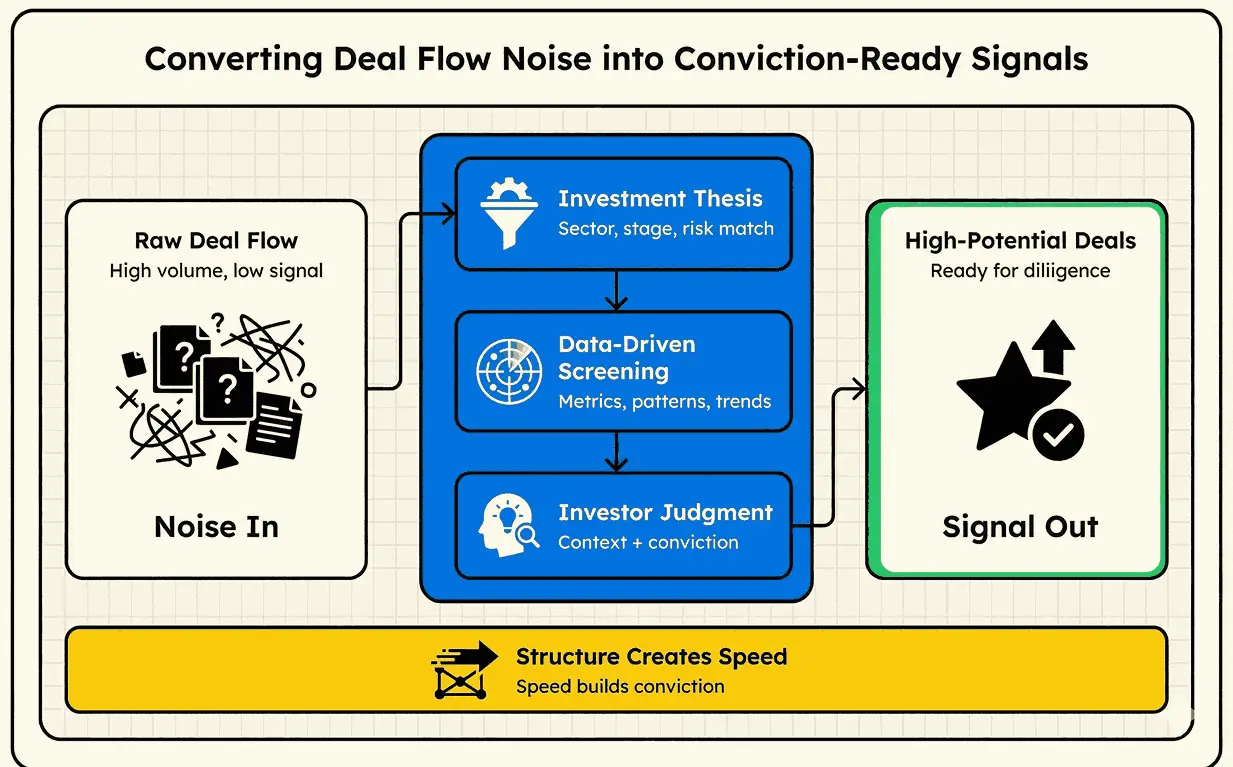
A well-crafted investment thesis does more than just streamline decision-making; it positions you to stay relevant in a rapidly evolving market. For instance, aligning your thesis with emerging technologies or shifting consumer behaviors ensures that your portfolio remains adaptable to future opportunities. This approach is particularly critical in competitive environments, as highlighted by Forbes, which depicts how staying attuned to market dynamics can sharpen your edge in dealmaking.
Moreover, an investment thesis provides clarity on which opportunities to pursue and which to pass on, saving valuable time and resources. This clarity becomes even more impactful when considering the dynamics of deal sourcing.
A balanced perspective on managing deal pipelines is reflected in the discussion of inbound vs outbound startup deal flow, which examines how different sourcing methods interact within the broader startup ecosystem. By refining your thesis, you can better determine which channels align with your strategy and focus your efforts accordingly.
Setting Measurable Sourcing Targets Aligned with Your Thesis
Translating your investment thesis into clear sourcing targets ensures consistent focus and progress tracking. Define specific goals, such as the number of deals sourced monthly or target industry segments. Regularly reviewing these metrics helps maintain alignment with your strategic priorities. This approach keeps the sourcing process disciplined and goal-oriented.
Expanding Your Network for Exclusive Deals
Building a robust professional network is a cornerstone of accessing high-quality, exclusive deals. Strong connections often lead to opportunities that remain out of reach for those relying solely on traditional methods.
For example, investors attending the Web Summit have connected with early-stage founders leading to successful investments.
By prioritizing relationship-building, you can position yourself as a trusted partner in your industry, increasing the likelihood of receiving valuable deal referrals. Trust is the foundation of any successful network. When you invest time in cultivating genuine relationships, you create a reputation that encourages others to share opportunities with you.
For instance, insights from event-based networking are further detailed through startup scouting at tech conferences, offering nuanced observations on in-person engagements with startups. These gatherings provide a platform to meet like-minded professionals, exchange ideas, and uncover potential deals that may not be publicly available.
Proactive Strategies for Effective Deal Sourcing
Proactive deal sourcing is crucial for identifying and closing attractive deals quickly and efficiently. Identifying and closing attractive deals quickly requires a proactive mindset and a structured approach. Proactive deal sourcing, when combined with data-driven strategies, can significantly enhance the efficiency and success of investment efforts. By adopting innovative outreach techniques and leveraging technology, investors can uncover opportunities that might otherwise remain hidden.
1. Prioritize Outbound Sourcing Methods
Outbound sourcing methods are a cornerstone of proactive deal sourcing. Instead of waiting for opportunities to come to you, actively reaching out to potential targets can yield a higher volume of quality leads. Outbound sourcing trends are gaining traction as they allow investors to identify opportunities earlier in the pipeline. This approach not only expands your reach but also ensures that you’re engaging with startups and businesses before they enter competitive bidding scenarios.
2. Harness the Power of Data-Driven Insights
Data-driven deal strategies are transforming how investors identify and evaluate opportunities. By analyzing market trends, industry benchmarks, and company performance metrics, investors can make informed decisions faster. Firms like A16Z emphasize the importance of integrating data into deal sourcing processes, highlighting how predictive analytics and machine learning can uncover patterns that traditional methods might miss. These insights enable investors to focus their efforts on high-potential opportunities, reducing the time spent on less promising leads.
Industry technology adoption is accelerating. According to projections, AI adoption will reach 75% in OECD firms by 2028, growing at a 28% CAGR from 2023 levels. This rapid transformation underscores why leveraging advanced sourcing platforms is vital for maintaining a competitive pipeline.
3. Explore Alternative Sourcing Channels
Expanding beyond traditional networks can open doors to untapped opportunities. For instance, scouting startups from accelerators and hackathons introduces investors to innovative ventures at their earliest stages. These environments often foster groundbreaking ideas and provide access to founders who are eager to collaborate. By exploring these alternative channels, investors can diversify their deal flow and gain a competitive edge in discovering emerging opportunities.
4. Build Relationships Through Targeted Outreach
Proactive deal sourcing isn’t just about identifying opportunities, it’s also about building meaningful relationships. Tailored outreach efforts that address the specific needs and goals of potential partners can establish trust and credibility. This personalized approach ensures that your firm stands out in a crowded market, increasing the likelihood of securing favorable deals.
5. Combine Technology with Human Expertise
While technology plays a critical role in streamlining deal sourcing, human expertise remains irreplaceable. Platforms that integrate CRM tools, AI-driven analytics, and automated workflows can help manage and prioritize leads efficiently. However, the ability to interpret data, assess qualitative factors, and negotiate effectively still relies on human judgment. Striking the right balance between technology and personal insight is key to maximizing success.
Continuous Refinement and KPI Tracking in Deal Sourcing
Building on these proactive strategies, investors should regularly evaluate their sourcing effectiveness using clear performance indicators. Tracking key metrics, such as deal conversion rates or time-to-close, highlights areas for improvement. This ongoing analysis enables firms to adapt quickly to market shifts and refine their approach. Consistent optimization ensures the deal sourcing process remains efficient and competitive.
From refining your investment thesis to utilizing digital platforms and alternative sourcing channels, mastering these processes is critical to building a robust investment pipeline. For a broader perspective on identifying startups at their earliest stages, explore proven startup scouting strategies.
Challenges in Private Equity Deal Sourcing and Pipeline Management
Process inefficiency is a major bottleneck for deal sourcing teams. For instance, 33% of developer time is wasted managing technical debt, which hinders effective pipeline screening and slows evaluation. Tackling these inefficiencies supports scalable pipeline growth.
Deal sourcing and pipeline management face distinct challenges:
- Quality vs. Quantity: Balancing a large deal flow without overwhelming the evaluation capacity.
- Data Quality: Incomplete or inaccurate startup information complicates screening.
- Resource Limitations: Limited personnel or time can hinder consistent sourcing.
- Pipeline Fatigue: Prolonged evaluation stages risk losing momentum and deals.
International deals can introduce additional regulatory risk. Early-stage founders may not be ready for investment due diligence.
Addressing these challenges requires clear prioritization, process discipline, and technology adoption.
Optimizing Deal Sourcing Platforms for Effective Deal Flow Management
Digital platforms are essential for modern deal sourcing, enabling investors to identify opportunities and streamline deal flow management efficiently.
Leading Deal Sourcing Platforms
- AngelList – Facilitates direct investor-startup connections, promoting collaboration and transparency through its networking-focused approach.
- Crunchbase – Provides comprehensive company profiles, funding histories, and industry trends that eliminate labor-intensive manual research.
- PitchBook – Delivers detailed market intelligence and competitive analysis tools for discovering high-potential startups.
Streamlining Deal Discovery
These platforms simplify opportunity identification through rich datasets and integrated workflows. They offer automated discovery capabilities, centralized data management, and enhanced evaluation tools that support informed decision-making.
Key Benefits
Investors can manage larger deal pipelines more effectively while reducing sourcing costs. Real-time market insights and tracking functionalities improve the ability to identify opportunities aligned with investment criteria and strategic objectives, dramatically enhancing overall sourcing effectiveness.
Best Practices for Pipeline Management
Enhancing Pipeline Management
Effective pipeline management depends on organizing leads, tracking interactions, and monitoring progress. Many digital tools incorporate CRM functionalities that assist investors in prioritizing deals based on engagement and milestones. Maintaining an active, well-managed pipeline is crucial to avoid stagnation and preserve deal momentum. Understanding pipeline dynamics and applying best practices can keep sourcing efforts productive and targeted.
Analytics for Smarter Decisions
Analytics embedded within these platforms empower investors to measure outreach efficiency, track response rates, and detect engagement patterns. These insights help refine sourcing strategies and ensure focus remains on the most promising opportunities. Additionally, social media sourcing tools, such as Fanbridge, open unconventional channels to discover innovative startups gaining traction.
Exploring Alternative Channels for Sourcing Deals
Expanding beyond conventional networks can uncover unique opportunities for alternative deal sourcing. Channels like startup accelerators, demo days, university R&D programs, and platforms such as Product Hunt provide access to early-stage innovation and diversified deal flow. These avenues not only enhance the pipeline but also introduce fresh perspectives and untapped potential. Deal sourcing platforms also help investors discover alternative channels and access early-stage innovation.
1. Startup Accelerators and Demo Days
Startup accelerators, such as Y Combinator or Techstars, are hubs for emerging businesses. Their demo days offer direct exposure to promising startups, allowing investors to assess ideas and teams in real-time. These events often showcase ventures with high growth potential, making them ideal for identifying early-stage opportunities.
2. University R&D Programs
Universities are breeding grounds for innovation, particularly within their research and development programs. Collaborating with institutions like Harvard Business School, which has explored geographic diversification in deal sourcing, can provide access to cutting-edge technologies and groundbreaking ideas.
3. Platforms Like Product Hunt
Digital platforms such as Product Hunt are invaluable for discovering emerging products and startups. By monitoring trends and engaging with creators, investors can identify ventures that align with their portfolio goals. These platforms often feature startups that are gaining traction, offering a glimpse into future market disruptors.
4. Industry Events and Conferences
Attending industry-specific events and conferences can also be a fruitful strategy. These gatherings bring together innovators, thought leaders, and investors, creating a dynamic environment for deal sourcing. Networking at such events often leads to connections with startups that may not yet be on the radar of traditional channels.
Building Consistent Deal Flow Systems
A robust deal flow pipeline is essential for capturing quality investment opportunities and maintaining competitiveness. For private equity deal sourcing, building reliable systems for consistent deal flow is essential to capture quality investment opportunities.
Establishing Systematic Processes
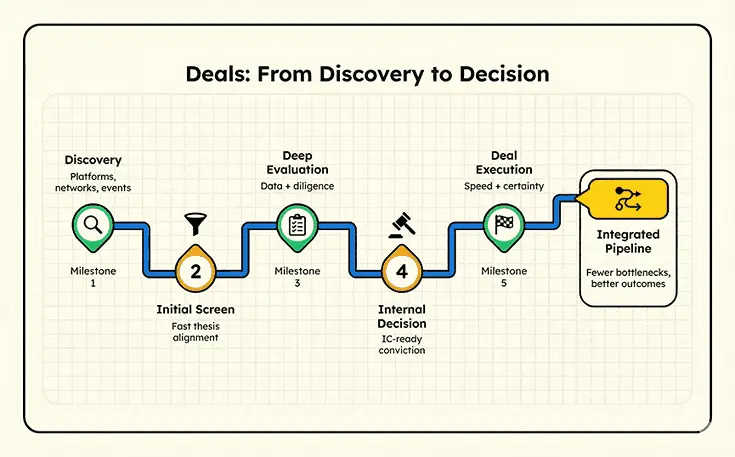
A well-defined process is the backbone of effective deal origination and consistent deal flow systems. Start by identifying key stages in your pipeline, from sourcing opportunities to closing deals. Each stage should have clear criteria to evaluate potential investments, ensuring only high-quality opportunities progress. Regularly reviewing these criteria helps maintain alignment with evolving market trends and business goals.
CRM Integration for Streamlined Management
Dedicated CRM tools are indispensable for managing deal flow effectively. These systems centralize data, track interactions, and automate follow-ups, reducing manual effort and improving accuracy.
- Centralizes data
- Tracks interactions
- Automates follow-ups
Systematic processes carry added value in certain market segments. Lower middle market private equity targets EBITDA from $5–15M, representing a $400B opportunity. Less competition and high operational improvement potential make systematic CRM approaches especially powerful in this space.
Continuous Refinement
Markets are constantly shifting, and deal flow systems must adapt accordingly. Regularly analyze sourcing strategies to identify areas for improvement. This could involve expanding your network, refining outreach methods, or adopting new tools to enhance efficiency. By staying proactive, businesses can ensure their pipeline remains robust and responsive to emerging opportunities.
Investing in systematic processes and CRM integration not only simplifies pipeline management but also positions businesses for sustained growth.
Legal and Compliance Considerations in Deal Sourcing
In the fast-paced world of deal sourcing, early legal and compliance screening is crucial to mitigate risks and ensure a smooth investment process. Addressing legal issues upfront saves time, protects reputation, and prevents costly deal failures.
Initial Background Checks and Confidentiality Agreements
Before diving deep into negotiations, investors should conduct thorough background checks on potential targets and their key stakeholders. This includes verifying ownership structures, any pending litigation, intellectual property status, and financial integrity. Equally important is establishing strong confidentiality agreements (NDAs, Non-Disclosure Agreements) early to protect sensitive information.
Regulatory Compliance
Investors must ensure that both the deal and the target company comply with applicable laws and regulations. This ranges from securities laws governing the sale and transfer of equity to data privacy laws (e.g., GDPR, CCPA) affecting how startups collect and manage customer information. Non-compliance can result in deal delays, penalties, or even deal nullification.
Engaging Legal Counsel Early
Bringing legal experts into the deal process at an early stage provides critical guidance on structuring transactions, conducting due diligence, and identifying any regulatory hurdles. Experienced counsel can flag potential deal breakers, help navigate complex cross-border legal environments, and advise on drafting contracts that protect investor interests.
Ongoing Compliance and Governance
Legal diligence doesn’t end at deal closure. Investors should establish mechanisms to monitor the target’s ongoing compliance with contractual obligations, financial reporting standards, and corporate governance practices. This helps prevent surprises post-investment and facilitates smoother integration or exit strategies.
Integrating Deal Sourcing & Pipeline Management
Deal sourcing and pipeline management must be integrated to create efficient investment workflows and maximize opportunities.
The Role of Integration
A well-integrated approach ensures that deal sourcing feeds directly into the deal flow pipeline, eliminating bottlenecks and enhancing decision-making. By streamlining communication between these functions, teams can prioritize high-value opportunities while maintaining a clear view of the investment pipeline. This alignment reduces redundancies and ensures that every deal progresses smoothly through the pipeline stages.
Actionable Insights for Optimization
Centralize Data: Consolidating deal sourcing and pipeline data into a single platform allows teams to access real-time insights and track progress efficiently. This minimizes the risk of missed opportunities and ensures transparency across the workflow.
Automate Processes: Implementing automation tools can simplify repetitive tasks, such as initial deal screening and pipeline updates. Automation frees up time for strategic analysis and ensures consistency in data handling.
Regular Reviews: Conducting periodic reviews of the pipeline helps identify gaps and refine sourcing strategies. These reviews ensure alignment with broader investment goals and provide actionable feedback for improvement.
Benefits of Alignment
Integrating deal sourcing with pipeline management not only improves workflow optimization but also enhances collaboration across teams. It fosters a proactive approach to identifying and managing opportunities, ultimately leading to better investment outcomes.
Conclusion
Deal sourcing is not a talent trait. It is an operating system. In a market where global deal value is growing and competition is tightening, the advantage goes to investors who run a repeatable pipeline that captures, qualifies, and advances opportunities with discipline. Digital tools help you do three things better than manual hustle ever will: widen top-of-funnel discovery, standardize evaluation, and keep momentum moving from first touch to IC decision. When sourcing and pipeline management are structured, you move faster, avoid obvious misses, and build conviction with cleaner data.
Want to upgrade your deal sourcing engine and tighten your pipeline into a decision-ready system? Use our AI startup fundraising platform to strengthen your investor-grade workflows, dashboards, and follow-up discipline so you can source earlier, evaluate faster, and close smarter.
Key Takeaways
- More deal volume does not equal better deals. A structured pipeline is what turns volume into outcomes.
- Your investment thesis is your filter. If it is vague, your pipeline becomes noisy and slow.
- Set measurable sourcing targets. Track inputs (new deals, meetings) and outputs (qualified deals, IC-ready deals, closed deals).
- Networks create proprietary access. Build consistent referral loops with founders, operators, accelerators, and sector experts.
- Outbound sourcing wins early. Direct outreach, thesis-driven lists, and targeted communities beat waiting for inbound decks.
- Digital platforms speed discovery. Use tools like company databases, market intel, and startup networks to reduce manual research.
- Pipeline management is a momentum game. CRM discipline, reminders, and stage definitions prevent deal leakage and “maybe forever” limbo.
- Analytics make you sharper. Track conversion rates, response rates, time-in-stage, and drop-off reasons to refine your process.
- Alternative channels surface hidden gems. Accelerators, demo days, universities, Product Hunt, and niche communities widen coverage.
- Legal and compliance checks belong early. Basic screening, NDAs, and red-flag checks save time and prevent late-stage deal blowups.
- Integration beats tool clutter. One source of truth, automated workflows, and regular pipeline reviews reduce bottlenecks.
- Continuous improvement is the moat. The best sourcing systems evolve every quarter based on what actually converts.
Find startups worth your time.
Curated startup opportunities matched to your thesis and investment criteria.
- Deal flow filtered by sector, stage, and fit
- Research and context included with every opportunity
- Less noise. More relevant deal flow.

Frequently asked Questions
What is deal sourcing?
Deal sourcing is the process of finding potential investment opportunities before they become widely known. It involves using networks, data, platforms, and outreach to spot high-quality startups early.