

 Back
Back









Table of Contents

A deal pipeline is not a nice-to-have. It is the engine that keeps investors ahead of the market. Without a steady flow of qualified opportunities, even strong funds start missing emerging winners, losing competitive edge, and drifting into pipeline stagnation.
The numbers make the risk obvious. Investors closed about 15,260 VC deals globally in 2024, one of the highest counts in the last decade. But Q1 2025 came in at roughly 3,990 deals and $91.5B in deal value, which highlights how quickly momentum can flatten if sourcing is not proactive.
This guide is for investment teams who want a repeatable system for startup scouting, deal sourcing, and pipeline management, without relying on luck or last-minute scrambles.
Understanding the Fundamentals to Keep Your Deal Flow Active
Deal flow refers to the consistent stream of deals or opportunities flowing into your business funnel. It is the aggregate of potential investments or sales leads. These leads are sourced, assessed, and pursued. A robust deal flow provides a diverse portfolio of options, increasing your likelihood of selecting and closing high-value deals while avoiding overdependence on any single opportunity.
Conversely, a stagnant pipeline occurs when deals linger without advancement, creating dead ends that waste time and resources. Recognizing these concepts lays the foundation for understanding why an active deal flow is paramount.
Pipeline stagnation often arises due to a combination of factors including inefficient qualification processes, lack of timely follow-up, poor communication, or inadequate resource allocation. When deals become stuck, it is usually a reflection of broader systemic issues within the deal management process that, if unresolved, can steadily erode the pipeline’s efficiency and your competitive edge.
- Regularly network and attend industry events.
- Set clear qualification criteria.
- Use CRM to track progress.
- Schedule regular pipeline audits.
Formality in pipeline management generates measurable results. Organizations with a clearly defined B2B sales pipeline report 28% more revenue. Structured processes improve deal selection and conversion, reducing the risk of stagnation and missed opportunities.
The discussion on how to create a deal sourcing strategy breaks down proactive methods that integrate into your overall approach to balancing inbound and outbound opportunities.
Startups like yours already closed their rounds with us.
Founders across every stage and industry. Here's what it took.
- Raised $7.6M for Swiipr Technologies
- Raised $0.5M for Ap Tack
- Raised €0.5M for Ivent Pro

Building and Sustaining an Active Deal Flow
To keep your deal flow active, begin with a proactive sourcing strategy. The goal is to consistently identify and attract high-quality opportunities that meet your strategic objectives.
1. Expand and Nourish Networks
At the heart of deal flow lies networks, your relationships with entrepreneurs, advisors, intermediaries, and industry contacts. Regularly cultivating these relationships generates trusted referrals and insider access to opportunities before they become widely available.
Investing time in networking helps build credibility and expands your pipeline’s reach. Tapping into current networks can uncover hidden deals. Service providers, such as lawyers or accountants, are also valuable sources due to their early transaction involvement.
Service providers such as lawyers, accountants, and consultants are crucial sources for deals. Their early involvement in transactions gives them valuable insights.
2. Establish Thought Leadership
Creating valuable content positions you as a knowledgeable leader in the field, which tends to attract inbound opportunities. Blogging, publishing research or whitepapers, hosting webinars, or running podcasts centered on your sector of expertise cultivates awareness and trust. These efforts not only build brand visibility but also foster engagement that converts into deal flow.
3. Engage in Targeted Outreach and Marketing
A well-directed outreach strategy can awaken latent opportunities and expand your pipeline quality. This involves researching potential prospects and crafting personalized communications that highlight the mutual benefits of collaboration. Marketing campaigns focusing on the ideal customer or investment profiles help generate leads that fit your criteria. Using digital platforms and social media channels allows for broad yet precise targeting.
4. Use Technology Platforms
Digital platforms specialized in deal sourcing offer a scalable means to access diverse opportunities. Tools like angel investor networks, startup databases, and specialized marketplaces help you discover deals from geographies and industries beyond your immediate connections. Combining this with data-driven targeting can help prioritize the most promising leads.
Structured sourcing programs add another reliable channel, and scouting startups from accelerators and hackathons often produces early-stage opportunities that direct networking alone would miss.
Systematic Screening and Qualification for Pipeline Health
Strong deal flow management demands a rigorous and standardized screening process that quickly filters out non-viable opportunities while nurturing those with genuine potential.
- Set Clear Qualification Criteria: Establishing transparent criteria is fundamental. Defining the parameters such as industry verticals, company size, growth stage, financial metrics, or strategic fit ensures consistent evaluation. This prevents dilution of focus by extraneous leads and saves team effort from pursuing dead ends.
- Automate Initial Screening: Using technology to automate basic qualification through scoring systems or AI assessments streamlines the early stages. This allows you to handle large volumes effectively and prioritize top prospects for manual review.
- Implement Collaborative Evaluation Processes: Cross-functional input from deal sourcing, due diligence, finance, and legal teams enriches evaluation by incorporating varied perspectives. This reduces bias and leads to more informed, balanced decisions. Documenting the deliberations ensures transparency and future reference.
- Conduct Thorough Due Diligence: For high-value deals, meticulous due diligence is vital to validate assumptions, assess risks, and confirm strategic alignment. Organizing this as a formal, phase-gated process with clear milestones enhances discipline and avoids overlooked issues that could cause stagnation later.
Strong screening also weighs founder quality alongside market fit, and a closer look at startup success signals and founder evaluation criteria helps sharpen those qualification filters before deals move deeper into the pipeline.
Utilizing Technology for Continuous Pipeline Movement
Modern deal flow requires technology solutions that provide visibility, facilitate automation, and enable data-driven decision-making. These tools help keep your deal flow active and prevent pipeline stagnation.
1. CRM and Deal Flow Management Tools
Selecting the right customer relationship management (CRM) or specialized deal flow tool centralizes all deal-related information. These systems track every interaction, deadline, document, and update in one place, making coordination seamless. Automated reminders and notifications prevent follow-up delays, a common cause of stagnation.
2. Visualization and Analytics Dashboards
Visual pipeline dashboards allow teams and management to monitor the status of all deals simultaneously. Identifying deals stuck at certain pipeline stages provides actionable insights. Analytics can highlight conversion rates, average deal velocity, and potential bottlenecks, allowing proactive intervention.
3. Automation of Routine Tasks
Automation streamlines repetitive processes such as outreach emails, meeting scheduling, and document requests. This frees your team to focus on qualitative activities like relationship building and problem solving. Automated workflows also mitigate the risk of human error or oversight that can leave deals unattended.
Recent advancements highlight measurable impact. B2B teams using AI-driven tools achieve up to 7x higher revenue performance. These platforms automate outreach, score leads precisely, and boost forecasting accuracy. Integrating such digital solutions accelerates deal velocity and creates meaningful competitive advantage.
For investors looking past their immediate network, a step-by-step approach to using deal-matching platforms to expand your deal flow adds another structured pipeline source alongside CRM and automation tooling.
Maintaining Momentum: Strategies to Keep Deals Moving
Keeping each opportunity engaged and progressing is the essence of avoiding pipeline stagnation.
- Multi-Channel Communication Strategies: Deploying diverse communication touchpoints, including emails, calls, video conferences, and social media, accommodates different prospect preferences and maximizes engagement. Tailoring messaging based on deal stage and prospect behavior maintains relevance and interest.
- Value-Added Interactions: Continuously supplying value to prospects through market insights, demo sessions, or customized consultations reinforces your role as a trusted partner. This creates a compelling reason for them to move forward rather than stall.
Aligning Pipeline Stages with Buyer Behavior
Building on these engagement tactics, aligning your pipeline stages with buyer behavior ensures each step reflects real prospect actions. Clearly defined, actionable stages help teams anticipate prospect needs and tailor outreach accordingly. This alignment reduces confusion, shortens sales cycles, and keeps deals advancing. Regularly reviewing and updating stage definitions maintains their relevance as buyer expectations evolve.
- Dynamic and Personalized Proposals: Offering tailored proposals or incentives based on prospect needs or feedback signals responsiveness and commitment. Such customization can reignite discussions that might otherwise fade.
- Regular Review and Escalation Processes: Routine pipeline review sessions with deal owners track progress, identify stalled deals, and allocate resources for resolution. If necessary, escalating difficult deals to senior team members or decision-makers helps unblock bottlenecks.
Sustained momentum also depends on the mix of channels feeding the pipeline, since balancing inbound, outbound, and startup ecosystem deal flow prevents over-reliance on any single source when one channel slows.
Focusing on Quality Over Quantity
While maintaining volume is important, prioritizing quality improves pipeline conversion and overall efficiency.
- Implement Lead and Deal Scoring Models: Scoring models that weigh factors like strategic fit, engagement level, and deal size enable teams to focus efforts on the highest-value opportunities. This disciplined approach avoids chasing marginal leads that consume disproportionate resources.
- Regular Pipeline Cleansing: Periodically removing outdated, unresponsive, or disqualified deals reduces noise and improves forecasting accuracy. A leaner pipeline also enhances team morale by concentrating their efforts on genuine prospects.
Quality screening also benefits from a structured way of identifying disruptive startup technologies, which separates genuine technical differentiation from surface-level hype during evaluation.
Diagnosing and Remedying Pipeline Stagnation to Keep Deal Flow Active
Pipeline stagnation often results from structural or procedural weaknesses that can be remedied with targeted actions.
Identifying Causes
Common causes include overloaded pipeline stages where deals accumulate, breakdowns in communication, ambiguous qualification criteria, poor messaging, or underperformance by the team. Lack of proper tools and lack of process discipline also contribute.
Actionable Remedies
- Pinpoint pipeline bottlenecks using CRM analytics and focus attention on unstuck or remove deals.
- Sharpen messaging and sales pitches to address prospect pain points more effectively.
- Automate and systemize follow-ups and internal reporting for greater discipline.
- Institute regular pipeline audits and performance reviews to maintain momentum.
- Provide ongoing training to enhance team skills and adapt to emerging best practices.
The impact of poor tracking is tangible. Recently, a founder lost a $100K deal because it was buried in a spreadsheet. Disorganized pipelines directly expose teams to costly, preventable losses.
Segmenting Pipeline for Targeted Action
- Group deals by value to prioritize resources and focus on high-impact opportunities that drive revenue growth.
- Segment deals by stage to identify where bottlenecks occur and allocate support to unblock stalled opportunities.
- Analyze deal age within each stage to surface stagnation early and trigger timely follow-up or disqualification actions.
Embracing a Culture of Continuous Improvement
Sustainable pipeline vitality depends on a culture committed to learning, adapting, and optimizing.
- Establish and Monitor Key Metrics: Track metrics like deal flow volume, conversion rates, average time in each pipeline stage, and win ratios. Monitoring these KPIs regularly helps identify areas for improvement and measure the impact of interventions.
- Solicit Feedback and Learn: Engage your deal teams and clients to collect insights on process friction points or unmet needs. Use this feedback as input for process refinements or technology upgrades.
- Stay Abreast of Market Trends: Continuously scan the market for shifts in industry dynamics, emerging competitors, or new customer preferences. Adapting your sourcing and evaluation criteria accordingly keeps your pipeline relevant and competitive.
Traditional vs Weighted Pipeline Forecasting
| Forecasting Approach | Traditional Model | Weighted Model |
|---|---|---|
| Basis for Prediction | Counts all open deals equally | Applies probability based on deal stage |
| Accuracy Level | Lower, often overestimates revenue | Higher, reflects likelihood of closing |
| Resource Allocation | May misdirect team focus | Enables smarter prioritization |
Reviewing where capital is concentrating also informs where to invest more sourcing effort, with the work of identifying high-growth sectors for investment in 2026 feeding directly into these review cycles.
Internal Alignment and Collaboration: Keys to Success
Pipeline management thrives when teams work in alignment with shared goals and transparent communication.
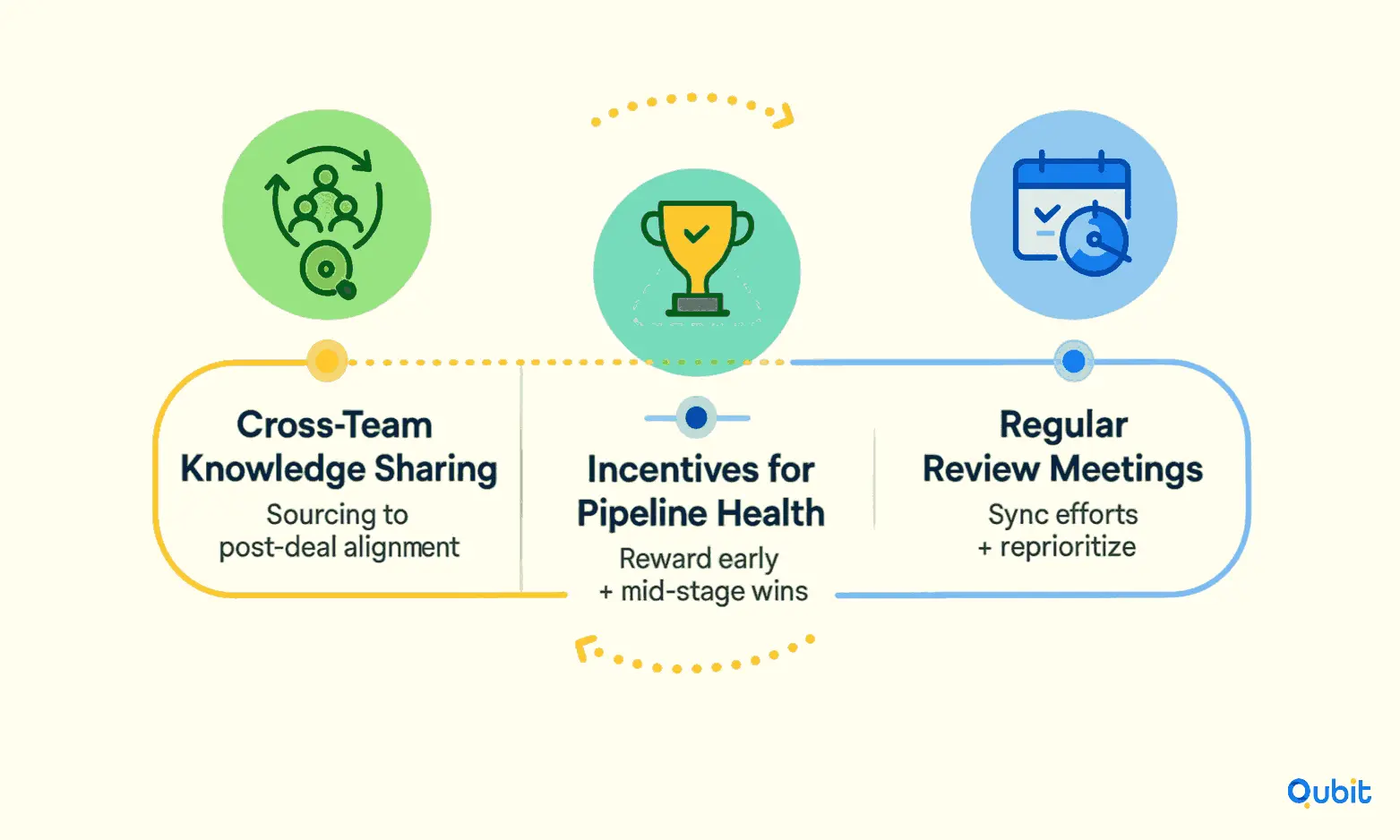
- Information Sharing and Cross-Functional Collaboration: Encouraging continuous exchange of insights between sourcing, investment, diligence, finance, and post-deal teams facilitates smoother handoffs and broader visibility. This reduces fragmented information that often causes delays.
- Aligning Incentives to Pipeline Health: Incentive structures should reward progress across pipeline stages and not solely closed deals. This encourages attention to early and mid-stage deals that are critical for sustained throughput.
- Regular Coordination Meetings: Frequent pipeline review meetings bring different stakeholders together to solve challenges, reprioritize resources, and celebrate wins. This collective ownership fosters accountability and motivation.
Conclusion
To keep your deal flow active and avoid pipeline stagnation, apply strategic intent, disciplined execution, and technological support.
Prioritizing quality over quantity, addressing bottlenecks swiftly, and fostering a culture of collaboration and improvement ensures deals flow consistently from lead generation to close, securing your competitive advantage and long-term success.
If you’re ready to elevate your startup scouting strategy, we invite you to explore our startup deal sourcing services service to connect with promising startups. Let us help you unlock new opportunities and drive your innovation goals forward.
Key Takeaways
- Building and nurturing strong networks fuels consistent deal sourcing.
- Thought leadership and targeted outreach attract high-quality opportunities.
- Clear qualification criteria and scoring improve pipeline focus and efficiency.
- Use CRM and automation tools to organize deals and avoid stagnation.
- Maintain proactive, personalized communication to keep deals moving.
- Prioritize quality over quantity for better conversion rates.
- Regularly review the pipeline to identify and resolve bottlenecks.
Find startups worth your time.
Curated startup opportunities matched to your thesis and investment criteria.
- Deal flow filtered by sector, stage, and fit
- Research and context included with every opportunity
- Less noise. More relevant deal flow.

Frequently asked Questions
What is deal flow, and why is it important?
Deal flow is the rate at which new investment or sales opportunities enter your pipeline. Healthy deal flow means more options and higher chances of closing successful deals. It drives business growth by reducing dependence on single opportunities.