

 Back
Back








Table of Contents

As the global push for clean transportation, urban mobility, and sustainable logistics intensifies, the capital needs of mobility startups have never been greater, or more diverse. Traditional venture capital has fueled much of the sector’s growth, but recent years have seen a marked expansion in alternative funding approaches, specifically syndicate investing and crowdfunding campaigns. For founders, these tools aren’t just about raising money, they’re about building community, validating products, and accessing networks previously out of reach.
The sector’s pivot to new funding approaches coincides with dramatic industry expansion. Between 2024 and 2025, crowdfunding market growth accelerated from $17.72 billion to $20.46 billion globally, marking a 15.5% annual increase. This surge underscores crowdfunding’s rising importance for startups seeking both capital and community engagement. For mobility founders, such momentum signals wider investor receptivity.
This comprehensive guide explores how emerging and mature mobility ventures can leverage syndicate funding and crowdfunding, examines real-world mobility success stories, and offers actionable steps for planning, launching, and sustaining high-impact campaigns.
Syndicate Investing for Mobility Startups: Structure and Value
Your raise sequence starts before you pick a platform. Investor psychology rewards founders who line up a credible lead first, then build pitch and community around that anchor. Choose the venue last, after you know what story the lead helps you tell.
What Is Syndicate Investing?
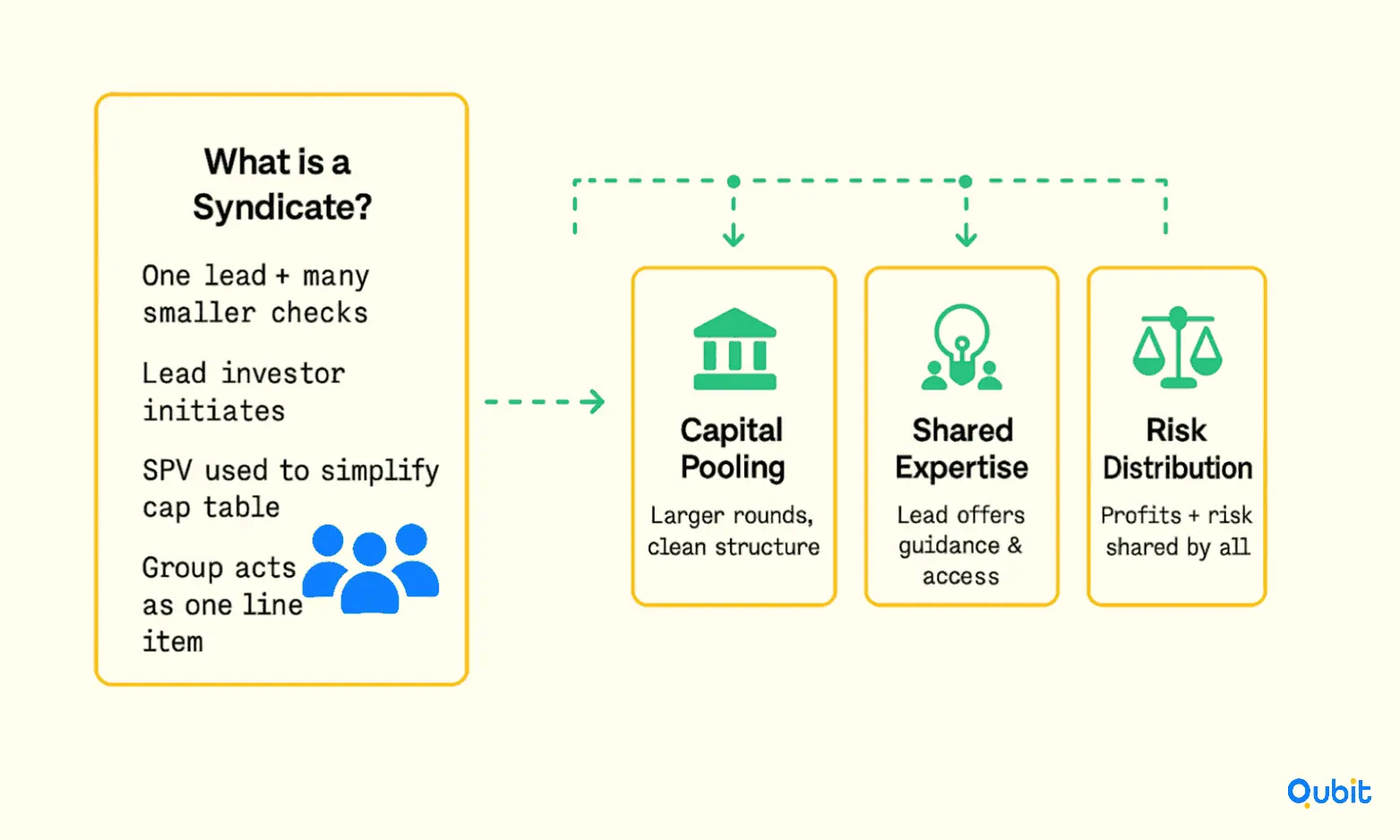
A syndicate pools capital from many investors into one round behind a single lead. The lead brings sector conviction, network, and the diligence work that smaller backers ride on. For founders, this means one relationship to manage and one signal that pulls the rest of the cap table along.
Key Attributes of Syndicate Investing:
- Pooling resources: Enables startups to raise larger rounds while keeping the ‘cap table’ (capitalization table, a record of company ownership) clean, since all syndicate members typically appear as a single line (often via a special purpose vehicle, or SPV (Special Purpose Vehicle, a legal entity used to pool investor funds for one investment round)).
- Collective expertise: The lead investor (the primary backer who organizes the investment round) handles negotiations and connects syndicate members to the founders, helpful for strategic guidance or introductions.
- Risk and reward sharing: Both return and risk are distributed, and lead investors often earn a “carry” (typically 10-20% of any profits generated by the deal for their work).
Platforms such as AngelList, Startupxplore, and Climate Angels have made syndicate creation seamless and widely accessible, including for mobility-specific deals targeting climate impact, EV infrastructure, and shared mobility solutions.
- Identify your funding need
- Select platform
- Craft story
- Pre-market
- Launch
- Engage backers
- Close round
Edge cases: If your product is highly regulated or you have nonstandard equity requirements, consult with legal or consider grant-based alternatives. To see how syndicates fit alongside other fundraising tools and support growth in mobility markets, check out the broader playbook on fundraising strategies, investor types, and finance options for mobility startups.
Startups like yours already closed their rounds with us.
Founders across every stage and industry. Here's what it took.
- Raised $7.6M for Swiipr Technologies
- Raised $0.5M for Ap Tack
- Raised €0.5M for Ivent Pro

Why Syndicates Fit Mobility and EV Startups
Mobility businesses, especially those with hardware, regulatory, or city-level components, often need blended capital:
- Larger initial tickets: Assets like vehicles, sensors, or charging stations require more capital than most angel investors can provide solo.
- Cross-border reach: Syndicates can gather investors from multiple geographies, matching local market knowledge with global capital, essential for ventures rolling out across cities or countries.
- Cleaner cap table, easier governance: Instead of juggling dozens or hundreds of angel entries, a single SPV entry per syndicate keeps institutional VCs happy in future rounds.
Best practice tip: For first-time syndicate raises, pick a lead with proven sector wins, a real network, and clean post-round communication. The best climate and e-mobility syndicates in India and Europe grew on that exact reputation profile. A weak lead costs you the next round before this one even closes.
Understanding the broader capital environment helps founders position syndicate rounds strategically, and reviewing global VC funding trends in EV and mobility gives useful context on where institutional capital is flowing and which sub-sectors are attracting the most attention from lead investors.
Crowdfunding for Mobility: Models, Platforms, and Potential
Crowdfunding mobilizes capital from hundreds or thousands of backers, generally in three models:
Crowdfunding is especially powerful for B2C mobility brands, such as micro-mobility vehicle startups, e-bike companies, or shared vehicle systems looking to validate demand and build a user community in parallel with fundraising.
Reward, equity, and debt crowdfunding aren't theoretical for founders, the capital pool is expanding fast. In 2025, global crowdfunding market is projected to jump from $16.6 billion to $18.5 billion, growing at 11.6% CAGR. Larger total pools mean lower competition per dollar for B2C mobility founders with a real story.
Real-World Examples of Mobility Crowdfunding
Mobility startup campaigns are part of a rapidly growing movement. In 2023, crowdfunding market reached $17.2 billion worldwide. That $17.2B base gives founders stronger negotiating ground with platforms and access to a wider pool of accredited capital.
Case studies illuminate what’s possible:
- Kiwee Mobility (France): The campaign targeted regional ‘fans’ and evangelists. These supporters could later become early users or local ambassadors.
- MOBY (Ireland): Raised nearly €800,000 on Spark Crowdfunding for its electric bike-sharing company, combining traction data with a strong local backer story.
- SoFlow (Switzerland): Secured over CHF 586,000 from 230 investors, pushing expansion into new European markets.
- Mount (US): Enabled Airbnb hosts to add shared vehicles, raising over $130,000 on WeFunder, proving niche concepts can still attract significant capital if the story resonates.
Regional momentum reinforces these case studies, with the India transportation and logistics tech fundraising surge showing how local crowdfunding platforms and angel syndicates have backed dozens of mobility ventures over the past two years.
Comparative Table: Syndicate vs. Crowdfunding for Mobility Ventures
| Aspect | Syndicate Investing | Crowdfunding |
|---|---|---|
| Investor Pool | Accredited angels & HNIs | Public (can be non-accredited) |
| Structure | SPV or single cap table line | Many direct investors |
| Regulation | Typically stricter, more diligence | Platform-driven, regulated per market |
| Average Ticket Size | Larger, group-funded | Small to moderate per backer |
| Best For | B2B/asset-heavy, scaling ventures | B2C brands, early product launches |
| Expertise Added | High (lead brings expertise/network) | Variable, more broad support |
| Community Building | Medium | High (users = backers) |
| Exit Pathways | Can facilitate secondary sales | More complex to exit/convert shares |
| Platform Examples | AngelList, LetsVenture, SeedBlink, Climate Angels | Kickstarter, Seedrs, WeFunder, Conda |
Campaign Planning: Steps, Success Factors, and Pitfalls
Planning a Syndicate Fundraise
- Choose your lead wisely: A prominent sector investor not only brings funds, but opens doors to their network.
- Set target amounts: Ensure it’s enough for the next real milestone, syndicates take time and aren’t ideal for very small rounds.
- Platform selection: Different countries and sectors have preferred platforms, AngelList and LetsVenture for India and global deals; Climate Angels for climate mobility, SeedBlink and Startupxplore across the EU.
- Prepare legal/administration: Set up the SPV or SPV-equivalent; most platforms offer support, but founders should understand costs and how future rounds will be affected.
- Engagement and communication: Syndicate rounds thrive on updates; keep all members in the loop throughout diligence, post-close, and as milestones are hit.
Designing a Winning Crowdfunding Campaign
- Start with a compelling story: Clarity about your mission (emissions, congestion, sustainable transit), the team, and the “why now” is crucial.
- Early marketing is critical: Build a mailing list, create pre-launch buzz, and test messaging with real users well before going public.
- Transparency breeds trust: Share not only ambitions, but real challenges and how you’ll solve them. This transforms backers into advocates, not just donors.
- Set realistic targets: Big campaigns fail if the initial momentum is absent. Seed early pledges to reach 30% to 40% of your goal fast, visible traction pulls in more backers.
- Choose perks wisely (if non-equity): Early bird pricing, exclusive access, or personalized thank yous work well in the B2C mobility sphere.
- Follow legal and platform guidelines: Especially for equity crowdfunding, learn the local securities law and compliance rules. Platforms do not always cover every risk, so engage your own legal counsel.
Pitfalls to Avoid
- Underestimating the campaign workload: Both syndicate and crowdfunding raises require dedicated time, content, and constant engagement.
- Ignoring the cap table: Direct crowdfunding can clutter equity structures, use platform solutions or legal counsel to aggregate shares efficiently.
- Overpromising in marketing: Backers and regulators increasingly expect full follow-through. Reputational damage from a failed or delayed campaign hurts every future raise.
Case Study: Building a Community Through Crowdfunding—Kiwee Mobility
Kiwee Mobility's crowdfunding success was not only about capital. Their equity campaign brought first customers and EV enthusiasts in as backers, with shared photos, manufacturing milestones, and live Q&A. For mobility founders, this dual track validates demand and acquires users inside one raise.
Regional Nuances and Platform Choices
Certain regions show stronger appetite for syndicate or crowdfunding rounds due to local investing culture and regulatory environment:
- India: Platforms like LetsVenture and Climate Angels have tailored their syndicate models to climate and e-mobility startups, working closely with founders to structure deals that meet both capital and environmental impact goals.
- Europe: Equity platforms like Seedrs (UK) and Conda (DACH region) have backed B2C mobility campaigns, offering geographic “fan bases” the chance to invest directly and spread the word.
- US: Crowdfunding platforms such as WeFunder and Republic have welcomed micromobility, B2B telematics, and EV retrofit kits. Here, regulation is nuanced, especially regarding shareholding limits and disclosures (consult legal input for campaigns).
Building for Long-Term Success: from Campaign to Community
Successful syndicate or crowdfunding efforts do not end at closing. They open long-term relationships that shape your next raise. The best founders:
- Engage post-campaign: Share regular product, revenue, and regulatory updates to backers and syndicate members.
- Leverage new networks: Investors gained through syndicates or crowd rounds can become early customers, beta testers, or referral sources.
Use momentum for storytelling: Media, government, and future VCs read a strong public backer base as social proof. That signal lifts you into larger institutional rounds with less friction.
For a deeper dive into matching your startup with the right kind of capital, structuring for future rounds, and building partnership-friendly terms, see the section on choosing the right investor for strategic fit and long term alignment.
Alternative and Hybrid Funding Strategies
Syndicate plus Crowdfunding:
- Incentive Alignment: Make sure syndicate leads and large crowd backers are included in advisory channels or product roadmap reviews, integrating financial support with real feedback.
- Government & Corporate Initiatives: Agencies and mobility corporates may match or top-up successful campaigns as pilot proof-points, providing another growth lever especially for pre-revenue startups.
Non-Dilutive Capital for Mobility Startups
Non-dilutive capital strengthens hybrid mobility raises. Grants from government or climate agencies fund pilots and tech validation without taking equity. Debt and revenue-based financing protect cap tables when market conditions tighten venture terms.
Using Investor Databases and Partnerships
Curated investor databases tighten your outreach, you pitch the right thesis to the right fund. Sector-focused partnerships add credibility before the lead investor ever calls a reference. Industry, tech, or government partners often double as social proof inside diligence.
Conclusion
Launching syndicate and crowdfunding campaigns gives mobility founders both capital and an engaged community. That community pulls forward your next milestone and your next raise.
Executed well, these campaigns become the foundation for multi-stage growth, media attention, and regional and global expansion. Mission-driven mobility founders now use the crowd and the collective intelligence of syndicates to move real-world adoption.
If you’re ready to take the next step, our travel startup fundraising services service offers tailored insights to connect you with the most suitable partners. Let us help you find the perfect match for your startup’s journey. Let’s get started.
Key Takeaways
- Syndicate investing and crowdfunding are increasingly common and effective tools for mobility startups overcoming early capital barriers.
- Well-structured syndicates bring expertise, efficient governance, and bigger round sizes; effective crowdfunding builds user-backer momentum and validates the vision in-market.
- Choosing the right platform, lead partner, and campaign structure is critical to success.
- Transparency, early engagement, and community building convert backers into advocates, not just one-time investors.
- For mobility and EV founders, blending these approaches with strategic venture, government, or corporate capital creates durable pathways to scale.
Get your round closed. Not just pitched.
A structured fundraising process matched to your stage and investor fit.
- Fundraising narrative and structure that holds up
- Support from strategy through investor conversations
- Built around your stage, model, and timeline
Frequently asked Questions
What are the main advantages of crowdfunding for mobility startups?
Crowdfunding helps mobility startups reach a broad user base and validate products quickly. It builds community around the brand from day one. B2C mobility brands gain market signal before scaling production. Backers often become early customers and advocates. The model also lifts brand visibility through campaign press. This is useful for new vehicles, bikes, or scooters.