

 Back
Back









Table of Contents

Artificial intelligence startups are changing how entire sectors operate, but getting the funding to scale is still a major hurdle. A recent report shows that around 60 percent of investors now prioritize long term growth over quick, near term wins when deciding where to allocate capital. That shift means what you do after the pitch matters as much as the pitch itself. AI founders need to show a clear, believable growth path if they want investors to stay engaged.
This article focuses on what happens after the meeting. Instead of treating the pitch as a one time event, you will learn how to use structured follow ups, targeted updates, and data driven progress to move investors from polite interest to real conviction.
Let’s jump right in!
Why Structured Follow-Up Matters
Today’s investors see dozens of AI decks every week. Most of them blur together. Your ability to stay top of mind comes less from a single impressive pitch and more from what you do in the days and weeks after it.
That is why follow-up needs to be structured, not random. Strong AI founders usually do a few simple things well: they send a personal follow-up within 48 hours, answer open questions quickly, share short progress updates, handle silence without being pushy, and keep the relationship warm even if the first answer is “not yet.”
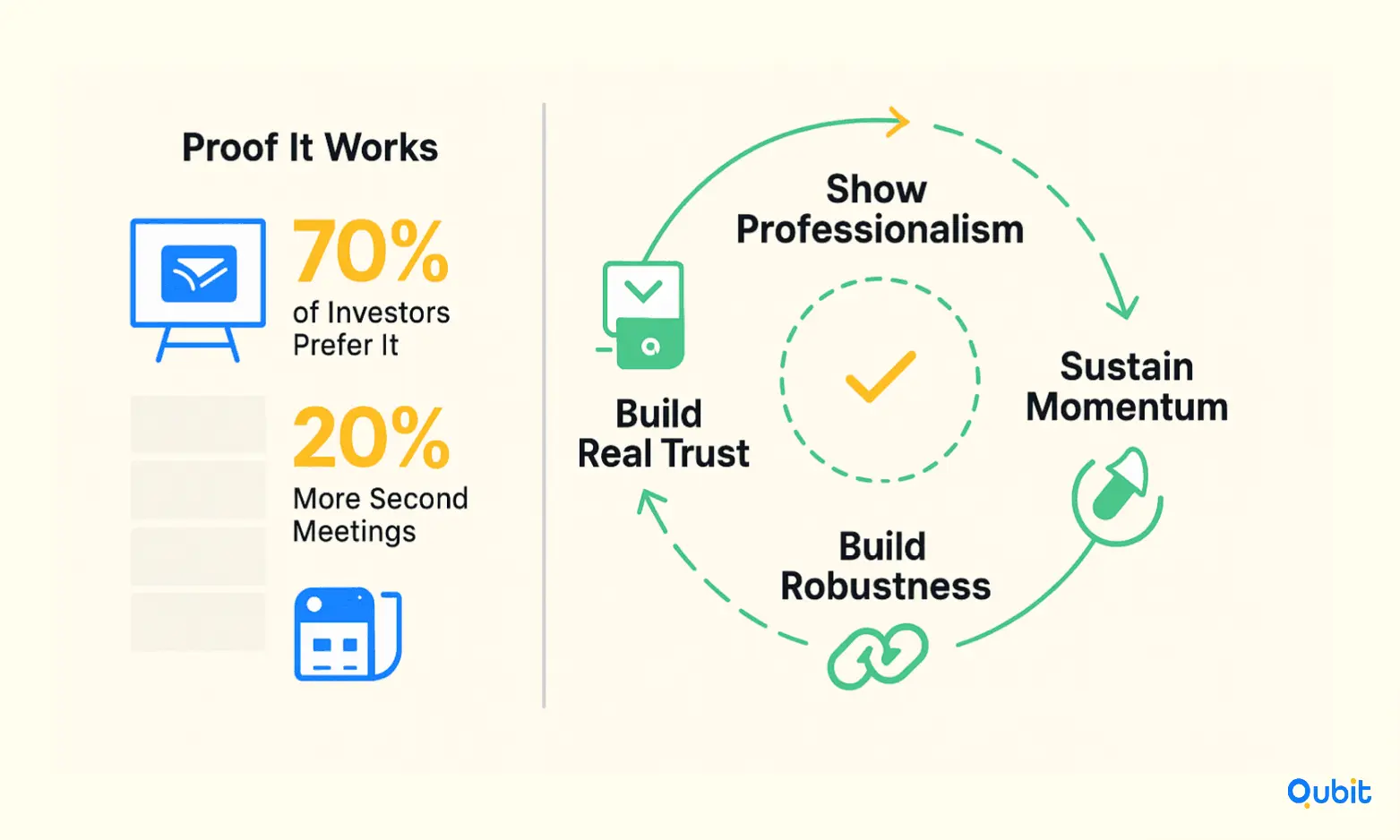
Effective follow-up is not just a courtesy; it is part of your fundraising system. Done well, it:
- Reinforces your professionalism and commitment
Clear, timely messages show you are organized, serious, and reliable. Investors use your follow-up as a proxy for how you will run the company. - Keeps momentum alive and addresses lingering doubts
When you answer open questions, share new proof points, or clarify risks, you stop the deal from stalling in the investor’s head. You turn “interesting, but…” into “this is moving in the right direction.” - Builds trust, transparency, and a real relationship
Regular, thoughtful communication shifts the interaction from a one-off pitch to an ongoing conversation. That is how you get remembered for future rounds, even if the first one does not close.
The data backs this up. Industry benchmarks suggest that about 70 percent of investors appreciate thoughtful follow-up that adds relevant insight or extra data. Startups with a structured follow-up process are roughly 20 percent more likely to secure a second meeting or move into due diligence.
A simple structure can look like this:
- send a thank you email within 48 hours
- respond to follow-up questions within 3 days
- provide all requested documents in one clean package
- propose or confirm next steps, such as another call or a product demo
- send short progress updates as you hit new milestones
You can also use AI tools to help, but they work best when you add your own voice. Industry research shows that AI-assisted emails that still include genuine founder input can improve reply rates by up to 33 percent compared with generic outreach. The winning combination is automation for speed and consistency, plus personal context so investors feel you are talking to them, not blasting a template.
A comprehensive review of diverse capital strategies appears in how to raise money for AI startup, positioning your understanding of mega-round discussions within a broader fundraising context.
Startups like yours already closed their rounds with us.
Founders across every stage and industry. Here's what it took.
- Raised $7.6M for Swiipr Technologies
- Raised $0.5M for Ap Tack
- Raised €0.5M for Ivent Pro

Follow-Up Strategies Post-Pitch: The Essential Playbook
1. The Thoughtful Thank-You
Always send a personalized thank-you within 24–48 hours of your meeting. This isn’t just polite, it’s strategic. Reference something tangible from your conversation (a tough question, a shared insight, or a moment that sparked curiosity). Express your appreciation for their time and input, and reiterate your excitement about a future together. Importantly, confirm or clarify any next steps (e.g., “Per your feedback, I’m sending our model benchmarking whitepaper and expect to get you the customer reference by next Tuesday.”)
2. Rapid Response to Open Questions
One of the most common investor gripes is a founder going dark after being asked for follow-up material or clarifications. If you said you’d provide additional data, a deeper tech appendix, or customer intros—do it fast. Fast responses are signals of reliability and execution. Even if gathering the information will take time, acknowledge the request quickly and commit to a delivery date. This builds confidence that you can operate with real-world partners and timelines.
3. Keeping Momentum With Value-Added Updates
You can’t assume that after your initial follow-up, the investor will come back with unprompted enthusiasm. The best founders craft a cadence of value-add follow-ups, spaced out to avoid pestering but frequent enough to remain top of mind. For example, if your startup lands a notable pilot, achieves a milestone in model performance, or secures a new advisor, send a brief note sharing these wins. Attach a visual, graph, or customer quote when possible to make the impact tangible. Instead of “just checking in,” turn each communication into a reason for renewed excitement.
4. Navigating Silence and the “Pending” Pile
Investor silence is commonplace and not always a sign of lack of interest. Internal processes, competing deals, vacations, or simple overload can all be culprits. If you haven’t heard back in 7–10 days, send a concise, friendly nudge. Reiterate your appreciation for their time, offer a small update, and ask if there’s any outstanding information you can provide. Never guilt-trip or seem entitled—a light touch wins.
5. Handling Feedback and Objections Like a Pro
Many founders get defensive in the face of critical feedback or probing questions. Instead, see each concern as an opportunity to build trust. If an investor challenges your business model, timeline, or technical approach, thank them and act on the feedback. Later, update them on how you’re addressing or have already improved on those concerns. This not only demonstrates adaptability and leadership—it can tip a skeptical investor over the edge into a “yes.”
6. Balance Transparency With Confidence
Share both wins and setbacks. If you encounter delays, technical hiccups, or changes in your projections, own them openly. Briefly explain what happened, what you’ve learned, and how you’re adjusting course. Investors appreciate founders who are candid and resilient under pressure—much more than those who hide reality or spin incessantly.
7. Never Drop the Ball on Scheduling
After every meaningful touchpoint (meeting, call, or email), clarify what happens next and who is responsible. Offer specific options for future calls or provide your calendar link—don’t leave the next step hanging. If there's an agreed-upon diligence process, regularly check in about its progress and ask if you can help move things forward.
8. Sustain Relationship Beyond the Pitch
Great post-pitch follow-up transcends the immediate fundraising process. Engaging an investor with relevant industry news, inviting them to AI webinars or demo days, or introducing them to thought leaders in your field can convert a passive prospect into an active advocate. Share your broader ecosystem wins—not just asks for money.
Additional Strategies
Differentiating with Dynamic Video Follow-Ups
Beyond written updates, founders can send short video messages highlighting product demos or customer testimonials. This format delivers information more personally and can capture investor attention more effectively. Dynamic videos help reinforce your startup’s progress and value proposition. Incorporating video content into follow-ups can set your outreach apart from standard email communications.
It’s not just what you send, but where you show up. Sequences that use three or more channels (email, phone, social) see a 287% higher response rate than single-channel outreach, and campaigns that combine email and phone outperform email-only by 128%. Adding LinkedIn “soft touches” – profile views, likes, and comments – can lift reply rates from roughly 1% to over 5%. For AI investors drowning in decks, a combo of email + LinkedIn + product updates statistically outperforms email alone – multi-channel sequences can more than triple response rates.
Using CRM Tools for Consistent Investor Outreach
Building on the importance of reliable scheduling, founders should use CRM tools and email clients to automate reminders and track communications. This approach reduces the risk of missed follow-ups and ensures every investor receives timely updates. Organized outreach signals professionalism and helps maintain momentum throughout the fundraising process. By integrating technology, founders can focus on relationship-building rather than manual tracking.
The Power of Persistent, Respectful Follow-Up
Recent analyses confirm the impact: effective follow-up elements yield 37% more first meetings and a 42% improvement in closing rounds. Top-performing founders treat each touchpoint as a measurable opportunity to advance.
After responding to open questions, founders should continue outreach with multiple follow-ups spaced several days apart. This persistence demonstrates commitment without overwhelming investors. Respectful intervals maintain engagement and increase the likelihood of progressing toward a deal. Consistent communication helps ensure your startup remains top of mind throughout the decision process.
Common Founder Mistakes to Dodge
- Sending boilerplate follow-up messages indistinguishable from spam.
- Failing to deliver promised materials (financials, technical details, customer contacts).
- Disappearing for weeks, thus losing listing status as an “active process.”
- Over-communicating small, irrelevant updates (avoid “noise”).
- Acting defensively or arrogantly in response to pushback.
- Applying pressure with artificial urgency or “fear of missing out” tactics not tied to real milestones.
Crafting a Timeline for Follow-Up Success
Applying follow-up strategies post-pitch is crucial when communicating timelines in competitive rounds.
If you’re in a competitive round or exclusivity is required, communicate timelines early but with honesty and tact, never manufacturing scarcity.
How to Prepare Your Personal Pitch
Crafting a compelling personal pitch is an essential skill for professionals aiming to make a strong impression. A personal pitch is a concise 30–60 second summary that highlights your expertise, achievements, and career aspirations. It serves as your introduction, offering potential employers a snapshot of your value and goals.
To create an effective pitch, start by identifying your core strengths and aligning them with the needs of the employer. For instance, if you're pursuing a role in artificial intelligence, mentioning your proficiency with frameworks like TensorFlow can reinforce your credibility. Highlighting familiarity with tools such as TensorFlow demonstrates your technical expertise and adaptability in machine learning environments.
Tailoring your pitch to suit each employer is equally important. Research the company’s values, mission, and job requirements, then adjust your pitch to reflect how your skills align with their objectives. This customization not only shows genuine interest but also positions you as a candidate who understands their unique needs.
Remember, the goal of a personal pitch is to quickly communicate your value while sparking interest for further conversation. Practice delivering it confidently and concisely, ensuring it feels natural and engaging. A well-prepared pitch can set the tone for a successful interaction, whether in interviews, networking events, or casual introductions.
By refining your pitch and tailoring it to specific opportunities, you can significantly enhance your chances of standing out in competitive job markets.
Turning Process into Partnership
What separates founders who convert investor interest into closed rounds? It’s not just about their deck or demo, but about relentless, relationship-based follow-up rooted in genuine transparency, responsiveness, and value creation. The best follow-ups feel natural, not transactional. When you proactively solve investor pain-points, communicate with empathy, and continuously share your journey, you turn a gatekeeper into a champion.
Engaging Investors with Regular Value-Add Communications
Follow-up strategies post-pitch should include regular, concise updates to keep investors engaged.
Think beyond the immediate pitch and closing timeline. After you’ve followed up, keep investors engaged through regular, concise updates—even if a deal isn’t imminent. Monthly newsletters or summary emails featuring key KPIs, product releases, or customer wins keep your startup top of mind and build cumulative trust. For your most promising contacts, periodic invites to product demos, webinars, or AI community events can foster a sense of partnership and provide additional touch points for informal conversation and feedback.
For example, consistent follow-up efforts drove two pilot signings in one month for a growth-stage startup, resulting in 28% month-over-month growth. These outcomes highlight the payoff of persistence after the pitch.
Example: Effective Post-Pitch Email Templates
Thank-You & Materials Follow-Up:
Subject: Thanks for your time—follow-up from our AI pitch yesterday
Hi [Investor Name],
Thank you for meeting with us to discuss [Startup Name]. I appreciated your insightful questions about our scalability plan and bias mitigation. As promised, I’ve attached our updated cohort retention analysis and technical appendix.
We are excited about the possibility of collaborating and look forward to your thoughts and any next steps. Please let us know if you’d like to schedule a follow-up call or need further information from our side.
Best regards,
[Your Name]
Progress Update/Soft Nudge:
Subject: Quick Update—Secured Major Pilot & Progress on Roadmap
Hi [Investor Name],
Just wanted to share that since our last conversation, we have secured a paid pilot with [Major Client] and our latest model release exceeded benchmark targets. We’d welcome any further feedback or questions; please let me know if you’d like more details or wish to revisit our discussion.
Looking forward to staying in touch.
Thanks,
[Your Name]Measuring Follow-Up Effectiveness and Iterating
Don’t just set and forget your outreach efforts. Track your follow-up open rates, responses, and how many progress touches convert into second meetings or diligence. Periodically ask trusted advisors or friendly investors to review your communications style for clarity, tone, and effectiveness. Use AI tools or CRM analytics to adapt your subject lines and content based on response data, continual improvement signals both discipline and professionalism.
Conclusion
Implementing follow-up strategies post-pitch is essential for startups seeking to thrive in the competitive AI landscape. Throughout this blog, we’ve explored strategies to assess the impact of such funding rounds on innovation and long-term planning. By focusing on actionable insights, startups can better position themselves to attract investors while maintaining a clear vision for growth.
The importance of aligning funding strategies with market trends cannot be overstated. Whether you’re refining your pitch or evaluating potential investors, applying these takeaways can significantly enhance your approach.
Ready to improve your funding strategy? Explore Qubit Capital’s Investor Outreach Services and contact us to schedule a consultation.
Key Takeaways
- Personalized follow-ups are essential to capture investor attention.
- Timing is critical, prompt and well-timed outreach significantly increases reply rates.
- Multi-channel communication, including email and social media, enhances engagement.
- A systematic, data-driven game plan helps optimize follow-up effectiveness.
- AI career fairs offer unique networking opportunities that can advance career prospects.
Get your round closed. Not just pitched.
A structured fundraising process matched to your stage and investor fit.
- Fundraising narrative and structure that holds up
- Support from strategy through investor conversations
- Built around your stage, model, and timeline
Frequently asked Questions
What strategies help founders secure mega-round financing for AI startups?
Founders should focus on structured follow-up, personalized pitches, and value-driven updates to investors. These strategies increase trust and funding success.