

 Back
Back









Table of Contents

Finding the right venture capital partner can make or break a PropTech startup. While the sector attracted $15.1 billion in VC investment in 2024, a 32.5% increase from 2023, navigating the investor landscape remains challenging for founders. Not all VCs understand real estate technology's unique dynamics: longer sales cycles, regulatory complexity, and the need to balance innovation with industry conservatism.
This directory profiles leading venture capital firms actively investing in PropTech, organized by investment stage and geographic focus. Whether you're building residential technology, commercial real estate software, construction tech, or property management platforms, you'll find relevant investors and actionable information to guide your outreach strategy.
Your comprehensive exploration of funding stages is supported by insights detailed in the PropTech fundraising guide, which outlines the transition from seed rounds to Series B within a cohesive framework.
Understanding the PropTech Investment Landscape
Before diving into the directory, it's worth understanding current market dynamics shaping PropTech funding.
The global PropTech market reached $40.58 billion in 2024 and is projected to grow to $179.03 billion by 2034, representing a 16% compound annual growth rate. This growth trajectory reflects increasing digitization of real estate processes and mounting pressure for sustainable building solutions.
However, the funding environment has evolved significantly. After PropTech funding peaked in 2021, investment volumes declined 38% in 2022 to $19.8 billion, reflecting broader market corrections. The sector has since stabilized, with 2024 showing renewed momentum through a 32.5% increase in deal volume and 12% higher average deal sizes compared to 2023.
Current investment trends reveal clear priorities among VCs
- Sustainability and Climate Tech: Solutions addressing energy efficiency, carbon reduction, and green building materials are attracting substantial capital. AI-powered PropTech captured $3.2 billion in 2024 funding, with 70% of recent deals incorporating artificial intelligence components for property management, valuation, and tenant services.
- Debt Financing Growth: Established PropTech companies increasingly use debt financing to scale while preserving equity, signaling market maturation.
These dynamics mean PropTech founders need targeted strategies for identifying and approaching the right investors at the right stage.
Startups like yours already closed their rounds with us.
Founders across every stage and industry. Here's what it took.
- Raised $7.6M for Swiipr Technologies
- Raised $0.5M for Ap Tack
- Raised €0.5M for Ivent Pro

How to Use This Directory
This directory is organized by:
- Investment Stage: Seed, Series A, Series B+, and multi-stage firms
- Geographic Focus: Global, North America, Europe, Asia-Pacific
- PropTech Specialization: General PropTech, Residential, Commercial, Construction Tech, Sustainability
For each firm, you'll find:
- Investment stage and typical check sizes
- Portfolio examples
- Geographic and sector focus
- What makes them unique
- Application/contact approach
Important Note: VC investment criteria and fund availability change frequently. Always verify current fund status and investment focus on the firm's website before reaching out.
Criteria for Selecting VC Firms
Choosing the right VC firm from a directory of top VC firms backing PropTech startups is a pivotal decision for entrepreneurs.
1. Investment Focus
Begin by assessing whether the VC firm specializes in PropTech or has a history of investing in similar sectors. Firms with a dedicated focus on your industry bring valuable expertise, networks, and resources tailored to your niche. specialization.
2. Track Record
A VC’s past performance speaks volumes about its credibility and ability to support startups effectively. Evaluate their portfolio to understand the types of companies they’ve backed and the outcomes of those investments. Pay attention to their success in scaling businesses and their involvement in exits, as these factors indicate their capability to guide your startup through various growth stages.
3. Geographic Reach
Location matters more than you might think. A VC firm with a strong presence in your target market can offer localized insights, connections, and support. Additionally, proximity often facilitates smoother communication and collaboration, which are critical during the early stages of growth.
4. Alignment of Values
Beyond financial backing, a VC firm should align with your startup’s mission and values. This alignment fosters a productive partnership and ensures that both parties are working toward shared objectives.
By carefully evaluating these criteria, you can identify a VC partner who not only funds your vision but also actively contributes to its realization.
Directory of Top VC Firms Backing PropTech Startups
In Canada, over 530 PropTech startups drive innovation, attracting attention from global VC networks exploring regional strengths. This ecosystem signals emerging opportunities for investors and founders.
The world of PropTech is thriving, fueled by venture capital firms that are reshaping the real estate industry through innovation. This directory highlights leading VC firms with significant investments in PropTech, showcasing both global powerhouses and regionally focused players driving advancements in real estate technology.
Global Leaders in PropTech Investment
Several VC firms have established themselves as frontrunners in PropTech funding, backing transformative startups that redefine how properties are bought, sold, and managed. These firms often focus on scalable solutions with global impact:
- Andreessen Horowitz: Known for its investments in cutting-edge technologies, Andreessen Horowitz has supported PropTech startups that integrate AI and blockchain into real estate processes.
- SoftBank Vision Fund: With a history of funding disruptive technologies, SoftBank has invested heavily in PropTech companies, including those focused on smart building solutions and property management platforms.
- Sequoia Capital: This firm has a diverse portfolio, including PropTech startups that specialize in data-driven real estate analytics and virtual property tours.
Regionally Focused VC Firms
While global firms dominate headlines, region-specific VC players are equally vital in fostering localized PropTech innovation. These firms often prioritize startups addressing unique challenges within their geographic markets:
- Fifth Wall Ventures: Based in the U.S., Fifth Wall specializes in PropTech investments, supporting startups that bridge the gap between real estate and technology.
- Pi Labs: Operating out of Europe, Pi Labs focuses on early-stage PropTech companies, particularly those revolutionizing urban living and sustainable development.
- JLL Spark: This VC arm of JLL targets PropTech startups that enhance commercial real estate operations, with a strong emphasis on regional market needs.
Connecting VC Focus to Regional Dynamics
Understanding how VC firms align their investments with geographic trends is crucial for PropTech entrepreneurs. Regional insights gain depth in discussions found in the best regions for PropTech startups, connecting geographic nuances to the evolving considerations of your fundraising strategy.
By exploring this directory, PropTech innovators can identify potential partners who align with their vision and market focus. Whether seeking global reach or regional expertise, these VC firms are instrumental in driving the next wave of real estate technology.
Using PropTech VC Directories and Platforms
Building on the directory of leading VC firms, founders can maximize fundraising efficiency by using specialized PropTech platforms. These tools enable startups to filter investors by geography, investment stage, and technology focus, ensuring outreach aligns with strategic goals. Integrating CRM features and verified firm profiles streamlines communication and increases reply rates. Employing these resources helps founders avoid inefficient cold pitching and fosters more productive investor relationships.
Steps to Optimize Investor Targeting with Platform Filters
- Start by selecting platforms with comprehensive PropTech VC directories and verified investor profiles for reliable results.
- Apply filters for geography, investment stage, and check size to match your startup’s lifecycle and regional focus.
- Review investor portfolios and recent deals to ensure alignment with your technology and market priorities before initiating outreach.
Trends in PropTech Investments
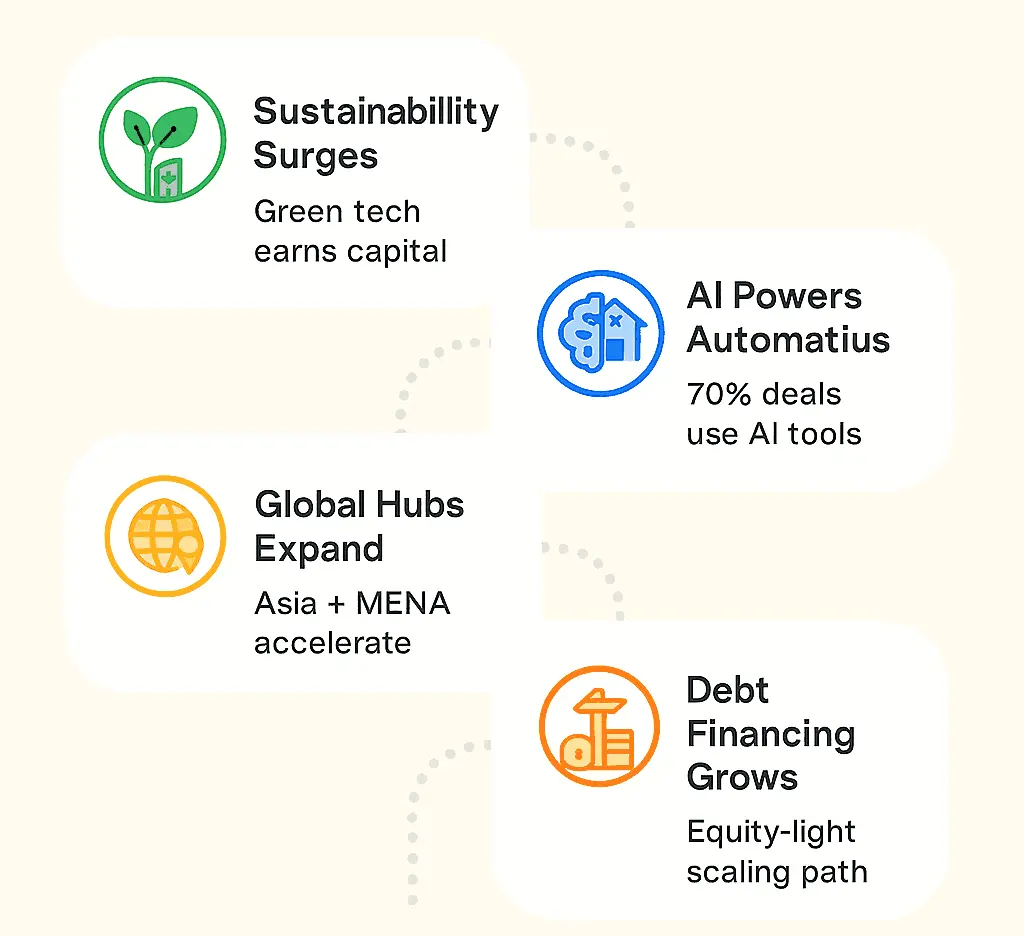
The PropTech sector is undergoing a transformative shift, as highlighted by the directory of top VC firms backing PropTech startups
1. Sustainability Takes Center Stage
Investors are increasingly prioritizing PropTech solutions that address environmental concerns. Companies like Dandelion Energy, which raised $40 million in a Series C round to expand residential geothermal solutions, exemplify this trend. Such initiatives highlight the growing demand for eco-friendly technologies that reduce carbon footprints while offering long-term cost savings. This focus on sustainability is not just a market preference but a necessity, as regulatory pressures and consumer expectations align toward greener real estate practices.
Similarly, Automax.ai produces complete appraisal reports in just 20 minutes. This rapid delivery demonstrates the tangible impact of PropTech automation on traditional real estate workflows.
2. AI-Driven Automation Gains Momentum
Artificial intelligence continues to redefine the PropTech landscape. With 70% of recent PropTech deals incorporating AI components, the technology is becoming indispensable for property management, tenant engagement, and market forecasting. This surge in AI adoption is reshaping how properties are managed and valued, making it a top priority for venture capitalists.
3. Regional Shifts in Investment Hotspots
The global PropTech market is also witnessing a shift in regional dynamics. While traditional hubs like the U.S. and Europe remain dominant, emerging markets in Asia and the Middle East are attracting significant attention. These regions offer untapped opportunities, driven by rapid urbanization and government-backed smart city initiatives. As a result, venture capitalists are diversifying their portfolios to include these high-growth areas, aligning with the broader trend of globalization in PropTech investments.
4. The Role of Debt Financing
Another notable trend is the increasing reliance on debt financing. Companies like Mews, which secured $100 million in debt financing to scale its hospitality property management operations, are opting for this route to preserve equity. This approach reflects a maturing market where established startups seek growth without diluting ownership.
Looking ahead, global real estate investment should climb to $952 billion by 2025. This projection highlights enduring optimism despite recent cyclical dips.
As 2026 unfolds, these trends will continue to shape the PropTech investment landscape, offering both challenges and opportunities for stakeholders.
Quantitative Investment Data and Performance Metrics
1. Deal Flow Analytics by Firm
Leading PropTech VCs demonstrate distinct investment patterns that founders must understand for effective targeting. Fifth Wall averages $6.8M Series A investments with 12-18% ownership stakes, completing deals in 4.2 months. Andreessen Horowitz targets larger rounds ($12-15M Series A) but requires 6-8 months for decision cycles due to extensive technical due diligence.
2. Investment Velocity Benchmarks
PropTech VCs move slower than general tech investors, with average decision timelines of 14-16 weeks versus 8-10 weeks for pure software. Q1 and Q4 show 35% higher funding activity, while summer months (June-August) experience 25% slower deal flow due to partner vacation schedules.
3. Performance Metrics That Matter
Top-performing PropTech VCs show average portfolio returns of 2.8x over 5-7 year periods, lower than general tech but reflecting real estate market characteristics. Firms with PropTech-specific expertise achieve 40% higher success rates than generalist VCs attempting real estate technology investments.
How to Approach VC Firms for Funding
Securing funding from venture capital (VC) firms requires a thoughtful approach that combines preparation, strategy, and relationship-building. Here’s a step-by-step guide to help you craft a winning pitch and avoid common mistakes along the way.
1. Build a Strong Foundation with Research
Before reaching out to VC firms, identify those that align with your industry, stage, and goals. Research their portfolio companies, investment focus, and recent deals. This ensures your pitch resonates with their interests and demonstrates that you’ve done your homework.
2. Create a Polished Pitch Deck
Your pitch deck should tell a compelling story about your business. Highlight your product-market fit, growth potential, and unique value proposition. Ensure your financial projections are realistic and backed by data. A clear, concise, and visually appealing deck can make a lasting impression.
3. Organize Your Data Room
A well-structured data room is essential for due diligence. Include organized folders for financials, legal documents, and product details. Using Data Room Best Practices can accelerate the process and inspire investor confidence.
4. Network Strategically
Warm introductions often yield better results than cold outreach. Attend industry events, join startup communities, and connect with mutual contacts to build relationships with potential investors.
5. Avoid Common Pitfalls
Incomplete data rooms, unclear product-market fit, and overinflated valuations can deter investors. For a deeper understanding of realistic funding expectations, refer to PropTech valuation benchmarks.
Operational Value-Add and Post-Investment Support
1. Specific Value-Add Capabilities by Firm
Leading PropTech VCs offer differentiated operational support beyond capital. JLL Spark provides direct enterprise customer introductions, with 78% of portfolio companies securing pilot customers within 6 months. Pi Labs offers regulatory navigation services, reducing compliance timelines by 40% for European expansion.
Andreessen Horowitz delivers technical architecture reviews through their a16z engineering team, while SoftBank Vision Fund provides Asian market entry support with dedicated regional teams in Singapore and Tokyo.
2. Board Involvement and Governance Models
PropTech VCs typically require board seats for investments above $5M, with monthly reporting expectations including regulatory compliance updates. Fifth Wall mandates quarterly business reviews with limited partner real estate companies, creating strategic partnership opportunities for portfolio companies.
3. Post-Investment Success Metrics
VCs with dedicated PropTech expertise achieve 65% higher follow-on funding success rates for portfolio companies. Specialized firms also demonstrate 45% faster time-to-market for regulatory approvals through established compliance frameworks and legal networks.
4. Practical Support Infrastructure
Top PropTech VCs maintain dedicated regulatory counsel, customer success teams, and technical advisory boards. This infrastructure reduces founder operational burden by estimated 25-30 hours monthly, allowing focus on product development and market expansion.
Conclusion
Securing funding for your PropTech venture is easier with access to a directory of top VC firms backing PropTech startups.
Securing funding for your PropTech venture requires more than just a compelling idea—it demands a pitch deck that tells a clear, engaging story and a strategic approach to selecting venture capital partners. Throughout this blog, we’ve explored actionable strategies to craft a narrative-driven pitch deck and emphasized the importance of aligning with VCs who understand your vision and market potential.
Taking these steps not only increases your chances of securing funding but also sets the foundation for long-term success in the competitive PropTech industry. If you're ready to take the next step, our Fundraising Assistance service offers expert guidance from initial outreach to deal closure. Let us help you secure the right funding to propel your PropTech venture forward.
Key Takeaways
A curated directory of top VC firms backing PropTech startups is essential for founders seeking strategic investment.
- Evaluating investment focus, track record, and geographic reach can streamline investor selection.
- Emerging trends like sustainability and AI are reshaping the PropTech funding landscape.
- Leveraging industry tools and clear data room practices is crucial for due diligence.
Get your round closed. Not just pitched.
A structured fundraising process matched to your stage and investor fit.
- Fundraising narrative and structure that holds up
- Support from strategy through investor conversations
- Built around your stage, model, and timeline
Frequently asked Questions
Which VC firms are leading PropTech investments in 2026?
Leading VC firms in PropTech for 2026 include global players like Fifth Wall, Andreessen Horowitz, and Pi Labs. They focus on innovative real estate technology solutions.