

 Back
Back










Table of Contents

The PropTech sector is poised for transformative growth, fueled by advancements in technology and shifting investor priorities. As the global PropTech market continues to expand, stakeholders are exploring innovative ways to capitalize on emerging trends. This blog delves into the evolving PropTech investment landscape, offering insights into regional adoption patterns, technological breakthroughs, and strategic opportunities for investors.
Whether you're tracking global PropTech trends or seeking to understand regional PropTech adoption, this article provides a comprehensive analysis to guide your decisions. For those looking to connect with key players in the industry, the proptech vc directory offers a curated list of venture capital firms actively supporting PropTech startups. Let’s dive into the data-driven insights shaping the future of this dynamic sector.
Market Overview: Global and Regional Trends in PropTech Investments
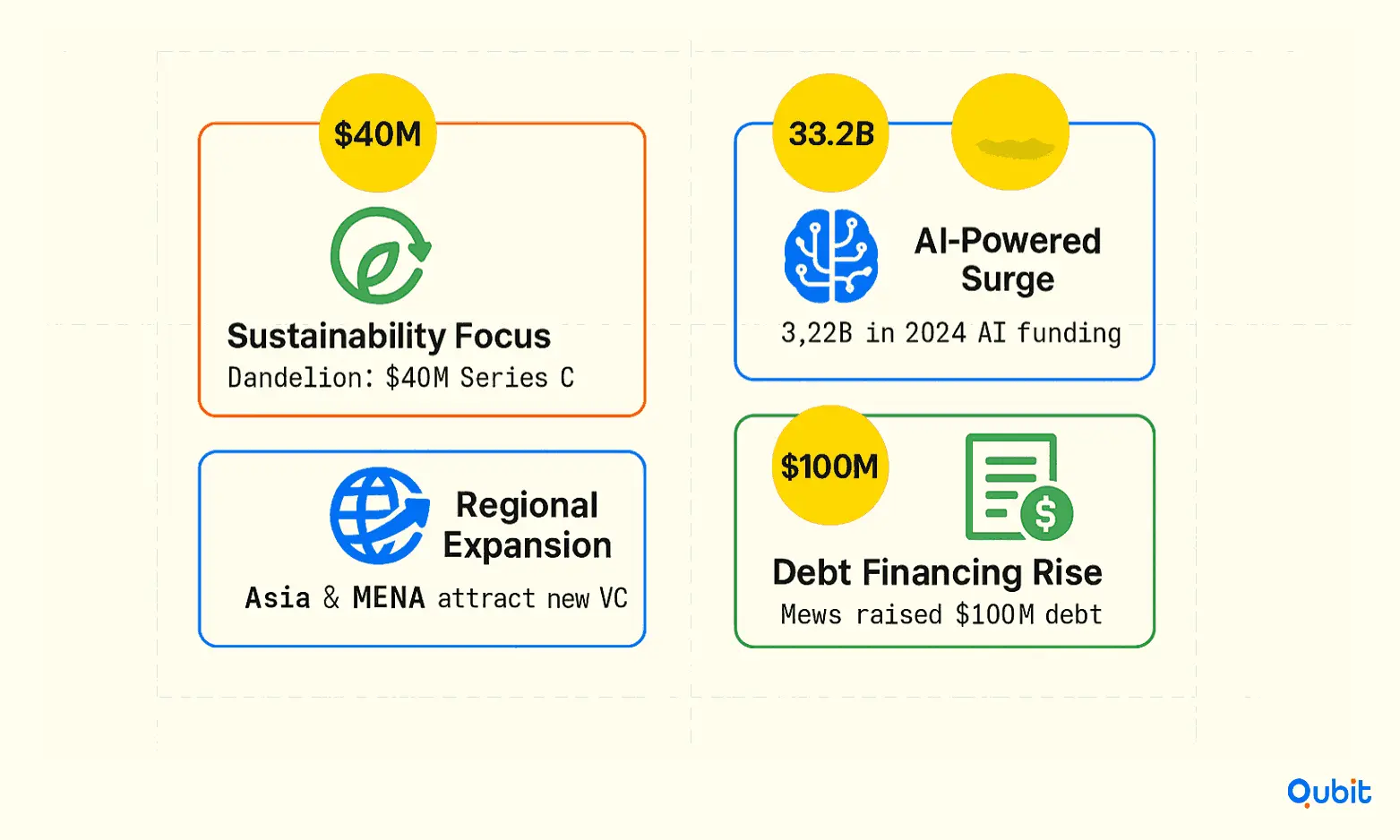
PropTech investment is driven by AI, sustainability, and rapid regional growth, creating diverse opportunities for investors.
Global Expansion in PropTech Investments
PropTech, the fusion of property and technology, is experiencing unprecedented global growth. Multiple market studies point in the same direction: the global PropTech market is expected to reach $44.88 billion, with forecasts of $119.45 billion by 2032 at a 15% CAGR. Other projections show the market expanding from $34.14 billion in 2024 to $131.87 billion by 2033, reinforcing a broad consensus around long-term growth potential and investor confidence.
Emerging technologies such as artificial intelligence (AI), blockchain, and eSigning platforms are transforming how properties are bought, sold, leased, and managed. Investment in automation continues to surge: AI-powered startups attracted $3.2 billion in 2024 alone, targeting critical workflows such as leasing operations and property marketing automation. This pace of funding highlights where investors see the highest impact and ongoing transformation.
AI integration enables predictive analytics for market trends, pricing, and tenant behavior, helping investors and operators make more informed decisions. Meanwhile, eSigning tools streamline transactions, reduce paperwork, and shorten deal cycles—making real estate processes faster, more transparent, and more scalable.
Regional PropTech Adoption: North America’s Leadership
While PropTech is gaining traction worldwide, regional differences strongly influence how and where capital flows. North America held the largest PropTech market share in 2023, driven by early adoption of digital real estate tools, mature capital markets, and a strong ecosystem of tech-savvy investors and operators.
Recent analysis underlines the global scale of activity: PropTech startups worldwide reached 10,000 in early 2024, with nearly 60% based in the US and Europe. This concentration shows how these regions currently anchor PropTech innovation and shape many of the standards the rest of the world follows.
Other regions, however, are rapidly closing the gap.
- Europe is seeing strong momentum, powered by a focus on sustainable real estate, energy-efficient buildings, and ESG-aligned property solutions.
- Asia-Pacific is being driven by rapid urbanization and large-scale infrastructure development, creating demand for digital tools across construction, property management, and smart cities.
These differences highlight why investors and founders need to tailor their PropTech strategies to each region’s market dynamics, regulatory environment, and adoption drivers, instead of assuming a one-size-fits-all global play.
Transformative Technologies Driving Growth
The integration of cutting-edge technologies is at the heart of PropTech’s evolution. AI-powered tools are enabling smarter decision-making, from property valuation to tenant management. Blockchain technology is enhancing transparency and security in transactions, while virtual reality (VR) is transforming property tours into immersive experiences.
One notable example is the rise of eSigning platforms, which have become indispensable in modern real estate transactions. By eliminating the need for physical signatures, these tools accelerate deal closures and improve customer satisfaction. Such innovations are not only reshaping the industry but also setting new benchmarks for efficiency and convenience.
Impact of Immersive Digital Marketing on PropTech Adoption
Building on transformative technologies, immersive digital marketing tools such as VR and AR property tours are reshaping PropTech adoption. These solutions allow investors and buyers to experience properties remotely, increasing engagement and accelerating decision-making. Enhanced visualization capabilities reduce transaction friction and expand market reach, especially in cross-border investments. As VR/AR technologies become more accessible, their influence on PropTech investment patterns continues to grow.
Startups like yours already closed their rounds with us.
Founders across every stage and industry. Here's what it took.
- Raised $7.6M for Swiipr Technologies
- Raised $0.5M for Ap Tack
- Raised €0.5M for Ivent Pro

Investment Strategies: Tactics for PropTech Funding Success
The PropTech sector is evolving rapidly, driven by innovative investment strategies that fuel its growth. $362 million was invested across real estate tech and its adjacent sectors. This activity defies softening trends, signaling investors’ sustained commitment throughout evolving market cycles.
From venture capital targeting disruptive startups to mergers and acquisitions reshaping industry dynamics, the funding landscape is rich with opportunities. This section explores these strategies, offering actionable insights backed by case studies and statistics to help investors and entrepreneurs succeed in this thriving market.
1. Venture Capital PropTech: Early-Stage Innovation
Venture capital remains the primary funding engine for PropTech, with seed-stage deals accounting for around one-third of investments in 2023. In 2023, 36% of global investors targeted seed-stage PropTech startups, underscoring the appeal of disruptive innovation. These startups often focus on technologies like AI, blockchain, and IoT, which promise to revolutionize real estate operations.
2. M&A Trends: Consolidation and Integration
Mergers and acquisitions (M&A) are reshaping the PropTech landscape as companies seek to consolidate resources and integrate advanced solutions. This trend is particularly evident in the adoption of AI-enabled tools to modernize legacy systems.
A compelling example is RXR Realty’s implementation of Vero, an AI-powered fraud screening and leasing tool that reduced delinquency rates from 4.16% to 0.02%. Such integrations not only enhance operational efficiency but also position companies as leaders in the digital transformation of real estate.
Funding diversity is another sign of sector maturity. In 1H 2025, around $2.3 billion in growth equity and debt financing supported 55 M&A transactions, underscoring PropTech’s resilience and its strong appetite for integration at scale.
Regional opportunities are better defined in the best regions proptech startup analysis, which identifies promising geographic hubs for launching PropTech ventures.
3. ESG Integration in PropTech Investment Strategy
Building on sustainability-focused solutions, ESG integration is increasingly central to PropTech investment strategies. Investors prioritize companies that demonstrate measurable carbon reduction, social impact, and transparent governance. ESG-compliant portfolios attract institutional capital and align with evolving regulatory standards. This strategic focus not only mitigates risk but also enhances long-term portfolio value in a competitive market.
4. Actionable Insights for Investors
- Identify early-stage startups
- Explore M&A opportunities
- Prioritize sustainability-focused ventures
Your understanding of the broader funding landscape is deepened by the proptech fundraising guide, which details strategies across funding stages from seed to Series B.
Emerging PropTech Investment Trends & Future Outlook
The PropTech sector is undergoing a transformative phase, poised to bring significant shifts in investment patterns. As technology continues to reshape real estate, investors are closely observing emerging trends that promise to redefine the industry. From advancements in artificial intelligence to the growing emphasis on sustainability, the PropTech market outlook is brimming with potential.
The Rise of AI and Data-Driven Solutions
Artificial intelligence (AI) is no longer a futuristic concept in PropTech; it is becoming a cornerstone of innovation. AI-powered tools are expected to dominate areas such as property valuation, predictive analytics, and tenant management. These technologies enable real estate stakeholders to make more informed decisions, reduce operational inefficiencies, and enhance customer experiences. For instance, AI-driven platforms can analyze vast datasets to predict market trends, offering investors a competitive edge.
Moreover, the integration of machine learning algorithms is likely to expand, allowing for real-time adjustments in property management strategies. This shift not only optimizes resources but also aligns with the growing demand for personalized services in the real estate sector.
Sustainability as a Driving Force
Environmental concerns are reshaping investment priorities, and PropTech is no exception. Green building technologies and energy-efficient solutions are gaining traction, with investors increasingly favoring projects that align with sustainability goals. The focus on reducing carbon footprints and adhering to environmental regulations will likely drive significant capital toward eco-friendly PropTech innovations.
Smart building systems, which monitor and optimize energy usage, are expected to see widespread adoption. These systems not only contribute to sustainability but also offer cost-saving benefits, making them attractive to both investors and property owners.
Blockchain and Tokenization Gaining Momentum
Blockchain technology is set to revolutionize the way real estate transactions are conducted. By enabling secure, transparent, and decentralized processes, blockchain reduces the need for intermediaries, thereby lowering transaction costs.
Tokenization refers to converting property ownership into digital shares, enabling fractional ownership.
In 2026, we can anticipate a surge in blockchain-based platforms that facilitate property transactions and ownership verification. These platforms promise to enhance trust and efficiency, making them a key area of interest for PropTech investors.
Shifting Investor Sentiment
Investor sentiment toward PropTech is evolving, with a growing appetite for innovative solutions that address current market challenges. The pandemic accelerated the adoption of digital tools in real estate, and this momentum is expected to continue. Investors are now prioritizing technologies that enhance flexibility, improve tenant experiences, and ensure business continuity.
Additionally, the rise of hybrid work models has influenced demand for adaptable spaces, prompting PropTech companies to explore solutions that cater to this trend. From smart office designs to virtual property tours, the focus is on creating seamless and efficient experiences for end-users.
Valuation Benchmarks Across Stages
PropTech valuations typically trade at a 15–25% discount to pure software companies, reflecting factors like regulatory complexity, asset intensity, and market cyclicality. This discount shows up clearly in revenue multiples.
- Early stage (Series A):
Early-stage PropTech companies generally trade at 8–12x ARR (Annual Recurring Revenue), compared with 15–20x ARR for pure SaaS businesses at a similar stage. - Growth stage (Series B and beyond):
Public market corrections have compressed late-stage valuations by 35–40% compared to 2021 peaks. As a result, Series B rounds now typically require $5–8M in ARR, versus $3–5M previously, before founders can command competitive terms.
For founders and investors, these benchmarks highlight two realities: PropTech still earns software-like multiples when fundamentals are strong, but the bar for traction and capital efficiency is now materially higher than in the last cycle.
The distinctions between initial and subsequent funding rounds are clarified in the proptech valuation benchmarks overview that contrasts seed and Series A valuations.
Risk Assessment Framework
1. PropTech-Specific Investment Risks
Regulatory risk represents the primary concern, with 23% of PropTech startups facing compliance challenges that delay growth. Real estate licensing requirements vary across 50+ jurisdictions, creating operational complexity and capital requirements for scaling.
Market cyclicality significantly impacts PropTech adoption, with construction technology seeing 40% revenue volatility during economic downturns. Property management software shows more resilience with only 15% volatility during market stress.
2. Economic Sensitivity by Subsector
Interest rate sensitivity varies dramatically: real estate fintech companies experience 60% revenue correlation with rate changes, while property management SaaS shows only 20% correlation. Construction technology demonstrates high GDP sensitivity, with 1% GDP decline typically reducing ConTech revenue by 2.5%.
Subsector Investment Breakdown
1. Capital Allocation Across Categories
Construction technology captured $4.8B in 2024 funding (32% of total), driven by automation and sustainability demands. Property management software secured $3.1B (21%), while real estate marketplaces attracted $2.7B (18%). Emerging categories like PropTech fintech and smart building solutions each captured $1.5B (10%).
2. Growth Trajectories by Vertical
ConTech shows fastest growth at 45% CAGR (Compound Annual Growth Rate), driven by labor shortages and efficiency demands. PropTech fintech grows at 38% CAGR (Compound Annual Growth Rate), benefiting from digitization of mortgage and lending processes. Traditional property management software grows at 22% CAGR (Compound Annual Growth Rate), showing market maturity.
3. Geographic Hotspots
Austin leads US PropTech funding with $890M in 2024, followed by San Francisco ($820M) and New York ($750M). European leaders include London ($340M) and Berlin ($180M). Singapore dominates Asia-Pacific with $210M
Investor Ecosystem Mapping
1. Investor Type Preferences
Corporate venture capital from real estate companies focuses on strategic fit over pure returns, investing average $50M annually across 8-12 deals. Traditional tech VCs prefer scalable software models, avoiding asset-heavy businesses. Real estate private equity increasingly allocates 5-10% to PropTech for portfolio company enhancement.
2. Strategic vs. Financial Investors
Strategic investors (Brookfield Ventures, Related Companies) prioritize integration opportunities and offer industry expertise but move slower on decisions. Financial investors (Fifth Wall, MetaProp) focus on returns and provide faster execution but less operational support.
Strategic vs. Financial Investor Priorities in PropTech
Operational Due Diligence Framework
1. PropTech KPI Benchmarks
SaaS PropTech requires 115%+ net revenue retention and under 8% annual churn for Series A readiness. Marketplace models need 25%+ month-over-month GMV growth and balanced supply/demand ratios. ConTech companies must demonstrate 60%+ gross margins on software components and predictable project completion rates.
2. Technology Integration Timelines
Enterprise PropTech sales cycles average 8-14 months, with implementation taking additional 3-6 months. Customer acquisition costs typically range 12-18 months of customer lifetime value, higher than pure software due to relationship-driven sales processes.
3. Regulatory Compliance Checklist
Multi-state operations require real estate licensing compliance costing $50K-200K annually. Data privacy regulations demand SOC 2 Type II certification and GDPR compliance for international operations. Financial services integration requires additional licensing adding $100K-500K in regulatory costs.
The Role of Venture Capital and Strategic Partnerships
Venture capital (VC) funding remains a critical driver of PropTech innovation. Strategic partnerships between PropTech startups and established real estate firms are expected to grow, fostering collaboration and accelerating the development of cutting-edge solutions. These partnerships not only provide startups with the resources they need but also enable traditional players to stay competitive in a rapidly evolving market.
Furthermore, the influx of VC funding is likely to target niche areas such as co-living spaces, smart cities, and modular construction. These segments offer unique opportunities for growth and are aligned with the broader trends shaping the future of real estate.
Preparing for the Future
As the PropTech landscape continues to evolve, staying ahead of the curve requires a proactive approach. Monitoring technological advancements, understanding shifting consumer preferences, and adapting to regulatory changes will be crucial for investors and industry stakeholders alike.
Conclusion
PropTech is shifting from “nice-to-have add-on” to core infrastructure for how real estate is built, financed, and operated. Capital is still selective, but it’s clearly flowing toward AI, sustainability, and data-rich platforms that solve real, painful problems for owners, operators, and tenants. Regional hubs like the US, UK, Germany, and Singapore are setting benchmarks on valuation, ESG, and regulatory standards, while ConTech, PropFintech, and smart buildings emerge as the fastest-growth verticals.
For founders, that means playing a higher-bar game: software-like metrics, regulatory readiness, and clear ROI for customers. For investors, the winners will be those who blend financial discipline with strategic partnerships in the ecosystem. In this cycle, “PropTech” isn’t a theme trade anymore, it’s where the modern real estate playbook gets written.
If you’re ready to accelerate your funding efforts, our Fundraising Assistance service is designed to secure the capital you need for growth. Contact us today to receive a customized investment strategy for PropTech opportunities.
Key Takeaways
- Global PropTech is growing fast, but capital favors AI-, data-, and ESG-led models.
- North America leads today, while Europe and Asia-Pacific are closing the gap with sustainability and urbanization themes.
- ConTech, PropFintech, and smart buildings show the strongest funding and CAGR momentum.
- Valuations trade below pure SaaS, but still reward strong ARR, retention, and capital efficiency.
- Regulatory complexity, rate sensitivity, and real-estate cyclicality are core risk drivers.
- Strategic vs financial investors play different roles; the best rounds often blend both.
- Robust KPIs, compliance, and integration readiness are now non-negotiable for serious PropTech funding.
Get your round closed. Not just pitched.
A structured fundraising process matched to your stage and investor fit.
- Fundraising narrative and structure that holds up
- Support from strategy through investor conversations
- Built around your stage, model, and timeline
Frequently asked Questions
How does artificial intelligence shape PropTech market trends?
Artificial intelligence in PropTech boosts data-driven decision-making and operational efficiency. AI-driven solutions are key trends attracting investor interest in 2026.