

 Back
Back










Table of Contents

Securing funding is often one of the biggest challenges for agritech and foodtech startups. Traditional equity-based funding can provide essential capital, but it comes at the cost of ownership dilution. That’s where non-dilutive funding options become critical, offering access to capital without giving up equity.
At the same time, global investment patterns are shifting. Agritech startups raised just $616 million, down 45% from $1.1 billion in 2023. Deal counts also fell by 40% to only 113. This downturn highlights the growing need for alternative and non-dilutive capital sources.
For startups in the agri-food sector, exploring these alternatives can unlock sustainable growth while preserving control over strategy and vision.
In this article, we’ll explore the potential of non-dilutive funding and how it can reshape your path to scaling.
What Is Non-Dilutive Funding?
Non-dilutive funding provides capital without requiring founders to give up ownership or control. Unlike dilutive options, such as equity sales or venture capital, which decrease the founder’s percentage stake, non-dilutive sources (like loans, grants, and some types of revenue finance) allow a business to grow while maintaining the founder's equity position.
Key Risks in Dilutive Funding
While equity rounds have been the backbone of Agri/FoodTech innovation for years, founders are increasingly wary of dilutive deals because:
- Venture debt and some loans can require warrants (the right to purchase equity at a fixed price), which if exercised or stacked, may reduce founder ownership meaningfully over time.
- Multiple dilutive deals can force founders below majority control, potentially impacting company direction and decision-making long-term.
Detailed Non-Dilutive Funding Analysis
Non-dilutive funding sources can help Agri/FoodTech startups grow while retaining ownership and control. Key options include grants, revenue-based financing, loans, and crowdfunding. Each offers unique benefits for early and growth-stage companies.
Recent market data highlights these shifts. Since late 2021, venture capital funding has declined 60 percent for agritech. Lower deal counts and funding values drive startups to seek alternatives like non-dilutive grants and revenue-based models.

1. Viable Revenue Streams and Growth Potential
Identifying sustainable revenue streams is critical for Agri/FoodTech startups to attract non-dilutive funding. Subscription-based models, licensing agreements, and direct-to-consumer sales are among the most promising options. For instance, startups offering precision agriculture tools can monetize through Software-as-a-Service (SaaS) subscriptions, while those in the alternative protein space may benefit from licensing proprietary technologies to established food manufacturers.
The growth potential in this sector is immense. According to recent data, the Agri/FoodTech market is projected to expand significantly, driven by increasing consumer demand for sustainable and innovative food solutions. While additional research is required for comprehensive statistical coverage in 2024, the upward trend is evident. Startups that align their revenue models with these market dynamics are better positioned to secure funding.
2. Operational, Technical, and Regulatory Requirements
Securing non-dilutive funding often hinges on meeting specific operational, technical, and regulatory benchmarks. For Agri/FoodTech startups, this could mean adhering to food safety standards, obtaining certifications, or demonstrating the scalability of their technology. For example, startups in the agritech sector must comply with agricultural regulations while ensuring their solutions integrate seamlessly into existing farming practices.
Government grants are a notable source of non-dilutive funding, but they often come with stringent requirements. To explore these options further, startups can refer to resources on agritech government grants, which provide insights into eligibility criteria and application processes.
3. Scalability and ROI Implications
Non-dilutive funding not only preserves equity but also enhances scalability and return on investment (ROI). Startups can reinvest profits into research and development, marketing, or operational expansion without diluting ownership. This approach is particularly advantageous for Agri/FoodTech startups, where innovation and scalability are key drivers of success.
For example, a startup that secures funding for a pilot project can use the results to attract additional grants or partnerships, creating a virtuous cycle of growth. By focusing on ROI and scalability, startups can maximize the impact of non-dilutive funding and achieve long-term sustainability.
Whether you're an early-stage entrepreneur or scaling your operations, understanding these funding avenues is crucial. To dive deeper into strategies for securing capital, check out our guide on agritech startup funding.
Key Alternative & Non-Dilutive Funding Options
Non-dilutive funding sources such as grants and public programs are a vital pillar of Agri/FoodTech innovation. Government funds and innovation grants remain a top source of non-dilutive capital for AgriTech and FoodTech, especially in sectors supporting sustainability, climate adaptation, and public health.
2025 is marked by expanded access. Government agencies, global institutions, and incubators now offer grants ranging from ₹1.5 lakh to ₹2 crore for AgriTech, AI, BioTech, CleanTech, and rural innovation. This enables deeper product and market validation before commercial scaling.
- National grants: In regions like the UK, India, the EU, and the US, programs back R&D, proof of concept, commercialization, and adoption of new technologies.
Examples include: the EU’s EIC Accelerator, USDA Specialty Crop Block Grants, and India’s PMFME and RKVY-RAFTAAR programs. - Academic & research grants: Startups spun out of research or working alongside universities can tap academic funding streams that support innovation and commercialization of lab-to-field solutions.
2. Revenue-Based Financing (RBF)
Revenue-based financing is gaining traction as an attractive, flexible funding model:
- Startups receive upfront capital in return for agreeing to pay investors a fixed percentage of their monthly revenue until the investment is repaid (plus a fee).
- There are no fixed interest payments, and no equity is relinquished.
- RBF works especially well for companies with predictable cash flows/products, including AgriTech SaaS, branded foods, or digital farm platforms.
- It aligns repayments to revenue strength, so slower months mean lower payments, reducing strain on cash flow.
3. Debt Financing (Bank Loans, Growth Loans)
Debt remains a classic non-dilutive option:
- Bank Loans/Growth Loans: While traditional banks used to avoid pre-profit startups, advances in data and analytics now enable some platforms and lenders to assess and underwrite young Agri/FoodTech companies more confidently.
- Debt is typically repaid with interest but provides crucial firepower for purchasing equipment, expanding operations, or bridging to larger rounds.
4. Crowdfunding
Crowdfunding platforms (Kickstarter, Indiegogo, and sector-specific sites) have proven valuable for:
- Consumer-facing food and ag startups (specialty ingredients, kitchen hardware, smart ag devices).
- Raising funds without equity dilution, while also building an early customer base and validating market demand.
- Some platforms now cater to later-stage companies or B2B tools as well.
5. Equipment Leasing as Non-Dilutive Capital
For Agri/FoodTech startups needing expensive equipment, equipment leasing offers a non-dilutive way to access capital assets. Leasing arrangements allow startups to use machinery, vehicles, or specialized technology without the upfront costs or equity dilution of traditional funding. This approach preserves founder ownership and provides operational flexibility, as leases can be structured to match business cash flows and seasonal needs.
Leasing providers often require less stringent financial covenants than banks, making this option accessible to early-stage companies with limited collateral or credit history. By converting large capital expenditures into manageable operating expenses, startups can conserve cash for growth activities and R&D. Equipment leasing also enables rapid scaling, as companies can upgrade or expand their asset base without waiting for equity rounds or loan approvals.
- Preserves founder equity by avoiding asset purchases funded through dilutive capital or restrictive loans.
- Improves cash flow management by spreading costs over time, aligning payments with revenue cycles.
- Supports operational agility, allowing startups to upgrade or swap equipment as technology evolves or business needs change.
6. Accelerators and Incubators: Non-Dilutive Support and Validation
Accelerator and incubator programs offer more than just early-stage funding, they provide critical non-dilutive support for Agri/FoodTech startups. These programs often include small grants, mentorship, pilot opportunities, and access to farmer networks, all without requiring equity in exchange. Participation can accelerate product validation, increase credibility with investors, and open doors to strategic partnerships.
By leveraging the resources and expertise of accelerators, startups can refine their business models, connect with potential customers, and demonstrate traction before seeking larger funding rounds. Many programs also facilitate introductions to corporate partners, research institutions, and potential co-investors, expanding a startup’s ecosystem reach. This non-dilutive support is especially valuable for founders aiming to build a track record and de-risk their venture for future investors.
- Provides mentorship and industry guidance to help founders avoid common pitfalls and accelerate growth.
- Offers pilot access and field trials, enabling startups to validate solutions in real-world agricultural settings.
- Connects startups to farmer networks and potential customers, supporting early adoption and feedback-driven iteration.
Operational & Financial Evaluation
Operational and financial evaluation is critical for accessing non-dilutive funding in Agri/FoodTech.
Securing non-dilutive funding requires a meticulous approach to evaluating operational and financial frameworks. This section delves into the essential methodologies for due diligence, technical assessments, financial validations, and risk management strategies. By aligning these elements, businesses can create a robust foundation that appeals to investors while ensuring sustainable growth.

1. Core Due Diligence and Assessment Frameworks
A comprehensive due diligence process is the cornerstone of any successful funding strategy. It involves evaluating the operational, financial, and legal aspects of a business to ensure transparency and reliability. Key components include:
- Operational Due Diligence: This focuses on the efficiency of processes, supply chain management, and scalability. For instance, agritech startups must demonstrate how their operational models align with industry standards to attract funding.
- Financial Due Diligence: This involves scrutinizing financial statements, cash flow projections, and historical performance to validate the company’s financial health.
- Legal and Compliance Checks: Ensuring adherence to regulatory requirements and intellectual property protections is critical for building investor confidence.
These frameworks not only identify potential red flags but also highlight areas of opportunity, making the business more attractive to funding sources.
2. Technological and Operational Requirements
The technological backbone of a business plays a pivotal role in operational success. For agritech startups, this could mean integrating advanced tools like IoT for precision farming or blockchain for supply chain transparency. Meeting these operational requirements involves:
- Scalability: Investors prioritize businesses that can scale their operations without compromising quality or efficiency.
- Innovation: Companies that adopt cutting-edge technologies often stand out in competitive markets.
- Sustainability: Aligning operations with environmental, social, and governance (ESG) principles is increasingly important. According to recent data, additional research is needed for comprehensive statistical coverage (N/A in 2024), but the trend toward sustainable practices is undeniable.
By addressing these factors, businesses can position themselves as forward-thinking and resilient, qualities that are highly valued in funding decisions.
3. Financial Metrics and Key Performance Indicators (KPIs)
Investors rely on specific financial metrics and KPIs to gauge the viability of a business. These indicators provide a snapshot of performance and potential, making them indispensable for securing non-dilutive funding.
- Revenue Growth: Consistent revenue growth signals market demand and operational efficiency.
- Profit Margins: Healthy profit margins indicate effective cost management and pricing strategies.
- Customer Acquisition Cost (CAC) vs. Lifetime Value (LTV): A favorable CAC (Customer Acquisition Cost)-to-LTV (Lifetime Value) ratio reflects a sustainable business model.
- Burn Rate: Monitoring the rate at which capital is spent ensures that funds are utilized effectively.
These metrics not only validate the financial health of a business but also provide a roadmap for future growth.
4. Risk Identification and Mitigation Strategies
Every business faces risks, but the ability to identify and mitigate them is what sets successful ventures apart. Risk management is particularly crucial for securing funding, as it reassures investors of the business’s resilience.
- Market Risks: These include changes in consumer behavior, competitive pressures, and economic fluctuations. Diversifying revenue streams can help mitigate these risks.
- Operational Risks: Inefficiencies in processes or supply chain disruptions can hinder growth. Implementing robust contingency plans is essential.
- Financial Risks: These involve cash flow issues, debt obligations, or unfavorable market conditions. Maintaining a strong balance sheet and exploring alternative funding options, such as foodtech impact investing, can provide stability.
- Regulatory Risks: Staying ahead of compliance requirements minimizes the risk of legal complications.
By proactively addressing these risks, businesses can build a solid foundation for sustainable growth while enhancing their appeal to investors.
Qubit Capital’s Expertise
At Qubit Capital, we specialize in guiding businesses through the complexities of operational and financial evaluations. Our tailored strategies ensure that you meet the stringent requirements of non-dilutive funding while positioning your business for long-term success.
Why Agri/FoodTech Startups Are Focusing on Non-Dilutive Sources
- Control: Founders retain decision-making power and position for future equity raises at higher valuations.
- Runway: Non-dilutive funds can extend cash runway, fund R&D, or validate market fit before seeking a dilutive round.
- Signaling: Securing competitive grants or innovation prizes can signal legitimacy to later VCs, corporates, and customers.
- De-Risking: Allows for milestone-driven growth, where each success builds the case for larger, less dilutive rounds down the line.
Trends and Considerations for 2025
Types of debt financing include bank loans, venture debt, RBF, and alternative credit platforms. Each serves different startup needs for growth and capital access.
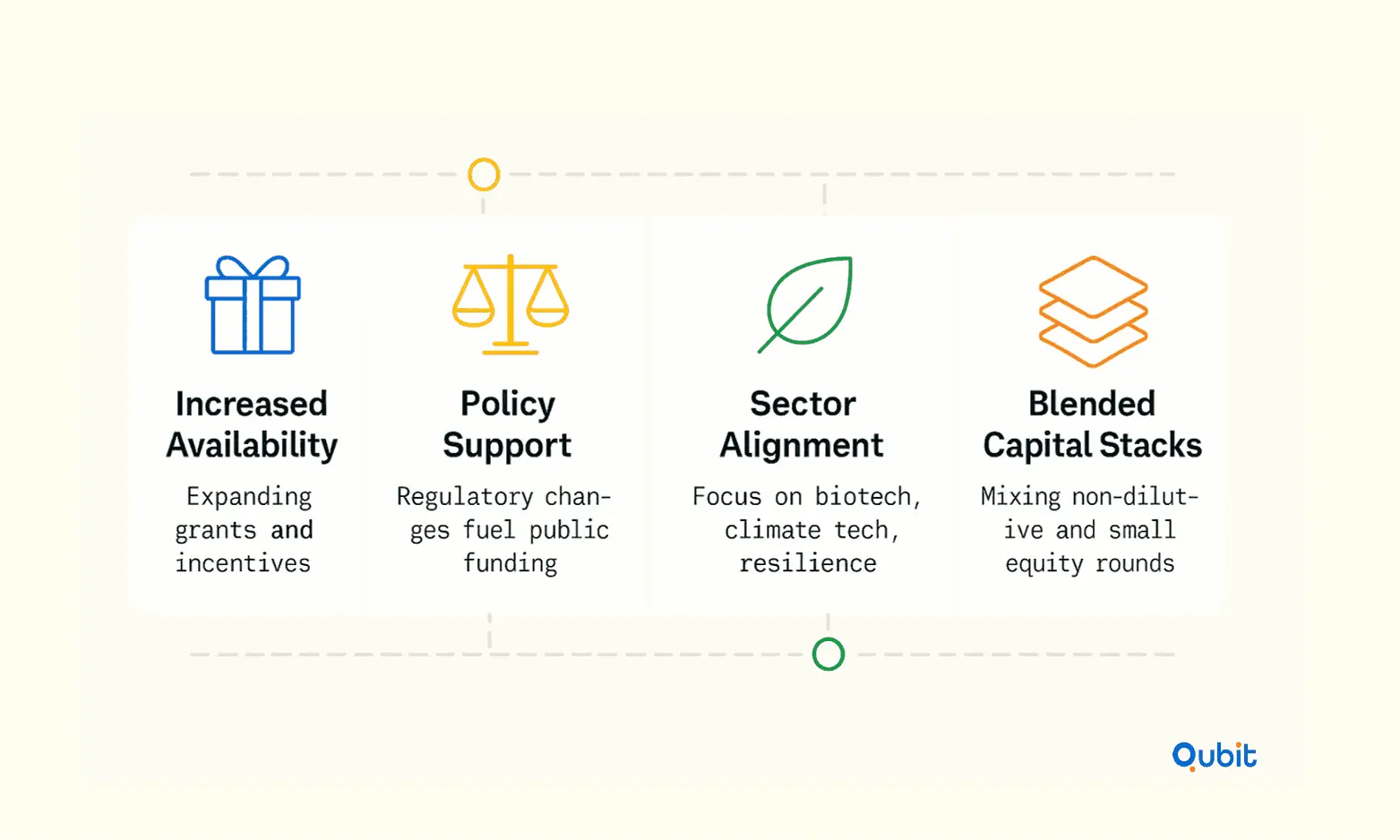
- Increased Availability: Policymakers view Agri/FoodTech as a strategic sector for climate and food security, so grants and incentives are expanding in many regions.
- Policy Support: In the UK and elsewhere, supportive policy and regulatory changes are driving a rise in public funding for sustainable agri-innovation.
- Sector Alignment: Historically underinvested niches such as Ag Biotech, climate mitigation technology, and supply chain resilience now attract both grant makers and alternative finance partners.
- Blended Capital Stacks: Many companies are combining non-dilutive sources (grants, prizes, RBF) with small dilutive rounds to maximize flexibility and minimize early-stage dilution.
Future prospects are formidable. Analysts forecast that the global AgriTech market will reach $48.01 billion by 2028, growing at 11.9% CAGR. Sectors like precision agriculture now employ over 130,000 workers, demonstrating sustainable expansion and sector-wide innovation.
Case Examples
- BioPrime (India) raised venture capital for ag-biologicals but could also tap RBF or government grants for product launches and expansion into markets like the US and Southeast Asia.
- Scaling surplus management for smallholder farmers requires creative capital. Kenya’s Farm to Feed demonstrates successful deployment, raising $1.5 million in seed funding. Their B2B platform rescues produce from waste, connecting farmers to institutional buyers. This funding enabled technology upgrades and expansion in East Africa.
- World Food Prize Foundation finalists regularly use competition winnings as a bridge to product pilots and VC rounds, with global exposure and multi-sector credibility.
- EU/UK startups in agri-automation and food traceability now leverage EIC and local grants to derisk R&D before seeking commercial funding.
Navigating the Options: Practical Tips
- Understand the Terms: Even “non-dilutive” options may sometimes include equity-like features, such as warrants in venture debt, so read the fine print.
- Stack Wisely: Combine grants, RBF, and loans with commercial traction to maximize leverage and avoid unnecessary dilution.
- Be Strategic: Use non-dilutive funds for experiments, pilots, and IP; save equity for when you can command higher investor interest and valuation.
Conclusion
Non-dilutive funding remains a key strategy for Agri/FoodTech startups aiming to scale without equity loss. Throughout this blog, we explored essential strategies such as market analysis, due diligence frameworks, and operational evaluations, all of which play a pivotal role in identifying viable funding opportunities. For agritech startups, revenue-based financing offers a promising avenue to scale operations without compromising equity.
If you're ready to take the next step, our Fundraising Assistance service offers expert guidance from initial outreach to deal closure. Let us help you secure the right funding to propel your venture forward.
Key Takeaways
- Non-dilutive funding preserves founder equity while fueling early growth.
- Government grants support R&D, sustainability, and rural innovation at scale.
- Revenue-based financing offers flexible repayments tied to business performance.
- Crowdfunding validates market interest and funds consumer-facing products.
- Venture debt provides capital without giving up ownership, ideal for growth-stage startups.
- Competitions and prizes offer non-dilutive capital and global visibility.
- Accelerator programs often include grants, mentorship, and pilot access.
- Blend non-dilutive and strategic funding by combining grants, RBF, and equity rounds.
- This reduces dilution and builds resilience for founders and teams.
Frequently asked Questions
Why should you consider non-dilutive funding?
Non-dilutive funding refers to capital that businesses receive without giving up equity or ownership. This funding is particularly appealing for Agri/FoodTech startups as it allows them to retain control while accessing essential resources for growth.