

 Back
Back










Table of Contents

The Identity & Access Management (IAM) market is experiencing explosive growth, fueled by cloud adoption, regulatory pressure, and the escalating sophistication of cyber threats. As organizations grapple with hybrid work, AI-driven automation, and increasingly fragmented digital ecosystems, IAM solutions have become mission-critical for enterprises of all sizes. This surge in demand is matched by a robust funding environment, with venture capital, corporate investors, and alternative channels all competing to back the next wave of IAM innovation.
This comprehensive guide explores the funding landscape for IAM startups, key investor expectations, alternative capital sources, and actionable strategies for founders seeking to raise capital and scale in this dynamic sector.
Why Are Investors All in on IAM Growth?
Investor enthusiasm for IAM is grounded in measurable market expansion and shifting enterprise priorities. The sections below break down the numbers behind the surge and the forces pushing capital toward this category.
1. Market Size & Momentum
Global cloud computing market reached $855.7 billion, growing at 18.91% CAGR. This surge underscores why scalable identity solutions are essential as enterprises transition to hybrid and multi-cloud. For IAM investors, it highlights a massive addressable opportunity. Translate that to your stack: every new SaaS subscription creates another identity surface to govern. SCIM provisioning, SSO connectors, and automated deprovisioning workflows turn identity sprawl into a managed flow. The math compounds fast when 200 apps meet 5,000 employees.
- Cloud and SaaS adoption: Enterprises are migrating to hybrid and multi-cloud environments, requiring scalable IAM to manage identities across platforms.
- Regulatory mandates: GDPR, CCPA, HIPAA, and sector-specific rules are forcing organizations to adopt centralized identity governance, audit trails, and access controls.
- Third-party risk: As digital ecosystems expand, managing external partner and vendor access is now a board-level concern.
As digital ecosystems expand, underutilized credentials become rampant. On average, 85% of credentials have not been used in the last 90 days. This operational inefficiency increases security and identity management risks, driving enterprise demand for more effective IAM solutions. Manual credential audits cannot scale at that volume. Automated access reviews surface dormant accounts in hours, not weeks. That time saved is the core ROI pitch every IAM vendor leads with.
Threat data reinforces IAM urgency. Stolen credentials fueled 80% of web application attacks and 40% of breaches, with phishing involved in nearly 20%. These attack patterns drive rapid IAM adoption to mitigate risk.
Startups like yours already closed their rounds with us.
Founders across every stage and industry. Here's what it took.
- Raised $7.6M for Swiipr Technologies
- Raised $0.5M for Ap Tack
- Raised €0.5M for Ivent Pro

Who’S Investing in IAM? the Evolving Funding
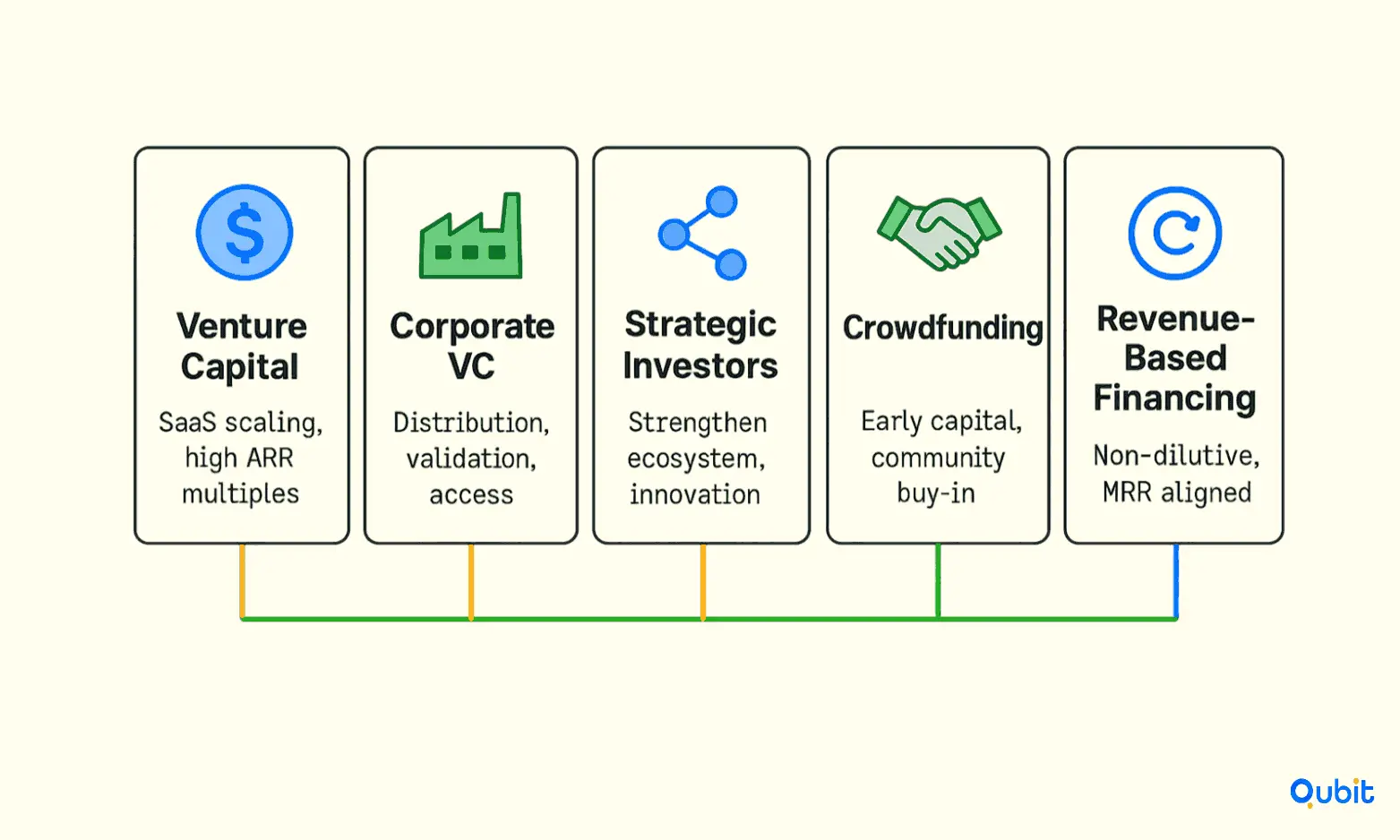
1. Venture Capital
Traditional VCs remain the primary source of early and growth-stage funding for IAM startups. Investors are drawn to:
- Recurring revenue models (SaaS, managed IAM)
- High ARR multiples (often 8 to 15x for high-growth startups)
- Rapid enterprise adoption and strong logo acquisition
Top VC-backed IAM companies include Okta, Auth0, Dashlane, Persona, and ID.me. Many have achieved unicorn status or successful exits.
2. Corporate Venture Capital (CVC)
Corporate VCs from tech giants (e.g., Microsoft, IBM, Cisco) and financial services are highly active in IAM. They bring not just capital but also:
- Distribution channels and co-selling opportunities
- Technical validation and integration partnerships
- Market access to regulated sectors
When enterprises aim to deepen identity security, corporate venture capital in IAM outlines how strategic backers influence technology roadmaps and market expansion.
3. Strategic & Enterprise Investors
Large enterprises, payment networks (e.g., Mastercard), and device manufacturers (e.g., Samsung) are investing in IAM startups. The goal: strengthen their own ecosystems and accelerate innovation.
For founders looking at the broader category, cybersecurity startup fundraising strategies show how IAM rounds fit within the wider security investment thesis that VCs and strategic backers are pursuing.
Alternative Funding: Crowdfunding & Revenue-Based Financing
- Crowdfunding: Identity protection startups are increasingly using equity and rewards-based crowdfunding to access early capital and build community support. As privacy concerns fuel consumer demand, crowdfunding consumer identity-protection solutions explores the platforms and pitch tactics that turn public interest into real funding.
- Revenue-Based Financing: SaaS IAM startups with predictable MRR can tap non-dilutive capital to fund growth without giving up equity.
What Investors Expect: Key Metrics & Proof Points
1. Financial Metrics
- ARR Growth: 2x+ YoY ARR growth is the benchmark for Series A/B rounds.
- ARR Multiples: Top IAM startups command 8 to 15x ARR multiples, especially with strong enterprise traction.
- Burn Multiple: Investors favor burn multiples (ratio of cash burned to revenue added) below 2.5x, signaling capital efficiency.
- Retention: Net revenue retention >110% is considered best-in-class.
Preparing for Series A hinges on demonstrating traction. ARR benchmarks for IAM startups seeking Series A highlight the growth rates and revenue milestones investors look for. Pipeline forecasting tools and ARR dashboards make those benchmarks defensible in a board meeting. Founders who track committed ARR weekly catch trajectory dips early. That same telemetry feeds the data room when the Series A starts.
2. Customer & Product Metrics
- Enterprise Logo Acquisition: Landing Fortune 500 or regulated industry clients signals market fit.
- Churn Rate (percentage of customers lost): <5% is ideal for mission-critical IAM solutions.
- Pilot-to-Paid Conversion: >30% conversion from pilot to paid contract is a strong product-market fit indicator.
- Integration Breadth: Ability to support cloud, SaaS, on-prem, and hybrid environments.
- Compliance Readiness: Certifications like SOC 2, ISO 27001, and alignment with GDPR/CCPA.
3. Technical Differentiation
AI & Automation:
- Passwordless Authentication: Startups innovating in passwordless and biometric authentication are drawing outsized rounds. Teams building passwordless authentication can refine their pitch with seed funding strategies for passwordless authentication startups, which details the steps and metrics that resonate with early-stage backers.
Funding Rounds: How Much Can IAM Startups Raise?
Identity and Access Management (IAM) has become a core layer of enterprise security, and the funding ranges reflect that. Here is what IAM startups can typically raise at each stage, and what investors expect in return.
Seed and Early Stage: $2M–$6M (with Outliers)
At seed, IAM startups usually raise between $2 million and $6 million. The goal at this stage is to:
- Assemble a strong founding and early team
- Prove there’s a real problem and a differentiated technical approach
- Show early signs of product–market fit
There are exceptions at the top end. AuthMind, for example, raised a $19.3 million seed round, far above the usual band. Cheyenne Ventures led, with IBM and Ballistic Ventures backing AuthMind's real-time identity observability across AI, cloud, and hybrid environments.
Series a: $7M–$20M
Series A rounds for IAM startups generally fall in the $7 million to $20 million range. By this point, investors expect:
- $1 million–$3 million in ARR
- Strong customer validation and high retention
- Evidence that the sales motion is repeatable
- A clear go-to-market strategy
Companies like Persona and Dashlane have raised $10 million+ Series A rounds, supported by rapid ARR growth and a credible base of enterprise customers.
Series B and Beyond: $20M–$100M+
From Series B onwards, rounds often land between $20 million and $100 million or more. At this level, investors look for:
- $3 million–$10 million+ in ARR
- Clear paths to scaling GTM and moving upmarket
- International expansion plans
- Broader product coverage (e.g., beyond single-point IAM features)
Auth0’s $103 million round is a good benchmark. The round propelled it to unicorn status, reflecting leadership in securing billions of logins monthly. Other raises like SpyCloud’s $110 million and Cerby’s $40 million Series B show the capital flowing to IAM startups with enterprise traction and technical depth.
Go-to-Market & Scaling Strategies: What Attracts Investors
IAM funding success relies on quantifiable growth and clear compliance signals. Translate that to your dashboard stack: investors should read pipeline velocity, ARR trends, and SOC 2 status in 60 seconds. Founders who automate this reporting close rounds faster than those rebuilding decks by hand. The tool stack often signals operational maturity before the metrics do.
1. Compliance-Driven Adoption
Why It Matters:
Regulatory compliance is now non-negotiable, especially in BFSI, healthcare, and government. Regulations like GDPR, CCPA, HIPAA, and NIS2 mandate strict controls over data access, identity management, and audit trails. Non-compliance triggers hefty fines and reputational damage.
What Investors Want:
- Third-party risk management: Tools to manage and monitor access for vendors, contractors, and partners, which is increasingly critical as digital ecosystems expand
- Automated audit trails: Tamper-proof logs of who accessed what, when, and how.
- Access governance: Centralized control over permissions, with policies that can be enforced and audited.
- Real-time reporting: Instant visibility into compliance status and potential violations.
2. Multi-Cloud & Hybrid Integration
Why It Matters:
Modern enterprises are no longer operating in a single IT environment. They use a mix of public clouds, private clouds, SaaS applications, on-premises systems, and mobile devices. This complexity introduces new identity risks and management challenges.
- What Investors Want:
IAM platforms that can seamlessly integrate across all these environments are in high demand. Key features include: - Scalability and resilience: The ability to handle millions of identities and adapt to rapid changes in enterprise architecture
- Unified identity management: One platform to govern access for all users, devices, and applications, regardless of location or infrastructure.
- API and connector breadth: Support for a wide range of cloud providers (AWS, Azure, Google Cloud), SaaS tools, and legacy systems.
3. AI-Driven Identity Observability
Why It Matters:
The rise of shadow IT, machine-to-machine (M2M) identities, and AI-powered attacks demands real-time visibility into identity activity. Human users are no longer the only risk. Devices, bots, and APIs now drive a significant share of access requests and vulnerabilities.
AI and machine learning
- Lifecycle management: Discovery, provisioning, and decommissioning of both human and machine identities
- Continuous monitoring: Real-time detection of anomalous or risky identity behavior.
- Automated threat detection and response: AI-driven identification of compromised accounts, privilege escalations, or suspicious M2M activity.
4. Passwordless & Decentralized Identity
Why It Matters:
Traditional passwords are a leading cause of breaches. Over 80% of data breaches involve weak or stolen credentials. The shift toward passwordless authentication (biometrics, passkeys) and decentralized identity frameworks gives users control over their credentials.
What Investors Want:
Startups innovating in:
Privacy-preserving technologies:
- Passwordless authentication: Solutions that use biometrics, hardware tokens, or device-native credentials to eliminate passwords entirely.
- Decentralized identity: Blockchain or distributed ledger-based identity systems that empower users and reduce reliance on centralized databases.
Case Studies: Recent IAM Funding Successes
Recent funding rounds offer a clearer picture of what investors reward in this space. The examples that follow highlight specific companies, their raises, and the strategies that attracted backing.
1. AuthMind (US, 2025)
- Raised: $19.3M seed round led by Cheyenne Ventures, with support from Black Opal Ventures, IBM, and others.
- What Worked: Real-time identity observability for hybrid, cloud, and AI-driven environments; rapid deployment; strong enterprise traction; and a visionary team.
- Investor Insight: “AuthMind is redefining identity protection by providing continuous, context-driven observability, posture management, and threat detection for all identities and their access paths across multi-cloud, SaaS, and on-premises environments.”
2. Auth0 (US, 2024)
- Raised: $103M in a round led by Sapphire Ventures, reaching unicorn status.
- What Worked: Highly customizable, developer-centric identity platform securing billions of logins monthly; strong enterprise adoption and rapid scaling.
3. Socure, Onfido, Evident
Raised:
- What Worked: Addressing regulatory compliance, digital onboarding, and fraud risk for financial services and e-commerce clients.
Actionable Tips for IAM Founders
- Benchmark your ARR, growth, and retention against top IAM startups.
- Build a world-class team with domain expertise and enterprise credibility.
- Focus on compliance, multi-cloud integration, and AI-driven features.
- Use alternative funding (crowdfunding, RBF, grants) to extend runway and build community.
- Engage early with CVCs and strategic partners for distribution and technical validation.
- Prepare a data-driven pitch deck with clear metrics, customer wins, and product differentiation.
- Maintain a clean data room and be ready for investor due diligence.
Conclusion
Investors back IAM startups that solve real-world problems at scale. The winning patterns: automating compliance, integrating across complex environments, offering AI-powered visibility, and leading the passwordless and decentralized shift. The most attractive founders anticipate where the market is headed, not just where it stands today.
The funding environment for IAM solutions is crowded and complex, don’t let your startup get lost in the noise. Use our Fundraising Assistance service to access proven investor strategies, a tailored outreach plan, and expert support that helps you win over even the toughest security-focused investors.
Key Takeaways
- IAM is a high-growth, high-priority sector with robust investor demand and rising valuations.
- Recurring revenue, rapid growth, and enterprise traction are essential for successful fundraising.
- Alternative funding channels (crowdfunding, RBF, grants) offer flexibility and strategic leverage.
- Compliance, multi-cloud support, and AI-driven observability are key differentiators for attracting capital.
- Strong teams, visionary leadership, and technical innovation are common traits among funded IAM startups.
Get your round closed. Not just pitched.
A structured fundraising process matched to your stage and investor fit.
- Fundraising narrative and structure that holds up
- Support from strategy through investor conversations
- Built around your stage, model, and timeline
Frequently asked Questions
How big is the global IAM market?
The global IAM market is projected to reach $17.2 billion in 2025. Analysts expect it to grow to $73.3 billion by 2035. The broader cloud computing market sits at $855.7 billion with 18.91% CAGR. Rising compliance demands and hybrid work patterns drive IAM adoption. Investors view IAM as a core layer of enterprise security spending.