

 Back
Back









Table of Contents

Maintaining insurance policies to meet debt covenants is not a back-office formality. It is a core risk management requirement that can make or break lender confidence. Debt covenants often mandate specific coverage types, limits, endorsements, and insurer ratings. Miss one detail, and you risk technical default, higher borrowing costs, or forced renegotiations at the worst possible time.
For growing companies and leveraged businesses, insurance compliance sits at the intersection of finance, legal, and operations. As debt structures evolve, coverage requirements change too. What worked at signing may quietly fall out of compliance after renewals, acquisitions, or policy adjustments. Lenders notice these gaps faster than founders expect.
With tighter credit markets and stricter covenant monitoring, maintaining compliant insurance is now a proactive discipline, not a once-a-year checklist. It requires clear documentation, regular reviews, and alignment between brokers, finance teams, and lenders.
This guide explains how to maintain insurance policies that meet debt covenants, avoid hidden compliance risks, and protect both your balance sheet and borrowing flexibility.
What are Debt Convenants?
Debt covenants are contractual promises embedded in loan agreements. They ensure that the borrower maintains certain financial and operational standards. Among these, insurance covenants require startups to carry specific insurance policies with defined coverage limits and terms.
The scale and criticality of the insurance sector amplify the consequences of noncompliance. In 2024, insurance industry market share reached $216.4 billion. This volume underscores why lenders monitor insurance compliance so closely. The stakes involved shape their risk policies.
If your business enters a new market, confirm local regulatory insurance requirements are met and communicate changes to lenders. For insurtech startups, these covenants are especially critical because, in finance, covenants set the rules for borrower behavior and risk management.
Startups like yours already closed their rounds with us.
Founders across every stage and industry. Here's what it took.
- Raised $7.6M for Swiipr Technologies
- Raised $0.5M for Ap Tack
- Raised €0.5M for Ivent Pro

Why Debt Covenants Matter for Insurance Startups
Understanding the typical insurance requirements lenders impose helps you prepare effectively. Debt covenants insurance startup compliance often depends on these common insurance covenants.
This focus on mandated policies reflects broader credit trends. In 2025, the U.S. venture debt market was projected to reach $27.83 billion. Lenders protect these assets by imposing standardized insurance covenants, especially for tech-driven startups.
1. Coverage Type and Minimum Limits
Lenders specify the types of insurance you must maintain and the minimum coverage limits. Typical policies include:
- Cyber Liability Insurance: Covers losses from data breaches, ransomware, and cyberattacks. For insurtech startups, this is often mandatory given the sensitive data handled.
- Directors & Officers (D&O) Insurance: Protects your leadership team from personal liability related to management decisions.
- Errors & Omissions (E&O) or Professional Indemnity Insurance: Covers claims arising from professional errors or negligence in advisory or algorithmic services.
- General Liability Insurance: Protects against bodily injury or property damage claims.
- Key Person Insurance: Covers financial loss if a critical founder or executive is incapacitated or passes away.
- Regulatory Liability Insurance: Protects against fines and penalties due to regulatory breaches.
Minimum coverage limits typically scale with your loan size and risk profile. For example, a lender might require $3 million in cyber liability coverage. This is typical for a $10 million loan.
2. Naming the Lender as Additional Insured or Loss Payee
Lenders usually require to be named as:
- Additional Insured: Grants the lender direct rights under the insurance policy.
- Loss Payee: Ensures that insurance payouts related to collateral or assets go directly to the lender.
This protects lenders’ interests and ensures they receive compensation first in case of a claim.
3. Proof of Insurance and Ongoing Reporting
You must provide:
- Certificates of insurance (COIs) annually or upon renewal.
- Broker’s letters confirming compliance.
- Immediate notification of any material changes, cancellations, or claims.
Failure to provide timely evidence can be treated as a covenant breach.
4. Non-Invalidation Clauses
These clauses protect lenders if you miss premium payments or inadvertently breach policy terms, ensuring the policy remains valid for the lender’s benefit.
For a detailed breakdown of compliance strategies, see insurance compliance & covenant management.
5. Negotiate Materiality Thresholds and Cure Periods
Beyond understanding standard insurance covenants, founders should proactively negotiate terms that allow for operational flexibility. Materiality thresholds define the severity of breaches that trigger lender action, so minor lapses do not result in immediate penalties. Cure periods give startups a window to fix compliance issues before lenders can enforce remedies or accelerate repayment.
These provisions are especially valuable for insurtech startups, where insurance requirements may change due to evolving risks or business models. By negotiating clear thresholds and reasonable cure periods, founders can avoid disruptive consequences from minor administrative errors or temporary coverage gaps.
Including these terms in your debt agreements demonstrates strategic foresight and risk management. It also signals to lenders that your team is committed to maintaining compliance, while protecting the business from unnecessary disruptions. Founders should engage legal counsel to ensure these provisions are drafted precisely and reflect realistic operational timelines.
The Impact of Breaching Insurance Covenants
Breaching an insurance debt covenant is a serious issue with immediate financial and operational consequences:
- Loan Acceleration: The lender can demand immediate repayment of the outstanding loan amount.
- Default Triggers: Breaches can trigger defaults, allowing lenders to impose penalties, increase interest rates, or restrict further borrowing.
- Balance Sheet Impact: Under accounting standards like IFRS, breached covenants may require reclassification of long-term debt as current liabilities, affecting your financial ratios and investor perception.
- Funding Delays: Breaches can stall or derail future fundraising rounds due to perceived risk.
Real-World Example
In 2023, an insurtech startup faced a $5 million loan default after a cyber insurance policy lapsed unnoticed. The lender accelerated repayment, forcing the startup to seek bridge financing at unfavorable terms. This incident underscores the importance of proactive insurance management.
Best Practices for Maintaining Insurance Policies to Meet Debt Covenants
For debt covenants insurance startup compliance, maintaining a disciplined, proactive approach is essential. Here are actionable steps to help you stay on track:
Automation reduces risk of manual errors during compliance management. Venture debt commonly features amortization schedules of 36–48 months. Startups now deploy digital policy trackers to ensure uninterrupted insurance and satisfy these multi-year requirements.
1. Align Insurance Coverage with Lender Requirements
- Review your loan agreement carefully for specific insurance clauses, which are often included as part of financial covenants.
- Work with insurance brokers experienced in insurtech to tailor policies.
- Ensure coverage limits meet or exceed lender minimums.
- Regularly benchmark your policies against industry standards and peer startups.
Effective risk mitigation strategies help prevent compliance failures.
2. Correctly Name Lenders on Policies
- Understand the difference between additional insured, loss payee, and composite insured status.
- Composite insured status (provides lenders direct claim rights regardless of borrower default) offers the strongest protection.
- Confirm with your insurer that lender naming is correctly documented.
3. Automate Renewal and Premium Tracking
- Use digital tools or policy management software to track renewal dates and premium payments.
- Set automated reminders well ahead of renewal deadlines.
- Consider multi-year policies to reduce renewal risks.
4. Maintain Transparent and Timely Reporting
- Prepare and submit Certificates of Insurance (COIs) and broker letters promptly.
- Notify lenders immediately about any policy changes, claims, or cancellations.
- Incorporate insurance reporting into your regular board and investor updates.
5. Integrate Insurance Compliance into Governance
- Make insurance compliance a standing agenda item in board meetings.
- Assign a dedicated compliance officer or team responsible for insurance covenant management.
- Conduct quarterly reviews of insurance policies and covenant status.
6. Prepare for Due Diligence
- Keep all insurance documentation organized and easily accessible.
- Anticipate lender requests during refinancing or new funding rounds.
- Use third-party audits or certifications to validate your insurance program.
Before your next data dump, read reporting insurance metrics to venture capitalists and lenders to translate actuarial speak into investor-ready insights.
7. Perform Stress Tests and Financial Modeling
Building on due diligence preparation, founders should conduct stress tests and financial modeling to evaluate how covenant requirements impact cash flow and runway. This process involves simulating scenarios such as insurance premium increases, policy lapses, or unexpected claims to assess whether the business can maintain compliance under adverse conditions.
By modeling these risks, startups can identify potential vulnerabilities before entering debt agreements and adjust coverage, reporting, or operational processes accordingly. This proactive approach enables founders to negotiate terms that reflect realistic business challenges and avoid surprises that could trigger covenant breaches.
8. Engage Legal and Accounting Experts Early
Beyond financial modeling, founders should consult experienced legal and accounting professionals before finalizing debt agreements. These experts can identify restrictive provisions such as cross-default clauses or ambiguous insurance requirements that may increase compliance risk. Early review ensures that insurance covenants are clearly defined and that reporting obligations are feasible for the startup’s resources.
Legal counsel can negotiate more favorable terms and help founders understand the implications of each covenant, while accountants ensure that financial certifications and documentation meet lender standards. This collaborative approach reduces the likelihood of accidental breaches and supports smoother fundraising and refinancing processes.
If you are unable to source insurer coverage, consult lenders for temporary waivers or alternative risk mitigation strategies.
Using Insurance Compliance to Enhance Fundraising and Growth
For debt covenants insurance startup success, maintaining insurance policies is not just about avoiding penalties. It can also be a strategic advantage:
Demonstrating insurance compliance supports access to rapidly growing capital pools. In H1 2025, the fintech market attracted $44.7 billion across 2,216 deals. Lenders and investors increasingly link such opportunities to operational rigor.
- Support Valuation Growth: Robust insurance coverage positively influences valuation.
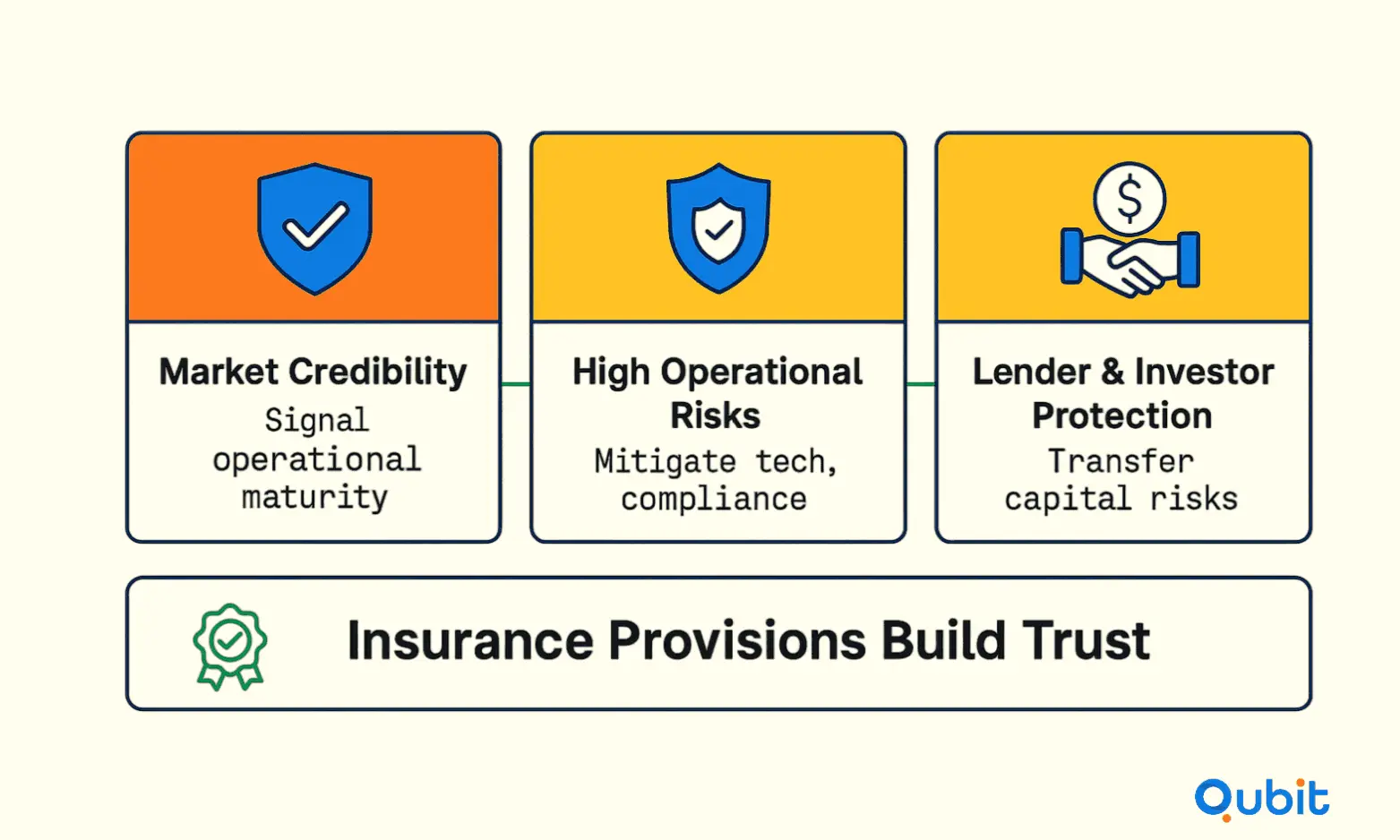
- Build Investor Confidence: Demonstrates operational maturity and reduces perceived risk.
- Negotiate Better Terms: Startups with strong insurance compliance often secure lower interest rates and higher loan amounts.
- Accelerate Funding: Compliant startups close funding rounds 20-30% faster on average.
Digital Tools and Technologies to Support Insurance Compliance
Insurance startup policy management is streamlined by leveraging technology for insurance covenant management:
- Policy Management Platforms: Centralize policy documents, renewal dates, and compliance status.
- Automated Alerts: Trigger reminders for renewals, premium payments, and reporting deadlines.
- Compliance Dashboards: Provide real-time visibility to founders, CFOs, and board members.
- Integration with Financial Systems: Link insurance compliance data with loan management and accounting software.
These tools reduce human error and ensure continuous covenant compliance.
Renewal Strategies to Avoid Financing Disruptions
Insurance renewals are a critical juncture. Poor renewal management can cause lapses, triggering covenant breaches. Best practices include:
- Start renewal discussions 90-120 days before expiry.
- Review coverage adequacy and adjust for business changes.
- Negotiate multi-year renewals or locked-in premium rates when possible.
- Coordinate renewal timing with lender reporting requirements.
Missed renewals and compliance lapses can have downstream impact on funding. In 2024, startup financing saw $58.7 billion in deals, up 119.3% from 2023. Securing your share depends on avoiding disruption from insurance policy gaps.
Maintaining insurance to meet debt covenants doesn’t just protect against default, it signals operational discipline to investors and partners. Startups with a strong compliance record often secure better terms on future loans, lower interest rates, and greater trust from VCs. For more on leveraging compliance in fundraising, see insurtech fundraising strategies.
Conclusion
For debt covenants insurance startup compliance, maintaining insurance policies is both a legal obligation and a strategic advantage.
By understanding your lender’s requirements, customizing your coverage, and building compliance into your operations, you protect your business from costly disruptions and position yourself for growth. Treat insurance compliance as a core part of your governance, not just a lender’s demand, and you’ll build stronger relationships with lenders, investors, and partners.
Target right-fit funds and maintain momentum using our insurance startup financing services, from outreach sequences to metrics packaging. Download our compliance checklist or schedule a free policy review with our experts today.
Key Takeaways
- Insurance covenants are standard in debt for insurtech startups and must be maintained throughout the loan term.
- Breaching a covenant can make your loan immediately due and disrupt your balance sheet.
- Align coverage, name the lender properly, and automate renewals to avoid compliance failures.
- Regular reporting and board-level oversight are essential for ongoing compliance.
- Proactive compliance supports future fundraising and strengthens investor trust.
Get your round closed. Not just pitched.
A structured fundraising process matched to your stage and investor fit.
- Fundraising narrative and structure that holds up
- Support from strategy through investor conversations
- Built around your stage, model, and timeline
Frequently asked Questions
What are insurance covenants in startup debt agreements?
Insurance covenants are binding clauses in loan agreements that require the borrower to maintain specific insurance policies for the entire loan term. They typically cover general liability, cyber insurance, professional liability, and D&O coverage. Failing to meet these requirements puts the borrower in technical default, even if all payments are current.