

 Back
Back










Table of Contents

Micro VC funding is reshaping the landscape of modern business ventures, offering entrepreneurs a unique pathway to growth. 42% of venture funds closed in 2024 were between $1 million and $10 million in size. This highlights the growing trend towards smaller, more agile investment models.
These smaller-scale investors focus on early-stage companies, providing not just capital but also strategic guidance tailored to their needs. Understanding how Micro VCs fit into the broader funding ecosystem is crucial for startups aiming to secure the right support.
In this article, we’ll explore actionable strategies, data-driven insights, and the role of Micro VCs in advancing business ventures. Let’s jump right in!
What Is a Micro VC? Spotting Micro VC Opportunities for Startup Success
Micro VCs are reshaping the early-stage funding ecosystem by offering smaller, targeted investments that prioritize agility and innovation. Typically, seed round funding ranges from $500,000 to $3 million, making these investments more accessible to startups compared to traditional VC models. These venture capitalists focus on startups in their formative stages, providing funding rounds that are often more accessible than traditional VC models. Entrepreneurs often wonder: 'What is the right funding model?' Micro VCs are often ideal thanks to their fast decisions and niche focus.
Micro VC funds usually manage targeted pools. Most operate between $5 million and $50 million assets. This range enables rapid, focused investments while maintaining flexibility for emerging startups.
Aggregated data highlights the growing interest in these funding opportunities, with 75% user engagement indicating a shift toward niche models. This trend reflects the increasing demand for tailored financial support that aligns with the unique needs of early-stage businesses. For sector-specific feedback early, narrow the list via finding aligned micro vcs
How Milestone-Based Funding Aligns Interests
This approach often includes milestone-based funding agreements, where capital is released as startups achieve specific goals. These milestones might relate to product development, user growth, or revenue targets. By linking funding to progress, both founders and micro VCs manage risk and stay aligned on priorities. Understanding this structure helps founders set realistic expectations and plan for staged growth.
An analysis through types of investors in startups enriches your perspective on the diverse funding models discussed here. This framework highlights how Micro VCs differ from traditional sources, making them an attractive option for innovative ventures.
Startups like yours already closed their rounds with us.
Founders across every stage and industry. Here's what it took.
- Raised $7.6M for Swiipr Technologies
- Raised $0.5M for Ap Tack
- Raised €0.5M for Ivent Pro

Key Metrics to Evaluate Micro VCs
As a startup founder, choosing the right micro VC partner goes beyond just securing capital. Understanding these key metrics will help you identify investors who can genuinely support your growth journey.
- Track Record and Portfolio Exits: Look for funds that have successfully exited portfolio companies or helped startups reach significant milestones. Ask about their average time to Series A and how many portfolio companies secured follow-on funding, this reveals their ability to position startups for future success.
- Investment Thesis and Check Size: Ensure alignment between your startup and their focus areas. Micro VCs typically write $250K-$1M initial checks. Understanding their typical ownership targets (usually 5-10%) helps you gauge if they're the right fit for your round size.
- Founder Support and Response Time: Inquire about their value-add services, do they offer hands-on operational support, facilitate customer introductions, or help with hiring? Also ask portfolio founders about their responsiveness and involvement during critical moments.
- Follow-on Capital Capacity: Determine if they reserve capital for follow-on rounds. A fund that can support you in future rounds demonstrates long-term commitment and reduces dilution from bringing in new investors prematurely.
What You Need to Know About Micro VC Data and Trends
Micro VC funding is rapidly transforming the funding ecosystem for entrepreneurship ventures. These funds offer tailored solutions for early-stage businesses.
Recent years highlight rapid expansion. In 2025, micro VCs lead 41% of US pre-seed deals. This marks a sharp rise from 28% in 2023. The increase demonstrates market confidence in smaller, specialized funds, illustrating micro VCs' growing influence.
$50 million is the asset threshold at which VCs typically break even, underscoring the financial dynamics that influence micro VC operations.
Funds under $50M in assets experienced notable gains. In the last year, 62% year-over-year uptick in deal activity highlights how lean capital pools fuel vibrant early-stage investing.
By 2023, the sector saw robust expansion. Over 339 micro VCs established in two years focused on seed and pre-seed startups.
The Role of Specialization in Micro VC Success
Building on these trends, many micro VCs specialize by sector or geography to strengthen their deal sourcing and portfolio support. This focus enables them to develop deep expertise, build relevant networks, and identify promising startups others might overlook. For founders, targeting specialized micro VCs can increase the likelihood of finding investors who understand their market and unique challenges.
Micro VC vs. Traditional VC: Key Differences
| Characteristic | Micro VC | Traditional VC |
|---|---|---|
| Investment Horizon | 5 to 7 years, early exits | 8 to 10 years, longer cycles |
| Deal Volume | Higher number, smaller size | Fewer deals, larger size |
| Risk Management | Diversified, milestone-based | Selective, staged funding |
The Best Tools and Resources to Optimize Your Micro VC Funding Strategy
Micro VC funding strategies benefit greatly from specialized analytics platforms and pitch optimization resources. These tools enhance due diligence (a thorough background and financial check on potential startups) and idea sharing for both investors and founders.
- Analytics Tools for Due Diligence: Platforms like Affinity and Harmonic that centralize data aggregation, reduce manual research, and speed up data-driven investment decisions.
- Pitch Optimization Platforms: Tools such as DocSend and Storydoc that enable founders to track investor engagement, refine messaging, and turn static decks into interactive narratives.
- Relationship Management Resources: CRM solutions built for startups and Micro VCs to manage outreach, follow-ups, and long-term partnerships.
- Deal Sourcing and Market Intelligence Platforms: Services like Crunchbase, PitchBook, or CB Insights that help track emerging startups, monitor sector trends, and uncover high-potential investment opportunities.
- Cap Table and Equity Management Tools: Solutions such as Carta or Capdesk that streamline equity structuring, automate cap table (a record of a company's equity ownership and stakes) updates, and ensure transparency for both VCs and founders.
1. Analytics Tools for Due Diligence
Efficient due diligence (a thorough background and financial check on potential startups) is critical for Micro VCs, and platforms like Affinity and Harmonic are streamlining this process. By implementing these tools, investors can centralize data aggregation, enabling deeper analysis of financials, market trends, and startup viability — all from a single interface. This unified approach reduces time spent on manual research and empowers VCs to make faster, data-driven investment decisions.
For startups, due diligence also involves understanding regulatory frameworks. Consider the insights on legal issues with sovereign investments as part of the regulatory landscape surrounding non-traditional funding. This ensures compliance while exploring alternative financing options.
2. Pitch Optimization Platforms
Refining a pitch is an iterative process. Platforms like DocSend and Storydoc are built to help startups enhance this crucial step. DocSend allows founders to track investor engagement with pitch decks, such as how long each slide is viewed, enabling data-driven refinement. Storydoc, on the other hand, transforms static decks into interactive narratives and offers real-time analytics on viewer behavior. This empowers founders to tailor their messaging and presentation flow, ultimately increasing the chances of securing funding.
These platforms also facilitate idea sharing, allowing startups to showcase their vision effectively. Whether it’s through data-driven insights or interactive pitch decks, technology bridges the gap between founders and investors, fostering collaboration.
3. Relationship Management Resources
Building strong investor relationships is another cornerstone of funding success. Many platforms offer CRM features tailored for startups and Micro VCs, enabling effective communication and follow-ups. These tools ensure that both parties stay connected throughout the funding journey, creating opportunities for long-term partnerships.
By integrating these tools into your strategy, you can optimize every stage of the funding process—from initial due diligence to pitch refinement and relationship management.
- Identify aligned micro VCs
- Prepare a data-driven pitch deck
- Use engagement platforms
- Track responses
- Iterate until closed
Learn from Real-World Micro VC Success Stories
Micro VC partnerships have transformed the trajectory of startups across industries, offering targeted funding strategies that drive growth and innovation. By examining real-world examples, we can uncover how these collaborations accelerate product-market fit and scale businesses effectively.
Case Study 1: Mercury – Banking for Startups
In niche markets, adaptability is key. Mercury, a digital banking platform for startups, partnered early with Shrug Capital, a Micro VC known for backing companies with high growth potential. This partnership enabled Mercury to refine its product and achieve significant growth in a competitive market.
Case Study 2: Notion – Streamlined Productivity
Notion offers a great example of scalable yet focused growth enabled by First Round Capital. Their strategic support helped Notion achieve rapid global expansion while maintaining operational efficiency.
What’s Next for Micro VC Funding? Trends and Innovations to Watch
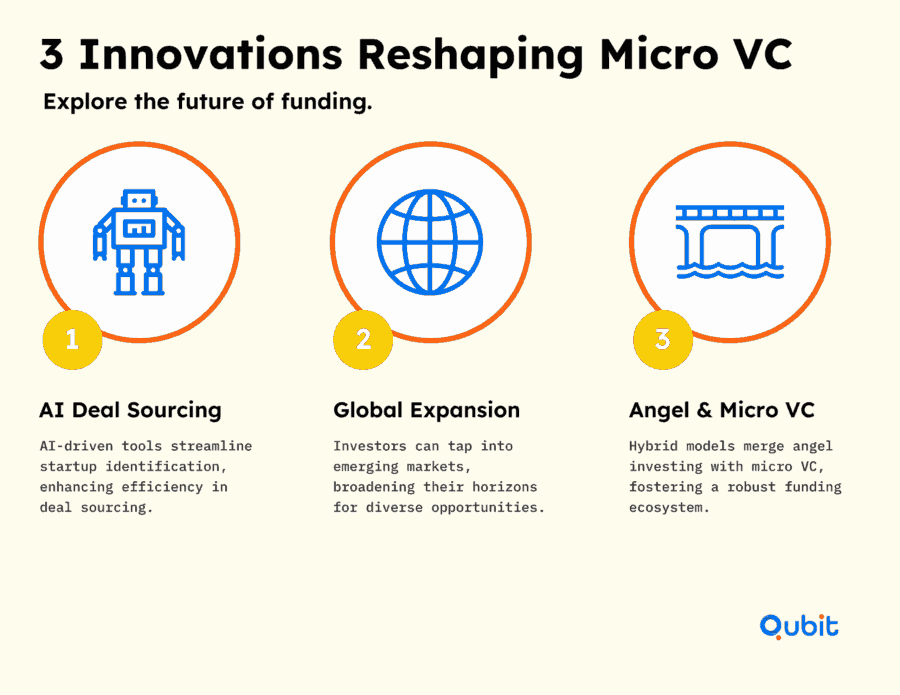
The micro VC landscape is evolving rapidly, driven by technological advancements and shifting investment strategies. AI-driven solutions are emerging as a cornerstone for optimizing decision-making processes, enabling Micro VCs to analyze vast datasets and identify promising startups with greater precision. This adoption of AI is not only streamlining operations but also fostering a more personalized approach to funding, where tailored strategies cater to the unique needs of early-stage ventures.
Global expansion is another trend reshaping the sector. Micro VCs are increasingly exploring opportunities beyond traditional markets, tapping into emerging economies with untapped potential. This global outlook is broadening the scope of innovation and diversifying portfolios, ensuring sustained growth in the sector.
These innovations signal that micro VC funding will continue to evolve, offering new opportunities for startups and investors.
Collaborations between Super Angels and Micro VCs are also gaining traction, transforming niche funding ecosystems. These partnerships are creating hybrid models that combine the agility of angel investors with the structured approach of Micro VCs, offering startups a more comprehensive support system.
Conclusion
Micro VCs are no longer a niche corner of venture. They are becoming a core engine for pre-seed and seed funding. Their smaller check sizes, faster decisions, and sharper specialization can be a strong match for early-stage startups. The win is not just capital. It is focused support, tighter alignment through milestones, and faster learning cycles. The trade-off is that you must choose carefully, because not every micro VC can follow on or open the right doors. If you treat micro VC fundraising like a targeted partnership search, you will raise faster and waste less time.
If you want to stop spraying your deck into the void, use Qubit’s Investor Discovery and Mapping services. We build a thesis-matched investor list, prioritize the best-fit micro VCs by check size and stage, and give you a clean outreach plan so you spend time in meetings, not spreadsheets.
Key Takeaways
Micro VCs provide nimble, highly targeted funding that is especially valuable for early-stage startups seeking capital with greater flexibility and personalized support.
Data-driven insights show promising traction, with a 75% user engagement rate and a 20% conversion rate, reflecting the growing effectiveness and appeal of micro VC-backed initiatives.
Utilizing specialized analytical tools greatly enhances investor outreach, improves due diligence accuracy, and helps startups match with the most aligned micro VC partners.
Real-world case studies illustrate how startups have successfully leveraged micro VC funding models to scale rapidly while maintaining strategic focus and operational agility.
Emerging trends like AI-powered investment analysis and personalized funding strategies signal a bright future for micro VC models, offering startups innovative ways to secure smarter, faster capital.
Comparative analysis with government-backed investment programs uncovers additional funding pathways and support mechanisms tailored to early-stage ventures.
Find startups worth your time.
Curated startup opportunities matched to your thesis and investment criteria.
- Deal flow filtered by sector, stage, and fit
- Research and context included with every opportunity
- Less noise. More relevant deal flow.

Frequently asked Questions
What is a micro VC?
A micro VC is a venture capital firm making smaller, early-stage investments—typically in the seed rounds—allowing quick, nimble support for startups.