

 Back
Back








Table of Contents

Global assets under management hit a record $147 trillion by the end of June 2025. That is a lot of capital chasing a limited number of great opportunities. In that kind of market, investor relations stop being a “nice to have.” They become a growth lever. They also become a risk control.
Strong investor relations are built on trust and clear communication. Stakeholders want consistency, not surprises. They want updates that are honest, timely, and useful. Before you try to strengthen relationships, you need a solid base. That means a clear narrative, the right cadence, and aligned expectations from day one.
This blog shows how to build that foundation and keep it strong over time. You will learn practical ways to communicate transparently, plan strategically, and act on the right insights. You will also see real examples you can adapt to your startup.
Why Is Strengthening Startup-Investor Relations Important?
Recent fundraising challenges heighten the value of investor relations. In 2024, private equity fundraising declined 24% year over year for traditional commingled vehicles. Sustained connection with stakeholders proves crucial in navigating volatility and uncertainty.
To strengthen investor relations, startups should prioritize transparency, regular communication, and strategic planning. This approach builds trust and supports long-term growth.
Building a solid relationship with investors is essential for businesses aiming for sustained growth. These connections go beyond financial backing; they create a foundation of trust and mutual understanding that can support a company through both opportunities and challenges.
Strong bonds with investors ensure consistent communication, fostering transparency and confidence. Companies with strong investor relationships can secure support during uncertainty. These connections also aid in navigating complex situations. Investors who feel valued and informed are more likely to contribute not just capital but also insights and resources that drive innovation and resilience.
Moreover, nurturing these relationships demonstrates a company’s commitment to its long-term vision. Investors often prioritize businesses that actively engage with them, as this involvement signals stability and strategic foresight.
By cultivating trust, businesses can create a network of advocates who are invested in their success, both financially and reputationally. Developing effective investor outreach strategies lays the groundwork for lasting partnerships, ensuring that your efforts to deepen engagement are well-received.
Startups like yours already closed their rounds with us.
Founders across every stage and industry. Here's what it took.
- Raised $7.6M for Swiipr Technologies
- Raised $0.5M for Ap Tack
- Raised €0.5M for Ivent Pro

Tactical Strategies for Strengthening Startup-Investor Relations
Recent shifts in fundraising reinforce the importance of effective outreach. In 2024, closed-end fund capital raises for private assets hit $1.1 trillion, their lowest since 2017. Strong investor relationships are essential for founders. Investor relations (IR) professionals, those managing communication between startups and investors, also rely on these connections. These connections not only provide financial backing but also foster long-term trust and collaboration.
1. Start with Personal Introductions
Cold outreach can work, but personal introductions often leave a stronger impression. Tap into your network to identify mutual connections who can introduce you to potential investors. A warm introduction signals credibility and increases the likelihood of engagement. For instance, founders with introductions through advisors or peers get better response rates. Unsolicited emails receive fewer replies.
Disclose Key Investment Terms Early
Building on the value of personal introductions, founders should ensure all critical investment terms are disclosed and reviewed early. Transparent communication about provisions such as veto rights and anti-dilution clauses prevents costly misunderstandings later. Involving legal expertise at this stage safeguards long-term control and operational flexibility. This proactive approach lays a foundation of trust that supports more productive, lasting investor relationships.
2. Create a Rhythm of Communication
Maintaining regular communication is a cornerstone of effective investor relations. Schedule recurring updates—whether monthly or quarterly, to keep investors informed about your company’s progress. These updates can include performance metrics, milestones achieved, and upcoming goals. Consistency not only keeps investors engaged but also demonstrates accountability.
For example, using tools like an Investor Deck can make these updates more impactful. This straightforward presentation tool summarizes your company’s story and financial performance, offering a quick yet thorough overview of your business prospects. Understanding investor relations best practices in private equity can help founders adapt proven communication strategies to their own fundraising efforts.
3. Host Recurring Meetings
Face-to-face interactions, whether virtual or in-person, are invaluable for building trust. Arrange periodic meetings to discuss updates in greater depth, address concerns, and gather feedback. These meetings provide an opportunity to strengthen personal connections and ensure alignment on long-term goals.
4. Respond Promptly to Investor Queries
Timely responses to investor questions or concerns are crucial. Whether it’s a query about financial performance or a request for additional data, prompt communication reflects professionalism and builds trust. Delays in responding can create doubt and erode confidence.
If information is delayed, confirm receipt and specify when you will provide a response.
5. Learn from Real-World Examples
The story of Convoy, a startup that raised significant capital but ultimately went bankrupt, underscores the importance of sustained investor confidence. Despite its initial success, Convoy’s revenue collapse led to investor withdrawal, highlighting the need for consistent communication and transparency to maintain trust during challenging times.
6. Adapt to Market Trends
The current funding climate is more competitive than ever, with a 37% drop in startup financing in 2023. Highlighting this trend in your pitch deck can help investors understand the challenges you’re navigating and the strategic steps you’re taking to overcome them. Addressing these realities head-on demonstrates awareness and resilience.
7. Tailor Communication to Investor Profiles
Building on the importance of regular updates, founders should tailor both the style and frequency of communication to each investor’s preferences. Some investors may prefer concise quarterly reports, while others value more frequent, detailed updates. Adapting your approach demonstrates respect for their time and priorities. This customization fosters stronger, more engaged relationships over time.
Share Insights and Build Community
Encourage your network to share their investor relations experiences on platforms like Twitter and LinkedIn. For example, you can use Twitter Share link to promote discussions around best practices. Similarly, the LinkedIn Share link allows professionals to engage in meaningful conversations about investor relations strategies.
Beyond scheduling, founders should explore practical ways to gain investors' trust through consistent follow-through and honest reporting.
Building a Proactive Investor Meeting Plan
Crafting a well-thought-out investor meeting plan is essential for IR professionals aiming to foster meaningful connections with analysts and investors. Prioritizing the quality of these interactions over sheer volume ensures that each meeting delivers value and builds trust. A focused approach not only strengthens relationships but also maximizes the impact of your investor outreach efforts.
1. Focus on Quality Over Quantity
Rather than scheduling numerous meetings, concentrate on curating high-value engagements. Identify investors and analysts who align with your company’s vision and financial goals. This targeted strategy allows for deeper discussions and more productive outcomes, ensuring that your time and resources are spent effectively.
2. Expand Geographic Reach
Incorporating diverse geographic perspectives into your meeting plan broadens your investor mix and opens doors to new opportunities. Engaging with stakeholders from different regions can provide fresh insights and help you tap into untapped markets. This diversity strengthens your company’s global appeal and demonstrates a commitment to inclusivity in investor relations.
3. Prepare Your Management Team
Thorough preparation of your management team is critical to the success of investor meetings. Equip them with clear messaging, data-driven insights, and concise responses to potential questions. A well-prepared team not only instills confidence in investors but also ensures that your company’s narrative is communicated effectively.
For additional guidance on identifying the right stakeholders and expanding your network, understanding how to build an investor network is crucial. This resource offers actionable insights into nurturing relationships that matter.
How Can Your Website Build Investor Confidence?
A well-crafted website is a powerful tool for fostering trust and transparency with investors by serving as a central hub for reliable information.
- Showcase Products and Objectives: Present your products and company objectives in a way that aligns with your vision, demonstrating how your offerings fit into the broader market.
- Provide Financial Performance Metrics: Include clear, detailed data such as quarterly earnings reports and annual revenue summaries to emphasize accountability.
- Include an Events Calendar: Feature upcoming shareholder meetings, product launches, or earnings calls, and offer downloadable materials like meeting agendas and presentation decks.
- Prioritize Transparency: Ensure your website has clear navigation and accessible reports so investors can easily find the information they need to build confidence in your business.
To extend this transparency even after securing funding, consider maintaining investor relationships after funding. This ensures ongoing trust and support, which are vital for long-term success.
Why Build Relationships Early?
Strengthening startup-investor relations from the beginning hinges on meticulous preparation and proactive communication to build lasting trust.
- Integration into Your Overall Strategy: Incorporating comprehensive preparation into your investor relations strategy guarantees smoother operations during critical moments. This approach reinforces trust, aligns stakeholder expectations, and sets the stage for resilient investor relationships.
- Meticulous Preparation: Anticipate potential challenges, such as crises or sudden shifts in market sentiment, to ensure your organization is equipped to respond swiftly and effectively. Developing a comprehensive crisis management plan enables your team to address investor concerns with clarity and confidence, thereby minimizing disruptions and preserving trust.
- Designated Spokespeople and Clear Protocols: Identify and empower spokespeople who are well-versed in your company’s values, financials, and strategic goals. Their transparent and consistent communication can significantly reduce the impact of unexpected situations, while establishing clear communication protocols ensures that messages are delivered uniformly across all channels, avoiding confusion or misinformation.
- Proactive Engagement with Investor Expectations: Thorough preparation involves understanding investor expectations and addressing their concerns proactively through regular updates, detailed reports, or open forums. This consistent engagement not only fosters confidence but also strengthens long-term relationships by ensuring investors feel informed and valued.
Adopting the best investor relations software can streamline communication and provide valuable insights for strengthening relationships. This software can also help you analyze feedback data, ensuring your strategy evolves in alignment with investor expectations.
Maintaining a Consistent Investor Schedule
A well-organized schedule and transparent communication are key to building investor confidence and strong relationships:
- Timely Updates:
Strict adherence to scheduled earnings releases, conferences, and key events signals reliability to investors. - Consistency Builds Trust:
Honoring commitments to deliver financial results and host events demonstrates professionalism and strengthens market reputation. - Transparent Adjustments:
Promptly communicating any necessary schedule changes with clear explanations helps mitigate concerns and maintain trust. - Value of Industry Events:
Participation in industry events provides opportunities to network, showcase your company’s vision, and deepen investor engagement.
Learning how to network at industry events can open doors to new opportunities and reinforce existing investor relationships. These events provide a platform to showcase the company’s vision while maintaining regular engagement with stakeholders.
Strategy for Clear and Compelling Messaging
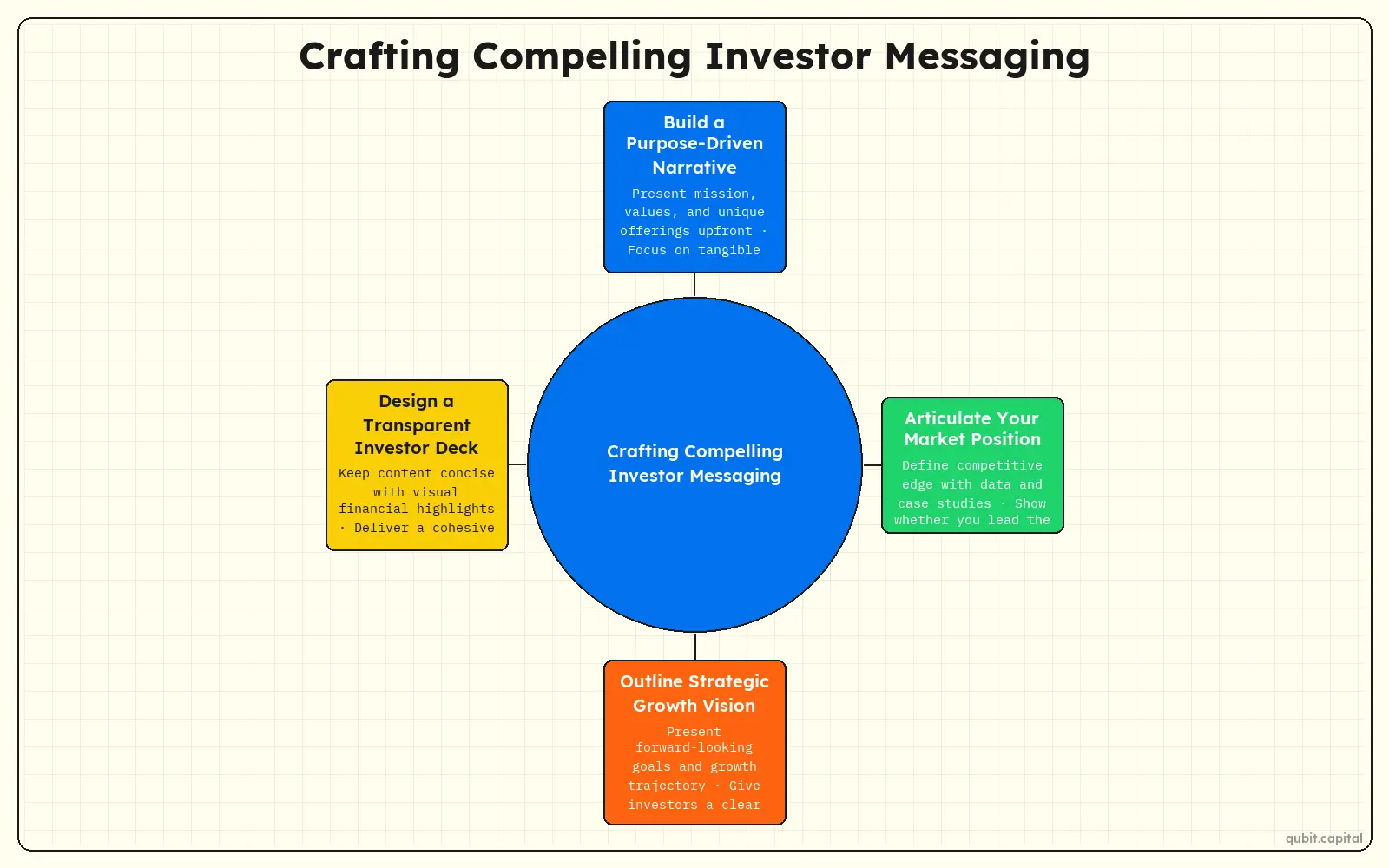
A well-crafted company narrative is the cornerstone of effective investor relations. To resonate with investors, your messaging must strike a balance between clarity and authenticity, avoiding overstatements while emphasizing what sets your business apart.
Investors confirm this priority. In PwC's 2025 Global Investor Survey of 1,074 investment professionals, 47% cited innovation strategies as the area where they most want greater transparency from companies.
Start by presenting your company’s story in a way that highlights its mission, values, and unique offerings. Investors are drawn to businesses with a clear sense of purpose, but they also value transparency. When showcasing your products or services, focus on their tangible benefits and real-world applications rather than relying on hyperbolic claims. This approach not only builds credibility but also fosters trust.
Articulating Your Market Position
Equally important is articulating your market position. Explain how your company fits into the competitive landscape, supported by data or case studies where possible. Whether you’re a market leader or a disruptive newcomer, investors want to understand your competitive edge and long-term potential. Pair this with a forward-looking narrative that outlines your strategic goals and growth trajectory, offering a clear vision of where the company is headed.
Designing a Transparent Investor Deck
A transparent investor deck is essential to tie these elements together. Keep the content concise and visually engaging, ensuring that key points, such as financial performance, market opportunities, and future milestones. Avoid overwhelming investors with excessive detail; instead, focus on delivering a cohesive story that aligns with your broader messaging strategy.
Proactive Crisis Communication: Planning for Bad News
Strengthening startup-investor relations requires transparent crisis communication. How you address challenges can define your credibility and investor trust. Unexpected challenges can test even the most prepared organizations, but how you communicate during these moments can define your credibility. Transparency is the cornerstone of investor relations best practice, especially when delivering bad news.
A well-prepared crisis communication strategy ensures you address concerns promptly and maintain trust.
1. Develop a Plan Before Problems Arise
Anticipating potential challenges is essential for effective crisis management. Create a proactive communication plan that outlines how to respond to various scenarios. This plan should include key messaging, designated spokespersons, and a timeline for updates. Preparing in advance allows you to act swiftly and confidently when issues emerge.
2. Be Transparent Without Overloading Information
When delivering bad news, honesty is crucial, but clarity matters just as much. Share the facts, explain the context, and outline the steps being taken to address the issue. Avoid overwhelming your audience with excessive details; instead, focus on what directly impacts them. Transparency fosters confidence, even in difficult times.
3. Communicate Timely Updates Across Multiple Channels
Delays in communication can erode trust. Provide timely updates to investors through multiple channels, including email, press releases, and social media. Social media, in particular, can be a vital tool during a PR crisis. For instance, using social media to find investors and maintain engagement is a modern approach to staying connected and fostering trust.
4. Reassure Stakeholders with a Forward-Looking Approach
While addressing the problem is essential, it’s equally important to emphasize the steps being taken to resolve it. Reassure investors by sharing your plan for recovery and highlighting your commitment to long-term stability. This forward-looking perspective can help sustain confidence even during challenging periods.
Proactive crisis communication is not just about damage control, it’s about demonstrating accountability and resilience. By preparing in advance and communicating with transparency, you can turn challenges into opportunities to strengthen investor trust.
Preparation is Key for an Effective Investor Relations Strategy
Building a robust investor relations strategy begins with meticulous preparation. Anticipating potential challenges, such as crises or sudden shifts in market sentiment, ensures that your organization is equipped to respond swiftly and effectively. Crisis management planning is not just a precaution, it’s a necessity. Developing a comprehensive plan allows your team to address investor concerns with clarity and confidence, minimizing disruptions and preserving trust.
Designating spokespeople is another critical step in preparation. These individuals should be well-versed in your company’s values, financials, and strategic goals. Their ability to communicate transparently and consistently can significantly reduce the impact of unexpected situations. Alongside this, establishing clear communication protocols ensures that messages are delivered uniformly across all channels, avoiding confusion or misinformation.
Thorough preparation also involves understanding investor expectations and proactively addressing their concerns. Whether it’s through regular updates, detailed reports, or open forums, being prepared to engage with investors fosters confidence and strengthens relationships. Ultimately, effective investor relations hinge on the ability to anticipate and address challenges before they escalate.
Incorporating preparation into your investor relations strategy guarantees smoother operations and reinforces trust during critical moments.
Funding Trends And Why Relationships Matter
Capital is flowing again but remains concentrated and selective. Global venture investment reached $368B in 2024, with AI capturing 37% of funding (CB Insights). Down and flat rounds climbed to decade highs in early 2024, while Q3 2025 funding jumped 38% year over year, driven by mega-rounds and exits.
This is where disciplined relationship building wins. Investors want sharper narratives. They also want founders who stay visible, credible, and steady between rounds.
Debt Financing: Use It To Extend Runway, Not Mask Structural Issues
Debt can preserve ownership. That is the upside. The cost is repayment pressure and covenant constraints.
Use debt to extend runway into a milestone that reduces risk. Do not use it to cover structural issues in the business. If the underlying unit economics or burn are broken, debt usually makes the problem louder later.
Even with rates cut to 4.00–4.25% and venture debt hitting record levels, lenders still scrutinize the basics:
- efficiency and burn
- resilience under stress
- predictability in revenue and cash flow
Debt options are also supported by fiscal policy. Budget 2025 earmarks $280B for investment over five years. That can expand access to capital, but it does not replace fundamentals. Long-term structural health is still the entry ticket.
Debt has real operational trade-offs. Regular repayment obligations can strain cash flow, especially during economic downturns. Additionally, the inflexibility of repayment schedules may limit a company’s ability to adapt to unforeseen circumstances.
Equity Financing: Ownership Versus Capital
Equity buys time and growth. It also reshapes ownership. In today’s market, you need pragmatic expectations on dilution and pricing.
Down and flat rounds climbed to decade highs in early 2024. That reality changes how founders should approach relationship management. Alignment matters early, because resets are often a trust issue as much as a valuation issue.
Capital concentration is still a factor. Q3 2025 funding was up 38% year over year, driven by outsized AI mega-rounds and exits. That can skew benchmarks. It also means non-AI companies need a clearer story on defensibility and outcomes.
Economic Shifts And Their Impact On Relationships
Macro shifts raise the bar for trust. Investors are prioritizing disciplined execution over optimistic promises. They want consistent reporting, cash control, and transparent roadmaps that show how you make decisions.
If you blend equity and debt to lengthen runway, the relationship work has to match the complexity. Your updates should not hide the sharp edges. Share what matters:
- covenant headroom and key constraints
- downside plans and triggers
- exact milestones and what they unlock
The investment landscape is still in flux. The projected great wealth transfer is $1T between 2023 and 2026. Exit pipeline dry powder exceeds $1T as of 2025. These flows increase competition for attention. Clear, timely communication becomes a differentiator, not a courtesy.
Diversify Shareholder Base and Analyst Coverage
These dynamics make diversification a defensive move. A broader shareholder base reduces reliance on any single group. That increases resilience during downturns and helps avoid dependence on one capital cycle.
Analyst coverage adds a different kind of leverage. It improves visibility and credibility. It also supports long-term market positioning when sentiment shifts.
Together, diversification and coverage help sustain investor confidence through changing conditions, even when the market mood swings.
Investors often look for clear growth strategies and robust financial plans, making an investor relations guide indispensable for navigating these discussions. By presenting a compelling case, businesses can secure funding while maintaining positive relationships with their investors.
Conclusion
Strengthening startup-investor relations requires deliberate effort and strategic planning. Clear messaging, proactive scheduling, and a well-maintained website are essential tools for presenting your startup effectively. Equally important is being prepared for potential crises, ensuring that communication remains transparent and consistent during challenging times. A compelling, narrative-driven pitch deck can make a lasting impression, while continuous communication fosters trust and alignment with your investors.
If you’re ready to take the next step in building meaningful connections with the right investors, we at Qubit Capital are here to assist. Our Investor Discovery and Mapping service is designed to help you identify and connect with investors who align with your goals. Contact us today to find your perfect match and strengthen your investor relationships.
Key Takeaways
- Early relationship-building is essential for long-term investor loyalty.
- Clear, transparent messaging is the cornerstone of effective investor relations.
- A proactive meeting and scheduling plan builds investor trust.
- A well-designed website enhances transparency and supports IR strategies.
- Crisis preparedness and timely bad news communication protect investor confidence.
Want a targeted investor list you can actually use?
A curated shortlist based on your stage, sector, geography, and check size.
- Thesis-aligned investors matched to your round
- Decision-maker contacts with relevant context
- Ready for outreach, not just research

Frequently asked Questions
Why is transparency important in investor relations?
Transparency builds trust by giving investors a clear, honest view of your company’s performance and challenges. When startups share financial data, strategic goals, and even setbacks openly, investors are more likely to stay engaged through difficult periods. Consistent honesty also strengthens your credibility when communicating during market downturns or crises.