

 Back
Back









Table of Contents

Building a strong network is often the key to unlocking funding opportunities, especially when it comes to angel networks. These groups of investors play a pivotal role in supporting early-stage startups, offering not just capital but also mentorship and industry connections.
To build strong investor networks for your startup, combine attending relevant events, targeted online networking, and authentic relationship-building. However, connecting with the right investors requires more than just a compelling pitch, it demands a strategic approach to relationship-building.
This blog will explore actionable techniques to expand your investor network, from leveraging personal connections to tapping into professional platforms.
How to Build Investor Connections for Fundraising?
Strategic networks create collective weight no single founder can match. As a prime example, Climate Action 100 unites over 600 investors to drive improved governance and company engagement. The founder takeaway: investors move in coordinated circles, so one warm relationship often pulls the next investor into your raise.
- Trust and Alignment:
Focus on cultivating trust and shared goals, as investors are more likely to back founders they know, respect, and believe in. - Resource and Insight Pool:
A strong network provides access to resources, insights, and opportunities that extend beyond mere financial backing. - Strategic Investor Identification:
Networking helps founders pinpoint investors who align with their vision, paving the way for productive, long-term partnerships. - Ripple Effect of Connections:
Authentic relationship-building creates a ripple effect where each connection leads to additional opportunities, amplifying success in fundraising and beyond.
For those looking to broaden their reach, finding startup investors involves employing targeted strategies that align with their business goals.
Startups like yours already closed their rounds with us.
Founders across every stage and industry. Here's what it took.
- Raised $7.6M for Swiipr Technologies
- Raised $0.5M for Ap Tack
- Raised €0.5M for Ivent Pro

Benefits of a Robust Investor Network
A strong investor network can be the cornerstone of a successful raise. When founders engage their network early, they build the conviction that closes rounds. Conviction, not the deck, is what moves an investor from interested to wiring funds.
Effective networking also opens doors to introductions that can significantly expand professional circles. These introductions often lead to partnerships, mentorships, and even access to niche investor groups. Treat each introduction as a signal, not just a contact. A warm intro from a trusted founder converts far better than a cold email. In the raise sequence, your first ten meetings should come from people who already vouch for you.
Investor networks are evolving rapidly. In 2024, AI startups commanded $110 billion in funding, capturing nearly 33% of all global venture capital. This momentum highlights how active networks amplify fundraising effectiveness for startups seeking credibility and new opportunities. When one third of global venture capital concentrates, capital clusters around connected networks. For founders, that means access matters as much as the idea. Map who funds your space, then work backward to the warm path into them.
Technology has simplified building investor networks. Digital platforms and CRMs make connecting with potential investors more efficient and trackable. The founder discipline still matters: every touch should advance an investor toward conviction, not just add a name.
Exploring the benefits of accelerator programs can help startups enhance their visibility and attract the right investors. Programs like these amplify networking opportunities and boost credibility, making it easier to find angel investors who align with your vision.
How to Network with VCs and Investors?
Building networking investor connections requires a mix of strategic planning and genuine relationship-building. Below, we explore nine practical strategies to help you stand out in investor networking and secure meaningful partnerships.
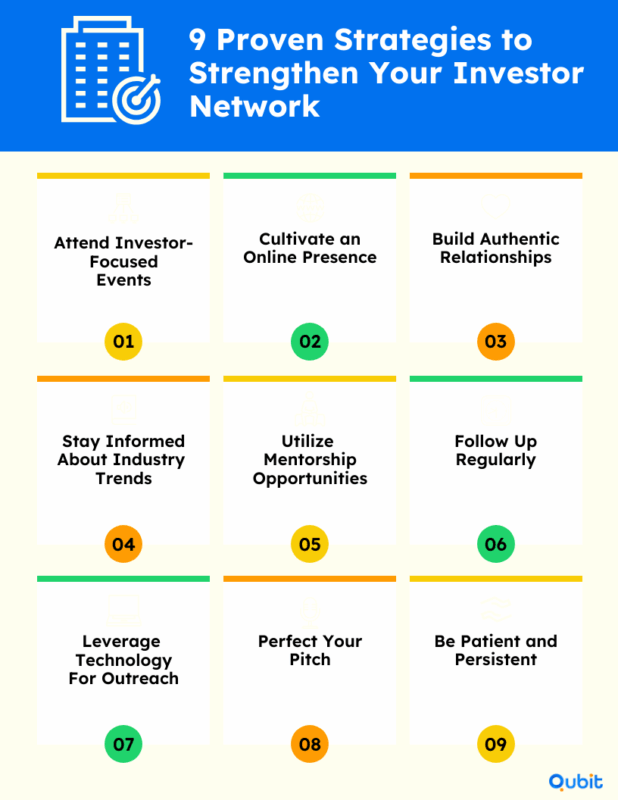
1. Attend Investor-Focused Events
Investor-focused events put you in a structured room with active backers. These events draw angel investors and venture capitalists scanning for new deals. Walk in with a one-line ask and a target list, not a hope to bump into someone.
2. Cultivate an Online Presence
A professional online presence is now part of diligence. Assume every investor checks LinkedIn and angel directories before the first call. Polish the profile, show traction, and treat it as the silent first screen on you.
3. Build Authentic Relationships
Networking is not about pitching your idea. It is about understanding an investor's thesis before you present your business. Authenticity builds the trust that makes an investor lean in during the raise.
4. Stay Informed About Industry Trends
Knowing your industry's latest moves signals commitment and command of the space. Investors trust founders who can place their startup against real market shifts. In a pitch, that fluency separates a fundable operator from a hopeful one.
5. Utilize Mentorship Opportunities
Engaging with mentors can significantly enhance your networking efforts. Integrating mentorship benefits in networking can amplify a founder’s ability to make meaningful investor connections. Mentors often provide strategic advice and can introduce you to their own networks, deepening investor trust.
6. Follow Up Regularly
Consistency wins the raise. After meeting an investor, send a short follow-up that thanks them and restates one reason to talk again. A monthly progress note keeps you top of mind through their slow decision cycle.
7. Use Technology for Outreach
Digital tools built for startups speed up your investor search. Use an angel investors directory to find backers who fit your model and stage. Filter for thesis match first, because a wrong-fit investor wastes weeks of your raise.
8. Perfect Your Pitch
A concise pitch is the price of entry. State the problem, your solution, and the proof in under a minute. Then tailor the emphasis to each investor's thesis, because the same pitch lands differently across the table.
9. Be Patient and Persistent
Networking success doesn't happen overnight. Building relationships takes time, so stay patient and persistent. Demonstrating resilience and a long-term vision can leave a lasting impression on investors. Treat the raise as a months-long relationship cycle, not a single transaction. Investors quietly track how you handle a slow no before they offer a yes. Persistence that stays respectful reads as conviction, not desperation.
For early-stage rounds, broadening your reach beyond venture firms matters, and a closer look at the specific networking tactics to find angel investors and the platforms where they gather can shorten the path to a first check.
Additional Strategies
Beyond initial outreach, sustained investor relationships depend on disciplined follow-up and organization. The tactics below focus on tracking prospects systematically so no promising connection slips through the cracks.
Build and Manage Your Investor Pipeline
Treating investor networking as a structured pipeline helps founders track progress and improve their fundraising approach. Begin by creating a prioritized list of potential investors, noting their interests and previous interactions. Use this list to systematically organize outreach, follow-ups, and responses, much like managing leads in a B2B sales funnel. Assign a stage to every investor: researched, contacted, met, pitched, diligence. Expect low conversion at each step. A raise that needs three checks often starts with a pipeline of forty-plus qualified names.
Update the pipeline with every new contact, meeting outcome, and piece of feedback. Patterns in the rejections usually point to a weak spot in the pitch, not the market. Fix the pattern, then concentrate effort on the investors most likely to match your thesis.
A well-maintained investor pipeline also helps founders manage time efficiently and avoid missed opportunities. Tracking each stage of engagement ensures that no connection is neglected and enables timely follow-up. Over time, this disciplined approach builds stronger relationships and increases the likelihood of securing funding.
- Segment your investor list by interest, stage, and likelihood of engagement for targeted outreach.
- Record every interaction, including feedback and follow-up dates, to maintain momentum and accountability.
- Review pipeline data monthly to identify trends and adjust your networking strategy for better results.
Offer Value Before Requesting Funding
Building on the importance of patience and persistence, founders should focus on offering value to investors before seeking financial support. Share relevant market insights, industry trends, or introductions that may benefit their portfolio. This approach demonstrates your expertise and positions you as a thoughtful collaborator, not just a funding seeker. Founders who give before they ask reset the power dynamic of the raise. An investor who has received a useful intro or insight reads your later ask as a partnership, not a pitch. Reciprocity is the cheapest conviction-builder in a cold network.
Providing value upfront helps establish trust and reciprocity, making investors more receptive to future requests. It also sets you apart from other founders who approach investors solely for capital. By nurturing these relationships over time, you create a foundation for meaningful partnerships.
- Share industry reports or market analysis that align with investor interests and portfolio companies.
- Make strategic introductions between investors and relevant founders or experts in your network.
- Offer constructive feedback on investor presentations or portfolio startups when appropriate.
To populate that prioritized list faster, software can surface names you would otherwise miss; this rundown of the top investor discovery tools every startup should use covers options that fit different budgets and stages.
How to Build Genuine Connections?
Meaningful relationships are the base of effective networking. Investors are not only buying an opportunity; they are choosing a multi-year partner. They commit when they see trust, shared goals, and a founder they want in the room.
1. Trust as the Foundation
Trust is the bedrock of any investor relationship. Transparency in your communication and decisions builds confidence faster than polish. Whether you share the vision or the hard problems, honesty is what makes an investor engage.
2. Mutual Benefits
Networking runs on reciprocity, not extraction. Show how your venture serves an investor's thesis, not only your need for capital. A relationship that pays both sides survives the long raise and the years after it.
3. Shared Interests
Common ground turns a transaction into a partnership. Investors back industries and causes they care about, so map their focus before you pitch. When your goals visibly overlap with their thesis, the conversation shifts from selling to building together.
Building authentic relationships with investors requires patience and effort. It’s not about quick wins but about cultivating partnerships that stand the test of time.
- Be transparent
- Highlight mutual benefits
- Align interests
- Show patience
Trust also builds before the first conversation through how you present yourself publicly, and this guide to personal branding for startup founders shows how a consistent reputation makes investors more receptive when you do reach out.
Which Investors Align with Your Vision?
Finding the right investors can significantly impact your startup's trajectory. It's not just about securing funding; it's about partnering with individuals or firms who genuinely understand and support your vision. The wrong investor on your cap table is harder to remove than to add. Alignment on vision predicts how a partner behaves in the down quarter, not just the pitch. Choose for the board you will live with, not only the check you need now.
Types of Investors and Their Priorities
Investors come in various forms, each with unique priorities. Angel investors often focus on early-stage startups, seeking innovative ideas and passionate founders.
Current sentiment among backers supports visionary founders. In 2025, 60% of investors prioritize long-term growth when evaluating opportunities. This reflects shifting preferences toward enduring impact over rapid returns. For founders, shifting investor sentiment changes which story to lead with. When backers reward enduring impact, durability metrics belong on slide two, not the appendix. Read the room's current thesis and sequence your narrative to match it.
- Venture capitalists value networking investment opportunities that prioritize scalability and market potential, making them ideal for startups ready to expand.
- Corporate investors often look for a strategic fit with their core business. Impact investors weigh social or environmental returns alongside financial ones.
Understanding these distinctions helps you identify which type of investor aligns best with your startup’s stage and goals.
Aligning Values and Expertise
Strong partnerships happen when investors share your values and bring real domain expertise. If you build in renewable energy, target investors with a track record in sustainable ventures who know the obstacles. Your existing investor network can surface people who believe the mission and can open the next doors.
Practical Steps to Identify Aligned Investors
- Research Investor Portfolios: Examine past investments to determine if their interests align with your industry and vision.
- Utilize Existing Networks: Reach out to mentors, advisors, and peers within your investors network for recommendations.
- Prioritize Communication: Clearly articulate your vision during pitches to gauge investor enthusiasm and alignment.
By focusing on investors whose values and expertise match your goals, you’re not just securing funding, you’re building a partnership that can drive meaningful growth.
Rather than treating every name on your list the same way, group them by stage focus, sector interest, and check size; this guide on how to segment investors based on your startup fit shows how that grouping sharpens your outreach.
How to Perfect Your Pitch for Investors?
Capturing an investor’s attention begins with preparation. A well-crafted elevator pitch and business plan help founders stand out. In competitive investor networking, clarity and precision are essential. Preparation is also a signal about how you will run the company. A messy data room or vague numbers reads as operating risk, not just a thin pitch. Investors price the founder's rigor as much as the market.
1. Crafting a Memorable Elevator Pitch
Your elevator pitch should distill the essence of your business into a concise, engaging narrative. Focus on articulating:
- The Problem: Clearly define the market pain point your business addresses.
- Your Solution: Highlight how your product or service solves this issue uniquely.
- Value Proposition: Emphasize the measurable benefits your solution delivers to customers.
Keep the pitch under 60 seconds and practice it until it feels natural. Tailor it to resonate with the specific interests of your audience, especially when engaging with smaller investor groups.
2. Developing Investor-Ready Materials
Investors look for more than just a great idea, they want evidence of market potential and a clear growth strategy. Your business plan should include:
- Market Analysis: Demonstrate a deep understanding of your target market and its dynamics.
- Financial Projections: Provide realistic forecasts that reflect your revenue model and scalability.
- Traction Metrics: Showcase early wins, such as customer acquisition or partnerships, to build credibility.
A pitch deck is a visual summary of your business that keeps investors engaged. Keep it concise and focused on key data points, not dense detail. Each slide should answer one investor question and move the raise forward.
3. Preparing for Investor Questions
Anticipate questions about your business model, competition, and long-term vision. Practicing responses ensures you appear confident and well-prepared during discussions.
Tailored pitch materials and thorough preparation not only create stronger first impressions but also increase your chances of securing meaningful investor interest.
Once you have the core message down, refine the delivery so it lands in the few seconds you usually get; founders who want a structured approach can follow this walkthrough on how to build an elevator pitch that resonates with investors before their next meeting.
How to Build Investor Relationships?
Establishing strong networking investor connections requires a mix of strategic networking and personalized communication. Whether you’re attending industry events or enhancing your digital presence, these approaches can help you build lasting relationships.
1. Attend Investor-Centric Events
Curated investor events are a direct line to people actively deploying capital. Pick events that match your niche so the conversations are relevant. Research attendees first and walk in with a sharp value proposition and a specific ask.
2. Optimize Your Online Presence
A polished digital footprint shapes the investor's first impression before you speak. Refine your LinkedIn to show achievements, traction, and a clear story. Stay active where investors watch, sharing wins and insight so you are warm before the first call.
3. Craft Personalized Outreach Messages
Generic outreach gets ignored. Reference the investor's thesis or a past deal, open with a sharp subject line, and keep the message value-driven. Close with one clear ask, like a 20-minute call, so the next step is obvious.
The relationship does not end when the round closes, and having a clear investor relations strategy for transparent communication keeps existing backers engaged and willing to introduce you to the next ones.
How to Master Investor Conversations?
Building meaningful relationships with investors begins with authentic and engaging communication. Establishing rapport is the foundation of productive discussions, and tailoring your pitch to align with investor interests ensures your startup’s potential shines through.
1. Start Strong: Breaking the Ice
Initiating conversations with investors can set the tone for the entire dialogue. Using a thoughtful question as an icebreaker, creates immediate rapport. These questions not only spark interest but also demonstrate your ability to connect on a personal level.
2. The Power of Emotional Intelligence
Effective communication is more than presenting facts. It requires reading the emotions and expectations of the person across the table. Match your style to the investor, because conviction is emotional before it is analytical.
3. Showcase Your Startup’S Potential
Investors back clear visions told as compelling stories. Lead with your unique value and growth path, then ask what they prioritize. If they care about scale, innovation, or market impact, weight your pitch toward that lever.
4. Building Trust Through Dialogue
Trust decides most investor relationships. Reading the room and adapting in real time signals you can handle a board, not just a pitch. Emotional steadiness in hard questions is itself a fundability signal.
Mastering investor dialogues is about more than presenting numbers, it’s about creating connections, understanding perspectives, and showcasing your startup’s potential in a way that resonates. By combining thoughtful icebreakers, emotional intelligence, and tailored pitches, you can turn conversations into lasting partnerships.
Boost Your Investor Engagement with Qubit Capital’S Investor Mapping and Outreach Services
Qubit simplifies this with investor mapping and outreach services that identify ideal investors and automate personalized outreach. The result is a targeted network built faster, with cleaner communication. That focus opens more qualified paths to closing your round.
1. Streamlined Investor Mapping for Targeted Outreach
With Qubit Capital, you can effortlessly map out potential investors who align with your business vision and financial goals. Their services enable you to segment investor profiles and target outreach efforts precisely. This approach minimizes wasted efforts on misaligned prospects and maximizes the chance of connecting with investors who truly understand your value proposition.
2. Automated Outreach for Consistent Engagement
Qubit’s solutions also include automation features that manage routine follow-ups and investor communications. By automating these processes, your team can focus on high-impact interactions without the risk of missed updates. This consistent, personalized engagement reinforces investor trust and builds long-term relationships, ultimately increasing the likelihood of successful funding rounds.
Conclusion
A strong pitch deck and real investor connections are what move a raise from cold to closed. A clear, narrative-driven deck builds investor conviction, and disciplined outreach gets it in front of the right people. Align both and your odds in a competitive market rise sharply.
At Qubit Capital, we specialize in helping startups refine their investor outreach strategies. If you’re ready to elevate your approach and connect with the right investors, explore our Investor Outreach services today. Let us help you turn your vision into reality.
Key Takeaways
- Genuine, relationship-driven strategies outperform sheer volume of contacts.
- Digital platforms and tools like Visible and DailyBot streamline investor engagement.
- A well-prepared elevator pitch and compelling business plan set the stage for success.
- Mentorship and targeted events can sharply strengthen your investor connections.
Want a targeted investor list you can actually use?
A curated shortlist based on your stage, sector, geography, and check size.
- Thesis-aligned investors matched to your round
- Decision-maker contacts with relevant context
- Ready for outreach, not just research

Frequently asked Questions
How does connecting investors help boost fundraising success?
Connecting investors builds trust and momentum that makes securing startup funding easier. A strong network gives you warm introductions instead of cold outreach. Investors who already know you are more likely to back your round. These relationships also bring mentorship and useful partner connections. Over time, your network becomes a steady source of capital and advice.