

 Back
Back









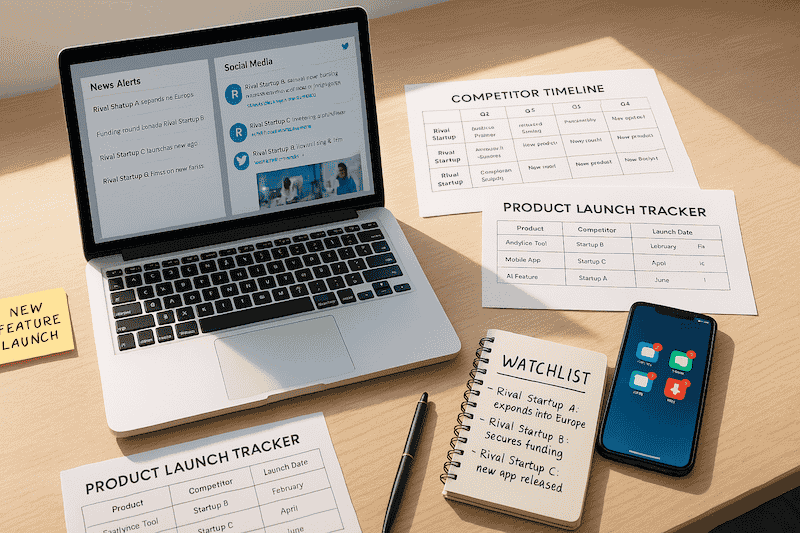
Table of Contents

Staying ahead in a competitive market requires more than just a great product or service, it demands a deep understanding of your rivals. Competitor analysis tools play a vital role in uncovering insights about market trends, pricing strategies, and customer preferences. These tools empower businesses to make informed decisions and adapt quickly to changing dynamics
Recent research shows that 19% of startups fail due to competition. This statistic underscores why mastering competitor analysis is essential for survival in a crowded market. Competitor analysis tools play a vital role in uncovering insights about market trends, pricing strategies, and customer preferences. These tools empower businesses to make informed decisions and adapt quickly to changing dynamics.
In this blog, we’ll explore the importance of staying informed about competitor strategies, highlight the best tools for competitor analysis, and provide actionable insights to help your business maintain a competitive edge.
Overview of Tools for Monitoring Competitor Activities
Competitor monitoring tools let you quickly spot rivals’ moves, uncover trends, and adjust your strategy in real time. Using these tools, businesses gain a market advantage by acting faster than competitors.
Tools for monitoring competitor activities offer businesses actionable insights. These span social media engagement, SEO performance, and multi-channel strategies, approaches that span multiple marketing platforms.
Understanding competitor behavior is a cornerstone of strategic decision-making. This section categorizes these tools based on their functionality, providing a clear understanding of how each type contributes to capturing competitor activities effectively.
Many free competitor analysis tools offer basic tracking and reporting features. To build a robust competitive strategy, startups must first master how to identify competitors effectively, ensuring they focus on direct threats and market leaders. This foundational step sets the stage for tracking competitor activities with precision.
Social Media Tracking Tools
Social media remains the top channel for customer engagement, making tracking tools indispensable for competitor analysis. The sector’s significance is evident as social media analytics market grew from $13.8B in 2024 to $17.4B in 2025, nearly 26% year-over-year. This surge reflects businesses’ expanding reliance on real-time competitive insights.
Competitor tracking allows businesses to monitor rivals’ social media engagement and adapt strategies.
These tools focus on monitoring engagement metrics like likes, comments, and shares, which are more critical than follower counts. For example, platforms like Hootsuite and Sprout Social allow businesses to analyze public social conversations, helping them understand competitor strategies and customer sentiment.
A case study involving Stoneacre Motor Group highlights the effectiveness of social media tracking. By analyzing public conversations, the company gained insights into competitor tactics and customer preferences, enabling them to refine their own strategies. Integration with social media tracking tools ensures businesses stay ahead in understanding market dynamics.
AI-Driven Insights
Artificial intelligence has revolutionized competitor analysis by automating data collection and providing predictive insights. Tools like Crayon and Klue use AI to track competitor activities, offering real-time updates on product launches, pricing changes, and marketing campaigns. These insights empower businesses to anticipate competitor moves and adjust their strategies accordingly.
AI-driven tools also excel at identifying patterns and trends that might go unnoticed with manual analysis. By leveraging machine learning algorithms, these platforms provide a deeper understanding of competitor behavior, helping businesses make data-driven decisions.
SEO Monitoring Tools
Search engine optimization (SEO) monitoring tools are essential for tracking competitor rankings and keyword strategies. Tools like SEMrush and Ahrefs allow businesses to analyze competitor backlinks, keywords, and overall SEO performance. This information can be used to identify gaps in their own strategy and optimize content for better visibility.
SEO monitoring tools also help businesses understand how competitors are driving organic traffic. By analyzing keyword trends and search engine rankings, companies can refine their own SEO strategies to stay competitive in search results.
Content Performance Analysis
Content performance tools focus on evaluating the effectiveness of competitor content across various platforms. Tools like BuzzSumo and Contently provide insights into which types of content resonate most with audiences, helping businesses tailor their own strategies.
Engagement trends show that high-performing content often correlates with strong engagement metrics. By analyzing competitor content, businesses can identify topics, formats, and channels that drive the most interaction, ensuring their own content strategies align with audience preferences.
Multi-Channel Analysis Tools
Multi-channel analysis tools offer a comprehensive view of competitor activities across various platforms, including social media, email marketing, and paid advertising. Tools like Adbeat and SimilarWeb provide insights into competitor ad spend, audience demographics, and campaign performance.
Multi-Channel Analysis Tools integrate data sources and offer a holistic competitive landscape.
Workflow Automation with Competitor Analysis Tools
Building on multi-channel monitoring, integrating competitor analysis tools with automation platforms like Zapier or CRM systems streamlines data collection and reporting. This approach reduces manual effort, enabling teams to focus on interpreting insights rather than gathering them. Automated workflows also facilitate real-time alerts, ensuring businesses respond quickly to competitor moves. Efficient integration enhances the strategic value of competitor intelligence across the organization.
Choosing the best tools for competitor analysis depends on your specific needs. For startups, a competitor monitoring tool like Crayon can provide a holistic view of competitors’ activities, while Klue is ideal for sales-driven strategies.
Customer Sentiment Analysis Tools
Understanding customer sentiment is vital for shaping responsive marketing strategies. Customer sentiment analysis tools dive deeper into qualitative feedback from reviews, surveys, and social media interactions. For instance, Brandwatch enables businesses to capture nuanced customer opinions, tracking emerging trends and public perceptions over time. These tools filter through vast amounts of unstructured data to highlight both positive experiences and areas for improvement. They enable companies to benchmark against competitors and refine their communication strategies accordingly.
Ethical Considerations in Competitor Analysis
When using competitor analysis tools, it is crucial to respect legal and ethical boundaries by relying only on publicly available information. This approach protects your business from potential legal risks and maintains fair competition standards. Ethical monitoring builds trust with stakeholders and prevents reputational damage. Always ensure your practices align with industry regulations and privacy laws.
Market Trend Analysis Tools
Market trend analysis tools complement competitor insights by evaluating broader industry movements and consumer behavior patterns. Tools like Google Trends offer businesses the ability to compare search interest over time, identifying emerging topics and shifting preferences that might impact market dynamics.
These tools correlate competitor activities with overall market trends. They empower companies to adjust their strategies in real time. This approach ensures alignment with current consumer interests and forecasted market conditions.
Broader Benefits for Investment Readiness
Understanding the competitive landscape can directly influence how startups approach investor discovery, especially when identifying how to find investors for startups who align with their market and goals. Competitor insights provide a clear picture of market trends and opportunities, making businesses more attractive to potential investors.
Competitor analysis tools are not just about staying ahead in the market; they also play a crucial role in shaping long-term strategies and investment readiness. By integrating these tools into their operations, businesses can position themselves as informed and strategic players in their industry.
In fact, 90% of Fortune 500 companies leverage competitor intelligence to sustain competitive advantage. This widespread adoption affirms the value of systematic competitor monitoring for market leaders.
Multi-Source Competitor Monitoring Process
- Begin by setting up automated alerts using tools like Klue, Google Alerts, or Syften for continuous competitor updates.
- Supplement automated monitoring with manual research, such as reviewing competitor websites and industry forums regularly.
- Combine insights from both sources to identify patterns and validate findings, ensuring a comprehensive competitive intelligence profile.
Startups like yours already closed their rounds with us.
Founders across every stage and industry. Here's what it took.
- Raised $7.6M for Swiipr Technologies
- Raised $0.5M for Ap Tack
- Raised €0.5M for Ivent Pro

Strategies for Effective Competitor Analysis
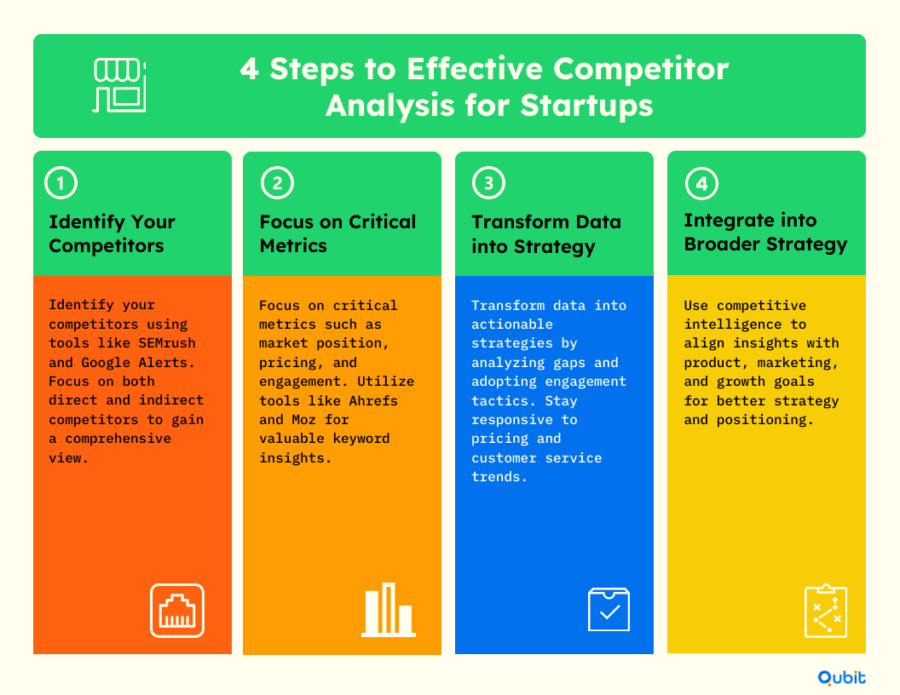
Effective competitor analysis starts with selecting the right tools for monitoring competitor activities. Tracking competitors is a vital part of effective competitor analysis. Effective competitor analysis involves identifying key players, evaluating critical metrics, and turning insights into actionable strategies.
1. Competitor Identification
The first step is to pinpoint who your competitors are. These can be categorized into:
- Direct Competitors: Businesses offering similar products or services to the same target audience.
- Indirect Competitors: Companies that fulfill the same customer needs but through different products or services.
Despite its importance, 44% of companies admit to zero competitor visibility according to a Crayon report. This gap can compromise strategic defenses.
Competitor monitoring is essential after identifying key market players. Start by analyzing your industry and market trends. Tools like Google Alerts or SEMrush can help track mentions of competitors, while customer feedback can reveal which alternatives they’re considering.
2. Performance Metrics Evaluation
Competitor analysis is most effective when you focus on the right metrics. These include:
- Market Position: Assess their market share and growth trajectory.
- Pricing Strategies: Compare pricing models to identify gaps or opportunities.
- Customer Engagement: Analyze their social media presence, reviews, and customer loyalty initiatives.
- Content and SEO Performance: Use tools like Ahrefs or Moz to evaluate their keyword rankings and backlink profiles.
For startups aiming to stand out, crafting a compelling startup unique value proposition is a critical step in distinguishing your business from competitors and appealing to your target market.
3. Transforming Data into Strategic Actions
Raw data alone won’t drive results, it’s how you interpret and act on it that matters. For example:
- If a competitor excels in customer engagement, consider adopting similar tactics, such as personalized marketing campaigns.
- If their pricing strategy is undercutting yours, explore ways to add value to your offerings without compromising profitability.
For deeper strategic planning, conducting a SWOT analysis for startups provides a clear framework to evaluate internal strengths and external opportunities while staying vigilant about competitor threats.
If your industry is fragmented or lacks reliable tracking tools, supplement digital monitoring with manual research and feedback collection.
4. Integrating Insights into Strategy
The final step is to align competitor insights with your overall business goals. Use these insights to refine your product offerings, marketing campaigns, and customer engagement strategies. For example, analyzing competitors’ content strategies can inform your approach to using competitive intelligence for growth.
Additionally, real-time competitor data can be pivotal in strategy refinement. Effective competitive analysis for startups not only reveals industry trends but also helps in crafting strategies to outperform rivals.
Competitor analysis is not a one-time task but an ongoing process. By identifying key competitors, focusing on critical metrics, and utilizing advanced tools, you can transform raw data into actionable strategies that drive growth.
- Identify direct competitors in your market.
- Gather and analyze performance metrics using monitoring tools.
- Interpret data to uncover actionable insights.
- Regularly update strategies based on competitor activity.
Conclusion
Competitor monitoring enables businesses to anticipate market changes and respond proactively. By utilizing a combination of tools, from social media platforms to AI-driven insights, businesses can uncover opportunities and anticipate challenges effectively. These strategies not only provide a clearer view of market dynamics but also empower organizations to make informed, strategic decisions that drive growth and innovation.
Integrating systematic competitor monitoring into your business strategy ensures you're not just reacting to market trends but actively shaping them. This proactive approach is key to maintaining a leadership position in any industry.
We at Qubit Capital can assist you in transforming these insights into actionable strategies. Explore our startup fundraising platform to connect with the right investors and position your business for success. Let's work together to turn insights into impactful outcomes.
Key Takeaways
- Social media analytics, especially engagement metrics, are crucial for industry insights.
- AI-driven platforms enhance competitive intelligence with automated alerts and predictive analytics—a process of forecasting future competitor moves based on data.
- Competitor tracking ensures businesses stay informed about direct competitors and market leaders.
- Structured competitor analysis involves identifying direct competitors, focusing on key metrics, and turning insights into actionable strategies.
- Real-world case studies and detailed tool comparisons provide the foundation for a successful competitive strategy.
Want a targeted investor list you can actually use?
A curated shortlist based on your stage, sector, geography, and check size.
- Thesis-aligned investors matched to your round
- Decision-maker contacts with relevant context
- Ready for outreach, not just research

Frequently asked Questions
What are the best free competitor analysis tools?
Several free competitor analysis tools include Ubersuggest, Google Alerts, and SimilarWeb. These help track competitor performance and uncover opportunities without cost.