

 Back
Back







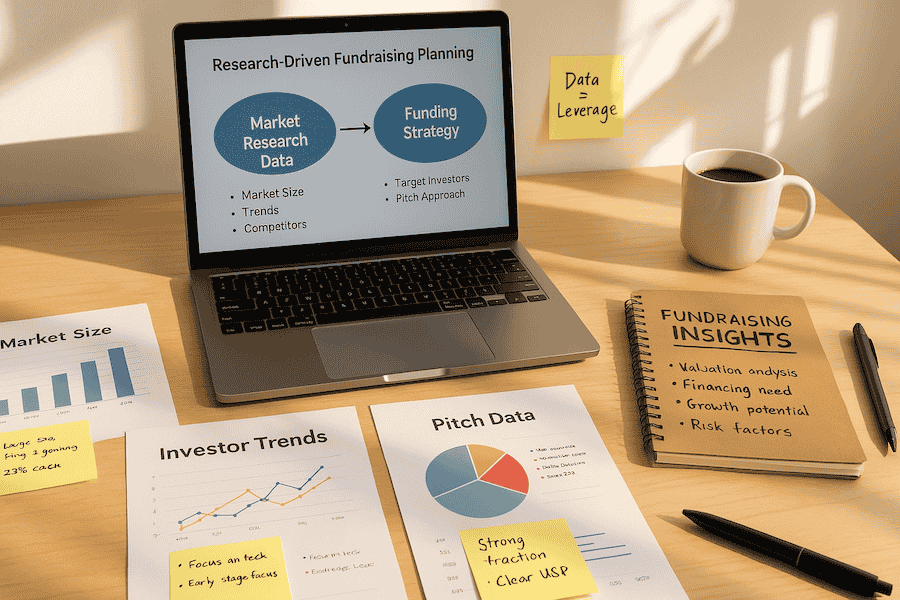
Table of Contents

Effective fundraising begins with understanding your audience, and prospect research (the process of identifying and assessing potential donors or investors) plays a pivotal role in this process. By analyzing data, organizations can identify potential donors and uncover their interests.
Recent studies reveal that following a five-step fundraising strategy plan enabled nonprofits to achieve up to 250% year-over-year donation growth. These results demonstrate how systematic planning amplifies fundraising outcomes. Readers can translate such evidence-based tactics into their own campaigns for measurable success.
This article explores how systematic research and data-driven decisions can transform your fundraising strategy. From identifying prospects to refining your approach, we’ll provide actionable insights to help you achieve your goals.
Marketing Research Fundamentals for Fundraising Strategy Using Research
Market research techniques for startups is the backbone of informed business decisions. By gathering data on target markets, customers, and competitors, businesses can gain valuable insights that guide strategic planning and reduce risks. This process involves analyzing consumer behavior, identifying market trends, and evaluating the competitive landscape to uncover actionable intelligence.
Startup founders and fundraising teams will find these strategies especially relevant.
- Define target investor profile
- Map fundraising timeline
- Prepare tailored pitch
- Research market and competitors
- Set realistic capital targets
- If market data is limited, focus on primary research (e.g., interviews, surveys)
- In volatile markets, adjust timing expectations
Startups, in particular, benefit immensely from marketing research as it helps them understand their audience and refine their offerings. Prospect research (the process of identifying and assessing potential donors or investors) plays a pivotal role in this process.
By analyzing data, organizations can identify potential donors and uncover their interests. These insights help tailor outreach strategies that resonate with them. This approach not only enhances engagement but also increases the likelihood of successful campaigns.
Marketing research is not just about collecting data; it’s about transforming that data into meaningful strategies that drive growth. Whether you’re launching a new product or entering a new market, understanding these fundamentals is key to building a strong foundation for success.
Implementing customer segmentation strategies enables startups to personalize their offerings and improve their engagement with key target groups. This method ensures that fundraising efforts are directed toward the right audience, maximizing impact.
Startups like yours already closed their rounds with us.
Founders across every stage and industry. Here's what it took.
- Raised $7.6M for Swiipr Technologies
- Raised $0.5M for Ap Tack
- Raised €0.5M for Ivent Pro

The Benefits of Market Research for Strategic Fundraising
A fundraising strategy using research enables organizations to uncover growth opportunities and refine their target audience for greater impact.
- Resource Efficiency:
A targeted, research-driven approach saves resources and refines fundraising initiatives, ensuring that efforts are concentrated on opportunities with the greatest impact. - Uncovering Donor Segments:
Market research helps pinpoint untapped donor segments and align messaging with audience preferences. Donor prospect research can reveal patterns in donor behavior, allowing organizations to focus on high-potential prospects and boost conversion rates.
In recent surveys, seventy percent of respondents identified donor acquisition or retention as their top fundraising challenge. These insights highlight why targeted market research is vital for successful segment outreach. A donor development strategy can be strengthened by using market research to identify and engage new donor segments.
Leveraging Relationship Mapping for Prospect Discovery
Building on donor segmentation, relationship mapping enables organizations to visualize and analyze existing supporter networks. This approach uncovers connections that may lead to high-value donor prospects. By identifying influential relationships within your community, you can prioritize outreach efforts for greater impact. Integrating relationship mapping with other research methods ensures a more comprehensive and targeted fundraising strategy.
Competitive Analysis:
Tracking competitors’ pricing, product offerings, and digital engagement provides actionable insights. Understanding competitive trends helps businesses see how competitor actions influence valuation and fundraising strategies, positioning them more effectively in the market.
Knowing how to perform competitive landscape analysis will also come handy. It will help you outline methods to identify gaps in strategy and capitalize on rivals’ weaknesses, ensuring your fundraising efforts remain ahead of the curve.
Essential Market Research Methods and Tools
Understanding market dynamics begins with effective research techniques. Primary methods, such as surveys and interviews, allow startups to gather firsthand insights into customer behavior and preferences. These tools are invaluable for identifying donor prospecting opportunities, as they help uncover motivations and patterns that drive engagement.
Secondary research complements this by analyzing industry trends and competitor behavior. Observing competitors’ strategies and market positioning can refine business models and highlight gaps in the market. For example, tracking competitor trends might reveal untapped donor segments or innovative approaches to audience outreach.
Leveraging new technologies makes research more actionable. Dollar For increased their financial assistance applications by 250% in one year, saving over $15.8 million. Adopting optimized tech tools can lead to these kinds of results.
To simplify the process of gathering actionable data, startups can explore the best market research tools for startups, which streamline data collection and analysis. These tools empower founders to make informed decisions quickly and adapt their strategies to evolving market conditions.
Fundraising Strategies to Apply Market Research Insights
Transforming market research insights into practical strategies can significantly enhance fundraising outcomes. A fundraising strategy using research helps transform insights into practical actions that drive successful fundraising outcomes.
Event-based engagement can translate insights into impact. Wayside Waifs raised nearly $189,000 at their 2024 Strut with Your Mutt event. They used audience-specific messaging and interactive value to drive participation. This example shows how tailored outreach based on market insights converts strategy into results.
Here are fundraising strategies you can include in your research plan for maximum impact:
1. Tailor Marketing Messages for Better Engagement
Understanding your target audience is crucial for crafting compelling narratives. Market research reveals evolving consumer behaviors and preferences, enabling businesses to refine their messaging. For instance, highlighting changing consumer interests in fundraising narratives can resonate with potential investors. This approach not only improves engagement but also demonstrates a deep understanding of market dynamics.
2. Optimize Product Development Cycles
Integrating research findings into product development ensures innovation and competitiveness. By analyzing startup industry trends, startups can anticipate shifts in their market and position themselves effectively for growth. This proactive approach allows businesses to align their offerings with market demand, making their products more appealing to both consumers and investors.
3. Time Fundraising Rounds Strategically
Timing is everything when it comes to fundraising. Incorporating market trends into your fundraising strategy ensures optimal appeal to investors. For example, identifying periods of heightened interest in specific industries or technologies can help secure funding more efficiently. This data-driven approach increases the likelihood of attracting the right investors at the right time.
Whether it’s tailoring messages, refining product cycles, or timing fundraising efforts, each step contributes to a more effective and impactful fundraising strategy.
Interpreting and Analyzing Research Data Effectively
Below are some analytical techniques that improve fundraising results:
- Descriptive Analytics: (data analysis that summarizes past behavior) Provides a snapshot of past trends by identifying patterns in prospect behavior.
- Predictive Analytics: (using data to forecast future events) Forecasts future outcomes based on historical data, allowing fundraisers to anticipate donor preferences and optimize strategies.
- Balanced Methodology: Combines quantitative data (e.g., donation amounts and frequency) with qualitative data (e.g., donor feedback) to deliver a comprehensive view of market trends and donor behavior.
- Actionable Insights: Decoding research data helps identify high-potential prospects, enabling tailored outreach that resonates with specific donor segments.
A donor development strategy benefits from analytics that foster stronger donor relationships through personalized engagement.
The Critical Role of Effective Fundraising
Fundraising not only sustains growth but also enables startups to expand operations, develop innovative products, and capture larger market shares. Without adequate funding, even the most promising ventures risk stagnation. For context, in 2024, donors gave more than $35 billion to internationally focused nonprofits, marking an 18% increase over the previous year. This growth highlights the expanding scope of opportunities awaiting effective fundraisers.
Beyond financial support, effective fundraising connects startups with experienced investors who bring invaluable strategic guidance. These investors often provide insights that refine business models, optimize operations, and position startups for long-term success.
Additionally, their involvement can significantly enhance a startup’s credibility. Securing funds from reputable investors signals trustworthiness and stability, which can attract further investments and partnerships.
The Importance of Diversifying Fundraising Sources
This approach requires startups to pursue multiple funding channels, such as grants, major donors, and events. Diversification reduces reliance on any single source and helps buffer against unexpected changes. By spreading risk, organizations enhance their ability to adapt and sustain growth. A varied funding base also opens doors to new partnerships and opportunities.
Understanding what is prospect research plays a pivotal role in this process. By conducting thorough research on potential investors, startups can identify those whose goals align with their vision, increasing the likelihood of successful funding rounds. This strategic approach ensures that the right partnerships are formed, fostering both financial and operational growth.
In essence, effective fundraising is more than just acquiring capital—it’s about building a foundation for sustainable success.
Five Must-Have Elements for a Nonprofit Fundraising Strategy
A successful fundraising strategy hinges on five critical components that can make or break your efforts. By focusing on meticulous investor research, assembling a diverse team, timing your efforts strategically, setting realistic capital targets, and planning for future needs, you can create a robust framework that attracts the right investors and ensures long-term sustainability.
- Investor research
- Team diversity
- Strategic timing
- Capital targets
- Long-term planning
Despite proven benefits, forty-nine percent of nonprofits lack a strategic plan. This gap explains why robust planning is crucial within winning strategies.
1. Conduct Thorough Investor Research
When exploring how to find investors for startups, understanding investor profiles and preferences is the cornerstone of effective fundraising. In-depth research helps uncover key details such as preferred industries, risk tolerance, and past investment performance. For example, using tools like Investor Fit can demonstrate how targeting aligned investors enhances the likelihood of fruitful capital injections. To dive deeper into this process, to connect with those who align with your vision and goals.
2. Build a Diverse Team
A diverse team brings fresh perspectives and signals a commitment to inclusivity, which resonates with socially conscious investors. According to Forbes, investors are increasingly prioritizing diversity, equity, and inclusion when evaluating startups. This shift underscores the importance of building a team that reflects varied backgrounds and experiences, enriching your strategy while appealing to modern investor values.
3. Time Your Fundraising Strategically
Timing can significantly influence the success of your fundraising efforts. Market conditions, such as down phases, often lead to reduced capital availability and lower valuation demands. Strategizing your raise windows based on Market Timing insights can help secure more favorable terms and avoid unnecessary compromises.
4. Set Realistic Capital Targets
Overestimating or underestimating your capital needs can derail your fundraising efforts. Accurate targets prevent capital shortfalls while avoiding excessive equity dilution. By setting realistic goals, you ensure that your business remains financially stable and attractive to investors.
5. Plan for Long-Term Sustainability
Proactive foresight is essential for securing your company’s future. Anticipating future funding needs and aligning them with your growth trajectory ensures that you’re prepared for challenges and opportunities alike. This forward-thinking approach builds investor confidence and positions your business for sustained success.
A fundraising strategy for nonprofits should include investor research, team diversity, strategic timing, realistic targets, and future planning.
6. Anchor Fundraising Plans with SMART Goals and SWOT Analysis
Establishing clear, actionable goals is crucial for effective fundraising. SMART goals, specific, measurable, achievable, relevant, and time-bound, provide a structured way to define and track progress. By setting SMART objectives, organizations ensure that fundraising targets are realistic and aligned with broader strategic aims.
Conducting a SWOT analysis further strengthens planning by identifying internal strengths and weaknesses alongside external opportunities and threats. This process enables teams to anticipate challenges, leverage unique advantages, and prioritize efforts where they will have the greatest impact. Combining SMART goals with SWOT analysis creates a robust foundation for decision-making and resource allocation.
- Define fundraising objectives that are specific and measurable to track progress accurately and adjust tactics as needed.
- Assess internal capabilities and external factors through SWOT analysis to inform strategy and mitigate potential risks.
- Align team efforts around clear, time-bound milestones that support long-term sustainability and adaptability in changing environments.
Strategic Road-mapping for Future Fundraising
A fundraising strategy using research starts with a clear vision and structured plan aligned to market dynamics.
- Strategic Roadmap:
Develop a comprehensive plan that outlines timing, target investors, and an analysis of the competitive environment to ensure each step resonates with potential backers. - Market and Investor Analysis:
Leverage market trends and investor priorities to refine your strategy, aligning internal goals with external opportunities for maximum impact. - Thorough Preparation:
A well-rounded approach helps anticipate challenges and seize opportunities, fostering confidence among stakeholders and ensuring that every element—from identifying funding sources to crafting compelling pitches, is strategically addressed.
Using a fundraising strategy plan template can help structure your roadmap and align each step with investor expectations. This structured, adaptive strategy lays the foundation for impactful fundraising rounds and long-term success.
Conclusion
Effective fundraising begins with a solid foundation of research and storytelling. A fundraising strategy using research provides startups with a solid foundation for effective fundraising and investor engagement. By combining data-driven insights with a compelling narrative, startups can create a powerful pitch that resonates with investors. This approach not only highlights the potential of your venture but also builds trust and credibility, essential for securing funding in a competitive market.
If you’re ready to elevate your fundraising strategy, we at Qubit Capital offer expert Fundraising Assistance to help secure your future funding. Schedule a free fundraising strategy session with our experts.
Key Takeaways
- Marketing research is the backbone of effective fundraising strategies.
- A fundraising strategy for nonprofits relies on marketing research to achieve sustainable growth.
- Understanding your target audience and competitive landscape improves pitch accuracy.
- Combining qualitative and quantitative data leads to more informed investment decisions.
- A successful fundraising strategy relies on investor research, team diversity, precise timing, realistic targets, and strategic foresight.
- Data-driven insights boost investor confidence and fuel sustainable startup growth.
- A fundraising strategy plan template provides structure for data-driven fundraising and investor confidence.
Want a targeted investor list you can actually use?
A curated shortlist based on your stage, sector, geography, and check size.
- Thesis-aligned investors matched to your round
- Decision-maker contacts with relevant context
- Ready for outreach, not just research

Frequently asked Questions
What is an effective fundraising strategy using research?
It is a structured approach that uses investor profile analysis, market trend data, and donor segmentation to target the right funding sources at the right time. Rather than casting a wide net, research-backed strategies match your startup’s stage and sector to investors with a proven interest in similar deals, increasing both response rates and funding success.