

 Back
Back









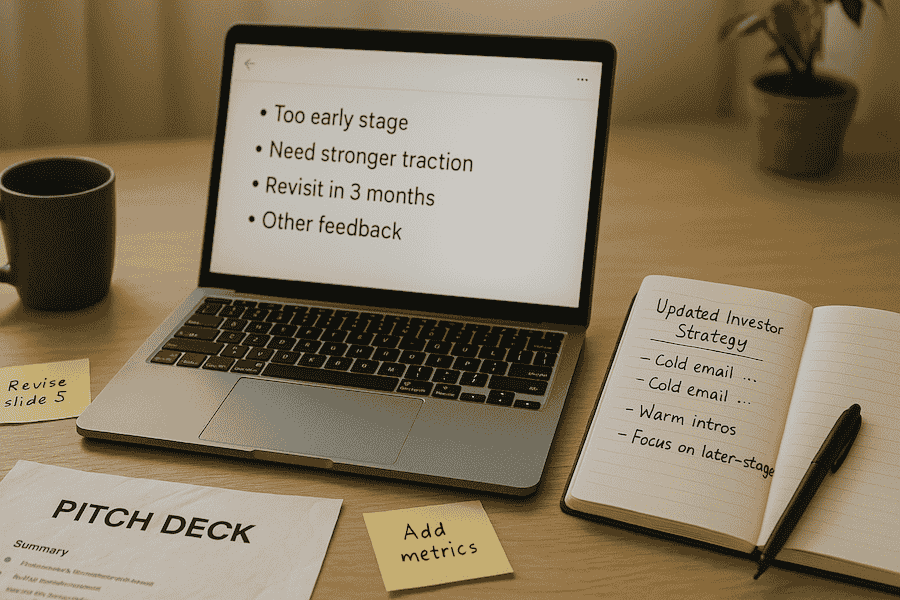
Table of Contents

Adapting to feedback is a cornerstone of investor relations best practice, especially in fast moving markets. Feedback does more than point out weaknesses. It highlights opportunities to refine your approach and sharpen how you present your startup.
For startups, knowing how to find investors is only the first step. The real advantage comes from creating strategies that adapt to changing investor expectations. This helps your pitch and communication stay relevant, clear, and impactful over time.
In this blog, we explore how to use both qualitative insights and quantitative metrics to refine your investor outreach. You will find practical strategies and expert backed ideas you can apply right away. Let’s dive into how feedback can transform your approach and drive better outcomes with investors.
Master Investor Feedback for Strategic Value
Investor feedback becomes far more powerful when you treat it as strategic data, not personal criticism. Each comment signals what matters to the people writing the cheques, from growth quality to governance. When you collect and review feedback in a structured way, it stops feeling random and starts guiding your roadmap.
Around 72 percent of investors have increased their reporting requirements in the last 18 months, often adding more non financial metrics. That shift tells you something important. Investors are no longer looking only at revenue and runway. They also want visibility on retention, customer health, product adoption, culture, and hiring quality. If you can respond to this with better reporting and tighter narratives, you stand out as a more mature partner.
To master investor feedback for strategic value, build a simple system around it:
- Capture every piece of feedback in one place instead of leaving it scattered across emails and calls.
- Group feedback into themes such as product, market, team, governance, and metrics quality.
- Look for patterns across multiple investors rather than reacting to one loud opinion.
- Turn recurring themes into concrete actions and add them to your quarterly priorities.
- Close the loop by updating investors on what you changed and what impact it had.
When you do this consistently, investor feedback starts to improve your strategy, not just your pitch deck. You show that you can listen, adapt, and execute. That behaviour builds trust, strengthens relationships, and increases your chances of getting follow on support when it really matters.
Understanding investor mapping fundamentals is equally crucial. It allows startups to refine their approach based on data-driven insights and feedback loops, ensuring that diverse perspectives drive pivotal decisions.
Startups like yours already closed their rounds with us.
Founders across every stage and industry. Here's what it took.
- Raised $7.6M for Swiipr Technologies
- Raised $0.5M for Ap Tack
- Raised €0.5M for Ivent Pro

Why Investor Feedback is Critical
Investor feedback plays a pivotal role in shaping a startup’s trajectory. It helps refine your pitch and also sharpens core business strategy. Treated seriously, it becomes a free, high quality signal on how your company shows up to the market.
External insights often reveal risks and opportunities founders miss from inside the build. For example, Fortune 100 companies adapted their investor engagement strategies to align with new SEC guidance. As a result, they achieved 94% engagement on governance topics and 65% board member participation in shareholder discussions. That level of engagement shows how powerful structured, two way feedback can be.
Integrating trust building tactics into your feedback loops makes them even more valuable. When you respond clearly, share context, and follow through on agreed actions, investors see you as a partner, not just a capital seeker. Over time, this increases support during hard decisions and future rounds.
Recent findings reveal that 60% of investors now prioritize long term growth over short term gains, a clear long term growth metric shift. This change means investors are looking for durable value, not just quick spikes. If you use feedback to align your roadmap, metrics, and narrative with that long term lens, every investor conversation starts working in your favour.
6 Strategic Ways to Collect Feedback from Investors
Gathering investor feedback is essential for refining strategies and strengthening investor relations. Below are five actionable methods to ensure every interaction provides valuable insights:
- One-on-One Meetings: Personalized discussions create an environment for candid feedback. These sessions allow investors to share their perspectives openly, fostering trust and uncovering specific concerns or suggestions.
- Pitch events: These are ideal for gathering investor feedback. Feedback from a diverse audience highlights areas for improvement and validates your strategy.
- Regular Updates: Companies maintaining regular, high-quality communications are 40% more likely to achieve favorable follow-on funding terms This demonstrates how proactive updates directly influence future investment outcomes. Consistent communication through an investor update newsletter ensures ongoing dialogue. Use these updates to share progress and invite feedback, keeping investors engaged and informed.
- Board Meetings: These structured sessions provide in-depth strategic insights. Board members often have a wealth of experience, making their feedback invaluable for long-term planning.
- Informal Channels: Casual emails or phone calls can capture immediate feedback. These informal interactions often reveal insights that might not surface in formal settings.
- Digital Surveys and Polls: Implement structured online surveys or polls through your CRM or investor portal to gather quantitative and qualitative feedback at scale. Customized questions can track sentiment over time and pinpoint precise areas for strategic refinement.
Feedback from these methods can also clarify how to prioritize investors for maximum impact.
Streamlining Investor Feedback Collection with Digital Tools
Digital tools have changed how startups manage investor relations best practice. Instead of scattered emails and notes, you can centralize communication, track feedback, and respond faster. This makes your investor updates feel more professional and your decisions more data driven.
Datavations show what this can look like in practice. By using AI powered tools like Flowlie, they raised a 17 million dollar oversubscribed Series A, saved around 250 hours, and built relationships with 26 prospective Series B leads. That is the power of turning investor engagement into a structured, tech enabled process.
Embracing the right tools does not replace relationships. It makes them easier to manage at scale. You spend less time chasing spreadsheets and inbox threads, and more time acting on clear, organized feedback. For a founder, that edge in speed and clarity can be the difference between a lukewarm round and a strong, momentum driven raise.
Maintaining Investor Communication without Overwhelming Them
Effective investor communication is about balance. You need to keep investors informed without filling their inbox with noise. Too many updates can dilute your message and quietly push people to disengage.
An investor update newsletter gives you a structured channel to share key milestones, financial performance, and strategic developments. When you keep it clear, focused, and on a predictable cadence, investors know when to expect updates and what they will get from them.
Segmenting Investors for Targeted Communication
Segmenting investors by type helps you send the right message to the right people. Retail, institutional, and ESG investors often care about different things and measure success in different ways. When you tailor both content and frequency to each segment, your updates feel more relevant and less overwhelming.
For example, some investors may want higher level strategic context, while others expect deeper reporting and metrics. Adjusting your detail level to match their expectations shows respect for their time and attention.
Always prioritise quality over quantity. A concise, well crafted update that addresses investor reporting clearly will do more for trust than a stream of generic messages. By keeping communication regular, relevant, and value focused, you can maintain strong investor relationships without burning out your audience.
Enhancing Your Pitch with Investor Feedback
Refining your investor presentation is an ongoing process, and investor feedback plays a pivotal role in achieving success.
1. Track your Feedback Rate
The Feedback Rate shows how well your pitch is landing with investors. It is the share of investors who respond with specific, actionable comments. If very few investors share feedback, your pitch is likely unclear, generic, or not compelling enough to react to.
2. Use structure to double your chances
A well structured deck can make a startup roughly twice as likely to get funded compared with a weak one. Investor feedback helps you see which parts of your story feel confusing, overloaded, or out of order. Tightening structure around that feedback makes your presentation easier to follow and much more convincing.
3. Add clear data and visuals
Decks with clear data and visuals keep investor attention up to three times longer than decks with mostly text. Use feedback to find where investors ask for more proof, clearer metrics, or simpler charts. Update those slides with focused numbers, clean visuals, and short explanations that answer their questions directly.
4. Turn feedback into specific actions
Do not treat each comment as random noise. Track investor feedback in one place and look for patterns across meetings. Use those patterns to adjust your narrative, sharpen your positioning, and highlight the right metrics. Over 40 percent of startups that revised their presentations after investor meetings reported a clear improvement in investor engagement.
5. Learn from real world examples
Datavations used Flowlie's AI powered platform to refine its pitch strategy based on feedback. The result was a seventeen million dollar oversubscribed Series A and a three times valuation step up. The lesson is simple. Structured, feedback driven improvements compound over time.
6. Avoid misalignment with investor expectations
Misalignment with investor expectations is a factor behind 17 percent of startup failures, according to CB Insights.
Feedback shows you where expectations differ on things like market size, timeline, pricing, or hiring pace.
Treat your pitch like a living product. Update it after real investor conversations, not just once in a while.
7. Make feedback a core presentation habit
When you treat feedback as a central part of your investor presentation best practices, everything improves. Your deck becomes clearer. Your meetings become more focused. Your relationships with investors become stronger and more long term.
The Importance of Regular Business Updates to Investors
Keeping investors informed through consistent communication is a cornerstone of building trust. A well-structured investor update newsletter not only demonstrates transparency but also reinforces confidence in your business’s strategic direction. Regular updates allow investors to track progress, evaluate milestones, and align their expectations with your company’s vision.
Use Templates for Consistent Investor Updates
This foundation enables more effective communication when founders use standardized templates for investor updates. Templates ensure each message covers key metrics, milestones, and challenges in a clear, structured format. Consistent formatting saves time and reinforces narrative continuity, making updates easier for investors to follow and evaluate.
To maintain strong relationships, focus on clarity and frequency. Share key metrics, upcoming goals, and any challenges faced. Transparency in these areas establishes credibility and fosters long-term partnerships. Additionally, adhering to an investor relations best practice guide ensures your updates remain professional and relevant.
Investors value consistent reporting as a critical factor in decision-making. By prioritizing open communication, businesses can create a foundation of trust that supports sustained growth and mutual success.
Responding Effectively to Investor Questions Post-Pitch
A well-prepared response to investor questions can make or break the momentum of your pitch. To ensure success, focus on crafting clear, data-backed answers that directly address the concerns raised. This approach not only demonstrates your expertise but also builds trust, a cornerstone of effective investor relations objectives and goals.
For example, Dropbox showcased investor presentation best practices by preparing adaptable presentation templates to address specific inquiries. Their detailed follow-up materials highlighted their readiness and commitment, leaving a lasting impression on potential investors.
Transparency is equally critical. If an investor raises a challenging question, acknowledge it openly and provide a thoughtful response. This level of honesty can transform skepticism into confidence, potentially securing further investment.
Fostering Long-Term Investor Relationships
Establishing enduring investor relationships is a cornerstone of investor relations best practice. Transparent communication and consistent updates are essential in building trust that stands the test of time. Investors value clarity, and providing them with regular, detailed insights into company performance fosters confidence in your leadership.
To align with investor relations objectives and goals, maintaining open channels of communication is critical. This includes sharing both successes and challenges, ensuring investors feel like true partners in the journey. Such transparency not only strengthens trust but also encourages sustained support during market fluctuations.
Consistency in messaging further enhances credibility. By delivering updates on a predictable schedule, companies demonstrate reliability, which is crucial for long-term investor engagement. A proactive approach to investors communication solidifies these relationships, creating a foundation for mutual growth and success.
Learning and Growing from Investor Rejections
Every rejection from an investor carries valuable lessons that can shape future success. While it may initially feel like a setback, constructive feedback from declined offers often reveals areas for improvement. This insight is crucial for refining your approach and aligning your strategies with investor expectations.
Embracing rejection as a learning opportunity transforms challenges into growth moments. For example, feedback on your investor presentation best practices might highlight gaps in clarity or alignment with market trends. By addressing these gaps, you can craft more compelling pitches that resonate with potential investors.
Rejection is not the end, it’s a stepping stone toward better outcomes. Treat each declined offer as a chance to enhance your investor relations best practice, ensuring your next pitch is stronger and more strategic.
Core Principles for Effective Investor Interaction
Engaging effectively with investors requires a thoughtful approach grounded in communication and collaboration. Active listening forms the foundation of investor relations best practice, ensuring businesses accurately receive and understand feedback. By attentively focusing on what investors share, businesses can uncover valuable insights that might otherwise be overlooked.
Thoughtful reflection transforms feedback into actionable improvements. Taking time to evaluate investor input helps identify areas for growth and refine strategies. Seeking clarity is equally essential; asking questions to confirm understanding prevents miscommunication and strengthens trust.
Collaboration drives innovative solutions. Working alongside investors to address challenges fosters a shared sense of purpose and often leads to creative outcomes. Applying data analytics for investor mapping enables startups to make informed decisions and adjust their strategies based on feedback loops.
Conclusion
Feedback driven investor relations give startups a clear edge. The best teams treat feedback as structured data, not personal judgment. They capture every signal, group it into themes, and use it to refine strategy, decks, and reporting. This turns investor conversations into a live roadmap for product, hiring, and governance.
Over time, that discipline compounds into higher trust, better engagement, and stronger support in tough markets. Make feedback systems, not ad hoc reactions, the core of your investor communication.
If you’re ready to elevate your investor engagement, our Investor Outreach service can connect you with the right opportunities. Contact us today to take the next step in building meaningful investor relationships.
Key Takeaways
- Around 72 percent of investors have increased reporting requirements, especially for non financial metrics like retention, adoption, and culture.
- Roughly 60 percent of investors now prioritize long term growth over short term gains in their decisions.
- Companies with regular, high quality investor communication are about 40 percent more likely to secure favorable follow on terms.
- Digital, AI powered tools can save hundreds of hours while centralizing feedback and building warmer future round pipelines.
- Structured decks are roughly twice as likely to get funded as weak, unstructured presentations.
- Clear data and visuals can keep investor attention up to three times longer than text heavy slides.
- Over 40 percent of startups report better investor engagement after revising decks based on direct feedback.
- Misalignment with investor expectations drives around 17 percent of startup failures, so feedback loops are a risk management tool.
Want a targeted investor list you can actually use?
A curated shortlist based on your stage, sector, geography, and check size.
- Thesis-aligned investors matched to your round
- Decision-maker contacts with relevant context
- Ready for outreach, not just research

Frequently asked Questions
How can digital tools streamline investor feedback collection?
Digital tools help centralize and automate feedback collection, allowing startups to gather real-time investor insights. Tools like Flowlie or Qubit Capital simplify tracking and follow-up, making it easier to refine your investor pitch.