

 Back
Back










Table of Contents

An updated investor database is the backbone of effective portfolio management schemes (a systematic process to oversee investor relationships and data). It ensures that your outreach efforts are targeted, timely, and relevant to the right audience. Without consistent updates, critical opportunities can be missed, and relationships may stagnate.
Investor database technology is undergoing rapid transformation. In 2025, AI-powered, real-time systems now operate on over 200,000 active investor profiles and 155 million U.S. real estate records. The scale enables startups to access richer, current investment insights, raising expectations for portfolio management efficiency and outreach precision.
This blog will explore actionable strategies to maintain your investor database, focusing on segmentation, technology integration, and strategic relationship building.
Ready to optimize your investor outreach? Let's go!
Why is Investor Database so Important
Recent market activity demonstrates why an effective investor database matters. In Q1 2025, global private equity exit value reached $175.59 billion, almost triple the amount seen in Q1 2024. This acceleration underscores the necessity for startups to maintain current investor information and seize emerging funding opportunities.
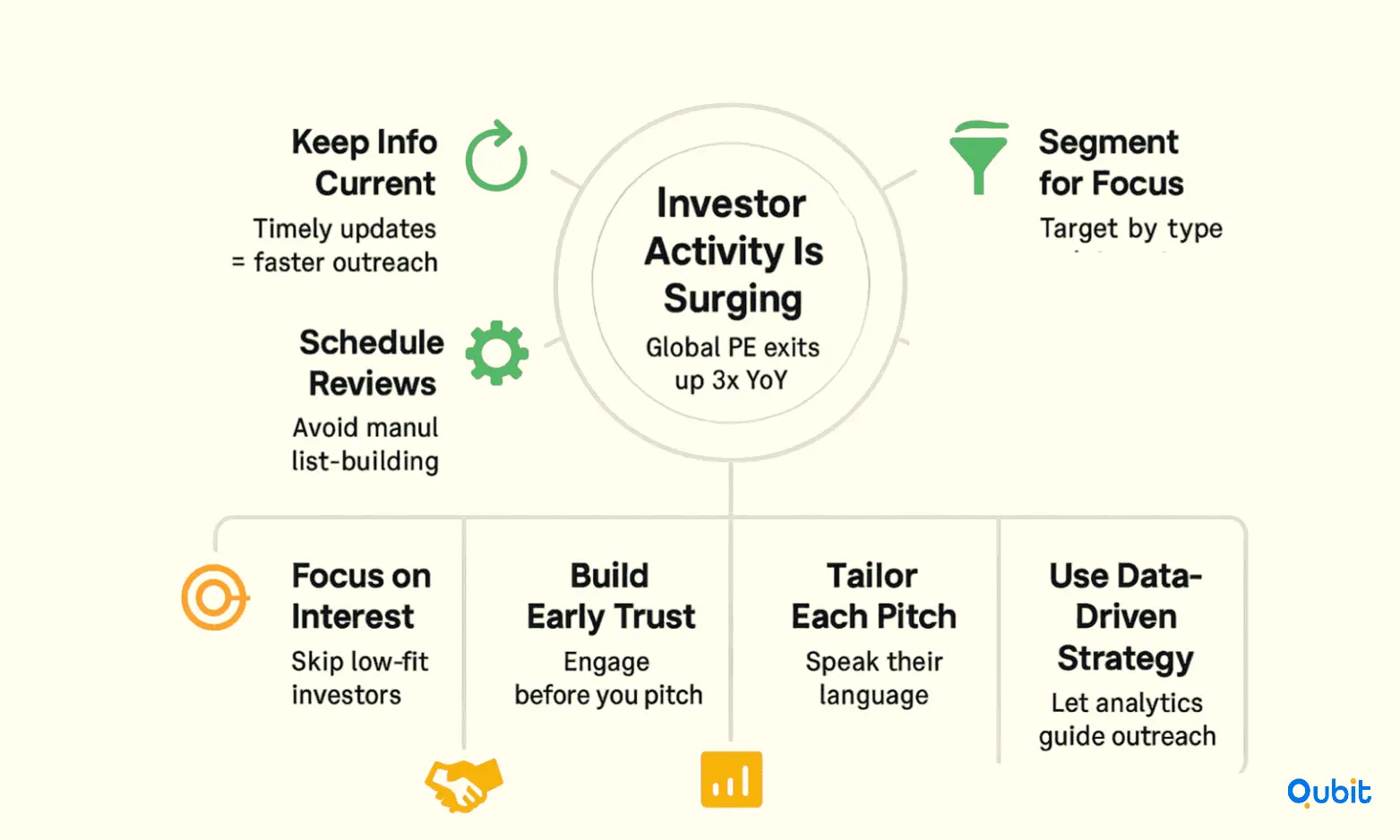
- To keep your investor database updated, use automation tools, segment contacts, and schedule regular reviews. This ensures timely, targeted outreach and prevents missed opportunities.
- When investor contact data decays about 2.1 percent every month, ignoring updates for a year guarantees painfully outdated outreach. Treat quarterly database reviews as mandatory hygiene so investor profiles stay accurate enough to support credible, timely fundraising conversations.
- Efficiency is another critical benefit. Instead of spending valuable time on uninterested parties, startups can focus on building meaningful connections. Early relationship-building is particularly impactful, as it lays the groundwork for future funding rounds. Engaging with investors ahead of time fosters trust and opens doors to tailored pitches that resonate with their specific interests.
- Proactive maintenance of an investor database also helps startups adopt data-driven strategies for superior funding outcomes. Understanding how to find investors for startups is a foundational step toward building a robust investor database.
Ultimately, an updated and strategically managed database doesn’t just enhance alignment; it boosts the likelihood of securing funding. By learning how to build an investor map, startups can better organize their database and ensure they target the right audience. This foundational step complements the importance of keeping investor data current and accessible.
What to Include in an Investor Database
Building a comprehensive investor database requires attention to detail and strategic organization. First you should be mastering investor mapping techniques for startups (methods for identifying and visualizing relevant investors).
- Start by creating detailed investor profiles that include essential criteria such as industry alignment, investment stage, reputation, and geographic location. These elements ensure that the database reflects investors who are compatible with your business goals.
- Incorporating vetting criteria is equally important. Analyze prior investments and recent deal activity to gauge an investor’s track record and current interests. This data-driven approach minimizes risks and ensures that potential investors align with your growth trajectory.
- Additionally, consider the value they can provide beyond funding, such as mentorship, access to networks, or operational expertise.
- A robust database also evaluates cultural fit and long-term compatibility. Investors who share your vision and values are more likely to contribute positively to your business journey.
To keep your database relevant and updated, explore tools that streamline the process. Using the best investor discovery tools can simplify updates and expand your network with meaningful connections.
How to Build & Grow an Investor Database
Expanding an investor database requires a strategic approach that leverages various channels and tools:
- Utilize online platforms like Qubit Capital to tap into a network of over 20,000 investors, including 7,476 VCs, 4,202 PEs, and 4,807 Corporates, and integrate its API with your CRM for automatic investor profile updates.
- Attend networking events to engage in direct conversations, fostering relationships that can lead to long-term collaborations.
- Use social media platforms for targeted campaigns and thought leadership content to connect with potential investors.
- Rely on peer recommendations from other founders to uncover valuable leads that might otherwise remain hidden.
- Segment contacts into distinct groups to ensure tailored and impactful outreach, increasing the likelihood of successful connections.
- Some B2B datasets decay as fast as 70.3 percent annually, turning last year’s investor map into a dangerously misleading asset. Adopt automation tools, such as automated segmentation systems, to refresh investor details regularly and eliminate manual errors.
- Embrace a diverse and precise approach, whether through digital platforms, events, or automation—to continuously build and grow your investor database.
Expanding an investor database requires a strategic approach that combines multiple channels and tools. You can also use online platforms like Investor Hunt, which provides access to over 90,000 angel investors and venture capitalists. Integrating the Investor Hunt API with your CRM ensures automatic updates to investor profiles, saving time and improving accuracy.
To maximize the effectiveness of your database, segmenting contacts into distinct groups is essential. Learn more about how to segment investors to ensure your outreach efforts are tailored and impactful, increasing the likelihood of successful connections.
Database building aligns with emerging funding flows. In 2024, AI startups commanded $110 billion in investment, setting records for sector capital allocation. This environment rewards companies that proactively expand investor lists and leverage technology for discovery.
Steps to Update Your Investor Database
- Define your target investor profile
- Tap into existing networks
- Conduct research
- Segment database
- Nurture relationships
- Use automation tools
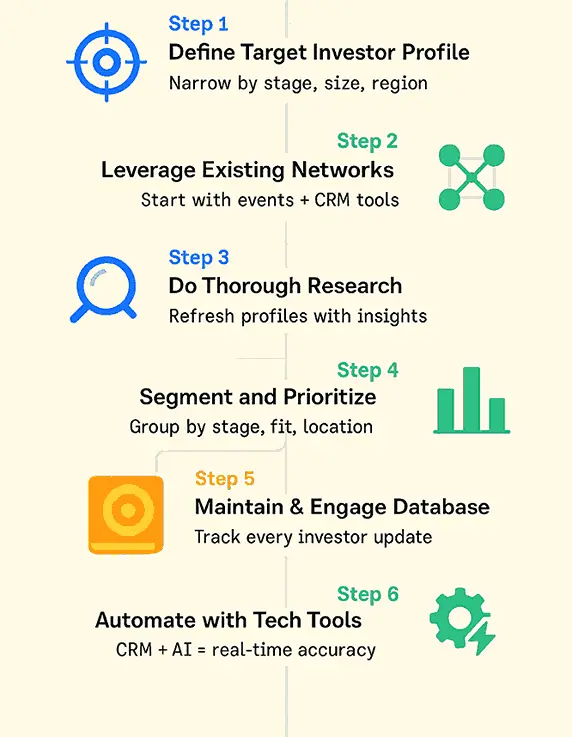
Here are detailed steps to keep your investor database up to date:
Step 1: Define Your Target Investor Profile
Identifying the right investor begins with a clear understanding of your ideal profile. Precision in defining this profile ensures your outreach is both focused and personalized, saving time and increasing the likelihood of meaningful connections.
Start by narrowing down key factors such as industry alignment, investment stage, deal size, and geographic preference. For example, if your startup specializes in renewable energy, targeting investors with a history in clean technology portfolios is essential.
The wrong room wastes quarters. Match your traction and runway with partners who fund your exact lane, then tailor the hook to their portfolio gaps. A clear playbook for identifying the right investors turns outreach into predictable meetings.
Step 2: Tap Into Existing Networks and Resources
Building connections starts with what you already have. Personal relationships, industry events, and online directories offer a solid foundation for expanding your reach. Whether it’s colleagues, mentors, or professional acquaintances, these networks can help identify potential investors aligned with your portfolio management scheme (a systematic process to oversee investor relationships and data).
Modern digital tools can transform legacy contacts into actionable resources. Platforms like CRM systems and investor databases ensure that information remains current and accessible. By maintaining updated profiles and tracking interactions, you can streamline communication and enhance engagement.
Industry events and conferences are also invaluable for meeting new contacts and reconnecting with established ones. Pairing these opportunities with online directories provides a comprehensive approach to identifying prospects.
Fundraising speed comes from focus: right angels, right message, right channel. Build a short list by geography, thesis, and ticket range, then personalize outreach in batches. These founder-friendly websites to find angel investors keep your pipeline full and your sanity intact.
Step 3: Conduct Thorough Research
Expanding your investment portfolio begins with meticulous research. By systematically analyzing industry publications, company websites, and government resources, you can uncover new investor opportunities while refreshing outdated data. This process of portfolio management (a systematic process to oversee investor relationships and data) ensures your strategy remains dynamic and well-informed.
Thorough research is essential for broadening the investor pool beyond familiar contacts. It allows portfolio managers to identify untapped opportunities, ensuring a diverse and robust network. Furthermore, revisiting older data ensures that your investment portfolio management approach stays accurate and relevant, avoiding reliance on outdated or incomplete information.
A structured approach to research not only enhances decision-making but also strengthens the foundation of your portfolio management process. By prioritizing reliable sources and maintaining consistency, you can uncover valuable insights that drive growth and innovation.
Step 4: Prioritize and Segment Your Database
Efficient outreach starts with a well-organized database. Begin by categorizing investor prospects based on three critical factors: investment stage, industry focus, and geographic location. This segmentation ensures that your communication aligns with the specific interests and priorities of each prospect.
For example, grouping investors by their preferred investment stage, seed, growth, or late-stage, helps tailor your pitch to match their portfolio goals. Similarly, identifying industry focus allows you to connect with investors who are more likely to resonate with your business model. Geographic segmentation further refines your approach, ensuring that time zones, market familiarity, and regional preferences are considered.
Prioritization is equally essential. Focus on high-potential prospects who align closely with your objectives. This not only streamlines follow-up communications but also maximizes the efficiency of your portfolio management scheme (a systematic process to oversee investor relationships and data). By combining segmentation and prioritization, you create a structured framework for meaningful and productive investor engagement.
Step 4a: Segment Investors by Fit Categories
Beyond basic segmentation, startups benefit from categorizing investors into fit tiers to streamline outreach. The Bullseye category includes investors who closely match your criteria and have a strong history of investing in similar ventures. Possible investors meet most requirements but may have less direct alignment or fewer relevant deals. Reach investors are less likely to engage but can be considered for broader networking or future rounds.
This tiered approach enables founders to prioritize their time and resources on the highest-potential contacts. Personalized communication can be tailored to each segment, increasing the likelihood of meaningful engagement. Tracking investor responses and updating categories over time ensures the database remains dynamic and focused on active opportunities.
- Bullseye investors are top-priority targets with high alignment and proven interest in your sector.
- Possible investors show moderate fit and may require more nurturing or information before engaging.
- Reach investors are long-shot prospects, useful for expanding your network or future fundraising rounds.
Step 5: Nurture and Maintain Your Database
A well-maintained database is the cornerstone of effective portfolio management. To keep your investment portfolio management efforts dynamic, prioritize regular updates to your database. This includes recording new investor details, tracking interactions, and noting any changes in investor activity. These updates ensure your database reflects the latest information, enabling informed decision-making.
Investor email lists also decay around 22.5 percent annually, so inactive or invalid addresses quietly drag down your update campaigns. Combine regular list cleaning with re opt in prompts so investor communications stay deliverable, relevant, and actually opened.
Periodic communication with investors is equally vital. Whether through newsletters, personalized emails, or quarterly updates, consistent engagement fosters trust and strengthens long-term relationships. Monitoring investor activity, such as portfolio adjustments or new investments, allows you to anticipate needs and tailor your approach accordingly.
Investors remember founders who follow up with signal, not spam. Log every touchpoint, set clear asks, and send updates that show movement. Tighten your process with disciplined investor pipeline management so conversations compound.
Step 5a: Organize a Secure Investor Data Room
Building on database maintenance, startups should create a secure digital data room to house essential fundraising documents. This repository typically includes financial statements, market research, legal agreements, and investor updates. Organizing these files in structured folders enables quick access during due diligence and fosters trust with potential investors.
A well-managed data room demonstrates professionalism and readiness for investment. It also simplifies collaboration with advisors and legal teams, ensuring all parties can review up-to-date information. Regularly updating the data room as your business evolves keeps investors informed and engaged throughout the fundraising process.
- Store financials, cap tables, and term sheets in clearly labeled folders for easy retrieval.
- Include market analysis, business plans, and recent investor updates to provide comprehensive context.
- Maintain strict access controls to protect sensitive information and ensure only authorized parties can view documents.
Step 6: Amplify Efficiency with Technology and Automation
Automation is transforming investor management. In 2025, AI-powered database technology became industry standard for portfolio building and updates. These tools optimize accuracy, speed, and scale, ensuring that even large datasets remain current without manual effort.
Streamlining your investor database begins with adopting the right tools. A robust CRM Software like HubSpot or Salesforce can transform how you manage investor data. For instance, these platforms can automatically update investor profiles after every interaction, eliminating the need for manual data entry. This ensures that your portfolio management scheme (a systematic process to oversee investor relationships and data) operates with accurate, real-time information.
Automation doesn’t stop at data updates. Features like automated tagging and segmentation allow your database to become self-sustaining. These tools categorize investors based on their preferences, behaviors, or engagement levels, making it easier to tailor your communication strategies. This process not only saves time but also enhances the overall efficiency of your portfolio management service.
By integrating technology into your workflow, you reduce the risk of human error and ensure that investor information remains consistently up-to-date. Whether you're managing a small investor pool or a large-scale portfolio, automation tools provide the scalability needed to handle growing demands.
Conclusion
A strong investor database is no longer a nice-to-have; it is core infrastructure for modern fundraising. When you keep profiles complete, segmented, and updated with real activity, every outreach block on your calendar becomes sharper, faster, and more relevant. The result is fewer dead-end conversations and more compounding relationships with investors who actually fit your stage, sector, and thesis.
If you combine clear investor profiles, disciplined research, and automation, your database starts working for you in the background, surfacing the right names at the right time. Treat it like a living asset, not a static spreadsheet, and review it as often as you review your product roadmap. Do that, and future rounds become a process, not a panic.
If you’re ready to engage with the right investors, let’s connect. Our Investor Outreach service can help secure the best investment opportunities for your startup.
Key Takeaways
- A well-maintained investor database is vital for targeted outreach and improved funding efficiency.
- Include comprehensive criteria such as industry alignment, investment stage, reputation, and geographic location.
- Utilize multiple channels, online tools, newsletters, social media, and networking events—to build your database.
- Automation and CRM integration are essential for keeping investor information current.
- Be cautious about manual data entry errors and respect investor privacy regulations when updating your database.
- Regular nurturing and segmentation foster long-term relationships with invest
Frequently asked Questions
What are best practices for investor database management?
Best practices include regular data updates, using CRM tools, segmenting investors, and automating profile updates for accuracy.