

 Back
Back










Table of Contents

Securing funding, including seed funding is often celebrated as a major milestone for startups, but maintaining momentum beyond that initial success requires thoughtful planning and execution. The steep risk startups face is clear. 90% of startups fail, with running out of cash among the top causes. This statistic highlights why a robust operations strategy and ongoing financial discipline are essential after raising capital.
Fundraising is not a one-time event; it’s an ongoing effort that demands strategic foresight, adaptability, and clear communication with stakeholders. For founders, understanding the nuances of fundraising, such as investor expectations and dynamic financial modeling, can make all the difference in sustaining growth.
Let’s dive into actionable strategies for maintaining fundraising success and driving long-term growth.
Fundraising – Understanding Early Experiences
Maintaining investor trust requires regular, transparent updates. Early-stage startup fundraising is often a defining moment, shaping the trajectory and laying the foundation for future growth. Reflecting on my initial experiences in securing seed funding, I quickly realized the importance of aligning with investor expectations and presenting a compelling narrative that resonates.
Key best practices for startup fundraising include building investor trust, using dynamic financial models, and maintaining transparent communication. These practical steps help founders navigate challenges at every stage. These lessons were not only pivotal for my own journey but also serve as valuable insights for anyone embarking on the path of raising capital.
A robust startup operations strategy is critical to ensuring sustainable growth and operational efficiency after fundraising. This approach helps founders align their financial goals with operational priorities, ensuring that every dollar raised is put to optimal use.
The Role of Seed Funding in Startup Growth
Understanding what is seed funding is crucial for entrepreneurs aiming to secure early-stage investments. Seed funding represents the initial capital that helps startups develop their ideas, build prototypes, and establish market presence. For many founders, this phase is not just about financial support, it’s about proving the viability of their vision to investors who are willing to take a chance on untested concepts.
Seed funding is often the literal starting point for new ventures. According to Y Combinator, 40% of companies joined the accelerator with just an idea. This underlines how seed capital is critical to make the leap from concept to execution.
During my early fundraising efforts, I learned that investors often prioritize clarity and confidence. They want to see not only the potential of your idea but also your ability to execute it effectively. This requires crafting a narrative that connects your business goals with their investment objectives.
Crafting a Narrative That Resonates
One of the most impactful lessons from my fundraising journey was the art of storytelling. Investors are inundated with pitches daily, and standing out requires more than just numbers and projections. It demands a story—one that highlights the problem your startup aims to solve, the unique solution you offer, and the market opportunity that awaits.
For instance, when preparing my pitch, I focused on weaving together the technical aspects of my product with real-world applications. This approach helped investors visualize the tangible impact of their investment. It’s not just about presenting data; it’s about making them feel connected to your mission.
Setting Clear Investor Expectations
Another critical aspect of early fundraising is managing investor expectations. Transparency is key. Investors appreciate founders who can articulate their needs, challenges, and milestones clearly. During my initial rounds, I made it a point to outline realistic goals and timelines, ensuring that my backers understood the risks and rewards involved.
This approach not only builds trust but also fosters long-term partnerships. Investors who feel informed and involved are more likely to support your venture through subsequent funding rounds.
The Strategic Value of Lead Investors
Building on the importance of investor alignment, founders should recognize the pivotal role of lead investors in fundraising rounds. Lead investors often set the terms, provide early validation, and attract additional participants to the round. Their involvement signals credibility to the market, making it easier to close subsequent commitments. For startups, securing a strong lead investor can accelerate the fundraising process and enhance long-term strategic support.
Lessons for Aspiring Entrepreneurs
For those embarking on their fundraising journey, here are some actionable insights:
Download our Startup Fundraising Checklist here.
- Understand the meaning of seed funding: Grasp its role in early-stage financial planning and how it sets the stage for future growth.
- Focus on storytelling: Develop a narrative that aligns your vision with investor interests.
- Prioritize transparency: Clearly communicate your goals, challenges, and expectations to build trust.
Fundraising is as much about relationships as it is about capital. By understanding investor expectations and crafting compelling narratives, startups can position themselves for success in the competitive world of early-stage funding.
To sustain success, startups must first master startup fundraising strategies, which lay the groundwork for effective capital acquisition. These strategies include understanding investor profiles, preparing detailed financial plans, and refining your pitch to address potential concerns.
Startups like yours already closed their rounds with us.
Founders across every stage and industry. Here's what it took.
- Raised $7.6M for Swiipr Technologies
- Raised $0.5M for Ap Tack
- Raised €0.5M for Ivent Pro

Early Fundraising Experiences – Learning from Case Studies
Fundraising for startups is often a defining moment, shaping the trajectory of their growth and operations. Reflecting on my first fundraising experience, I encountered challenges that tested my adaptability and decision-making.
The Complexity of Seed Round Planning
The seed round, often the first major fundraising milestone for startups, requires meticulous preparation and foresight. During my initial experience, I quickly realized that crafting a compelling narrative was only part of the equation. Investors sought clarity on scalability, market potential, and the team’s ability to execute. Without addressing these key aspects, securing funds became an uphill battle.
CityLogic’s journey in 2018 exemplifies this. Transitioning from a consultancy model to a scalable product offering, the company faced the daunting task of productizing its services to attract Series A investors. This shift demanded not only operational changes but also a clear articulation of their growth strategy. Their success highlighted the importance of aligning business models with investor expectations, a lesson I applied to my own fundraising efforts.
The Role of Scenario Planning
Scenario planning emerged as a critical tool during my fundraising journey. Anticipating potential obstacles, such as market shifts or operational bottlenecks, allowed me to present a robust strategy to investors. CityLogic demonstrated this effectively by preparing detailed plans for scaling their product offering while addressing potential risks. Their proactive approach instilled confidence in investors, showcasing their readiness to adapt and thrive in dynamic conditions.
For founders navigating their first seed funding for startups, scenario planning is indispensable. It not only strengthens investor presentations but also equips the team to handle unforeseen challenges with resilience.
Avoiding Common Pitfalls
Early fundraising is fraught with potential missteps. From overestimating market demand to underestimating operational costs, the margin for error is slimThe necessity of scenario planning is underscored by sector-wide outcomes. Cash flow shortfall ranks top three among reasons for startup failure. Addressing potential pitfalls upfront is critical to avoid becoming part of this statistic.
Cap Table and Compliance Best Practices
- Maintain an accurate, up-to-date cap table using dedicated software to ensure transparency and support investor due diligence.
- Engage qualified legal counsel early to prepare standardized funding documents and address regulatory requirements.
- Regularly review equity allocations and compliance filings to avoid costly errors and future disputes among stakeholders.
Another real-world lesson comes from Meg Whitman and Jeffrey Katzenberg. Their company raised $1.7 billion in pre-seed funding, yet failed and shut down only seven months after launch, showing even major capital can be wasted without effective planning.
Before diving into term sheets and investor meetings, founders should familiarize themselves with the legal documents founders need to secure capital, as overlooking compliance early on can derail even the most promising seed rounds.
Crafting a Dynamic Financial Model – Scenario Planning for Robust Fundraising
Building a financial model is crucial for startup fundraising success, helping startups adapt to varying scenarios and secure funding.
The Importance of Scenario Planning
Scenario planning allows startups to evaluate how different variables, such as market fluctuations or operational changes, impact their financial health. Tracking key performance metrics, such as Monthly Recurring Revenue (MRR) and churn rate (the percentage of customers lost over a given period), is crucial. These help founders spot trends and adjust strategies proactively.
Dynamic financial models also empower founders to answer critical questions during investor discussions. For example, how would a sudden increase in customer acquisition costs affect profitability? Or, what happens if churn rates rise unexpectedly? By addressing these scenarios, startups can present a comprehensive picture of their financial stability.
Tools to Build Versatile Financial Models
To simplify the process of creating adaptable financial models, founders can utilize tools like Fuel Tool. This free financial planning product is designed specifically for early-stage founders, helping them build robust models that can be updated regularly. Integrate the Fuel Finance tool into your budgeting workflow to update forecasts regularly, ensuring your projections remain accurate and relevant.
Additionally, HS Templates offer downloadable resources to structure financial reports and plans effectively. Use these templates to build and refresh your financial model as market conditions change, ensuring your strategy remains aligned with current realities.
Trends in Financial Modeling
The adoption of detailed financial models with scenario analysis and dynamic dashboards is becoming a best practice in fundraising strategies. Embedding dynamic dashboards into your reporting systems allows you to continually monitor key metrics for sustained fundraising success. This approach not only enhances transparency but also builds confidence among potential investors.
Maintaining Transparency Post-Funding
Current market conditions make adaptability even more critical. Fundraising success rates dropped 40% since 2021, and average time-to-close increased to five-to-seven months. Dynamic financial models are now mandatory for navigating protracted capital raises.
Once funding is secured, maintaining financial transparency is equally important. Strong investor relationships rely on consistent performance monitoring and clear communication.
By adopting versatile financial models and leveraging scenario planning, startups can navigate the complexities of fundraising with confidence. Whether preparing for a seed round or scaling operations post-funding, robust financial planning remains a cornerstone of success.
Market conditions can shift quickly, and founders who prepare for adverse scenarios are better positioned when it matters most — understanding raising startup funding during a downturn can make the difference between survival and shutdown.
Optimizing Post-Seed Growth Strategies
Beyond securing initial funding, startups must continuously refine their operational and fundraising strategies to sustain momentum. Once the seed round is complete, attention shifts to using capital for scalable growth. It’s also important to manage investor expectations closely.
Founders should emphasize proactive financial modeling that anticipates market shifts and operational costs. This means regularly updating forecasts, revisiting budgets, and identifying potential funding gaps before they become critical.
Key tactics include:
- ‘Dynamic budgeting’ means frequently updating budget allocations based on current performance.
- Operational Efficiency: Streamline processes to reduce overhead and maximize resource utilization.
- Milestone Tracking: Set and monitor specific performance indicators to measure progress.
Diversifying Funding Sources for Resilience
This proactive approach to financial planning is strengthened by diversifying funding sources beyond traditional venture capital. Startups can explore options such as angel investors, crowdfunding, venture debt, or strategic partnerships to access additional capital.
Diversification reduces reliance on a single funding channel and helps mitigate risks associated with market fluctuations. The opportunity for well-positioned startups is substantial. In Q3 2025, global venture funding rose 38% year-over-year to reach $97 billion. Proactive founders can access greater resources to fuel post-seed growth.
By broadening their funding base, founders enhance both financial stability and growth potential. Moreover, building a resilient team is crucial. Investing in talent development, leadership training, and cross-functional collaboration creates a culture of accountability and innovation.
Strategic partnerships with advisors and industry experts can also provide fresh perspectives on growth challenges. This continuous cycle of evaluation and improvement is essential to sustain investor confidence and fuel ongoing fundraising efforts. By embedding adaptability and clear financial discipline in every aspect of operations, startups can effectively transition from initial success to long-term market leadership.
Founders planning their next raise should understand the stages of venture capital investment so they can align milestones and metrics with what each round demands.
Dynamic Investor Communication for Sustained Momentum
Effective communication not only nurtures existing relationships but also sets the stage for future funding rounds. Startups should cultivate a transparent dialogue with stakeholders by sharing both triumphs and challenges. Regular, data-driven updates reinforce trust and demonstrate that the company is navigating the complexities of scaling responsibly.
Strategies to enhance investor communication include:
- Scheduled Updates: Implement periodic financial and progress reports to keep stakeholders informed.
- Visual Dashboards: Utilize graphical data presentations that simplify complex metrics.
- Feedback Mechanisms: Create channels for investors to provide input, ensuring their insights influence strategic decisions.
Integrating these methods into your communication plan helps demystify financial models and operational plans. This transparency not only builds investor confidence but also showcases the startup’s commitment to accountability.
A well-crafted narrative that aligns with investor expectations transforms every update into an opportunity to validate progress and foster collaborative growth. By consistently aligning business performance with strategic financial forecasts, founders create a compelling case for continued investment, thereby ensuring that momentum extends well beyond the initial funding stage.
Strong investor communication is just one piece of a broader fundraising playbook. Founders looking to sharpen their overall approach can review strategies and tools to secure capital that go beyond pitch decks and cold outreach.
Strategic Fund Utilization – Best Practices for Spending Raised Capital
Effective utilization of funding for startups is essential for long-term success. Startups must adopt disciplined spending practices to ensure raised capital is allocated strategically. This involves adhering to budgets, maintaining transparency, and consistently tracking expenditures.
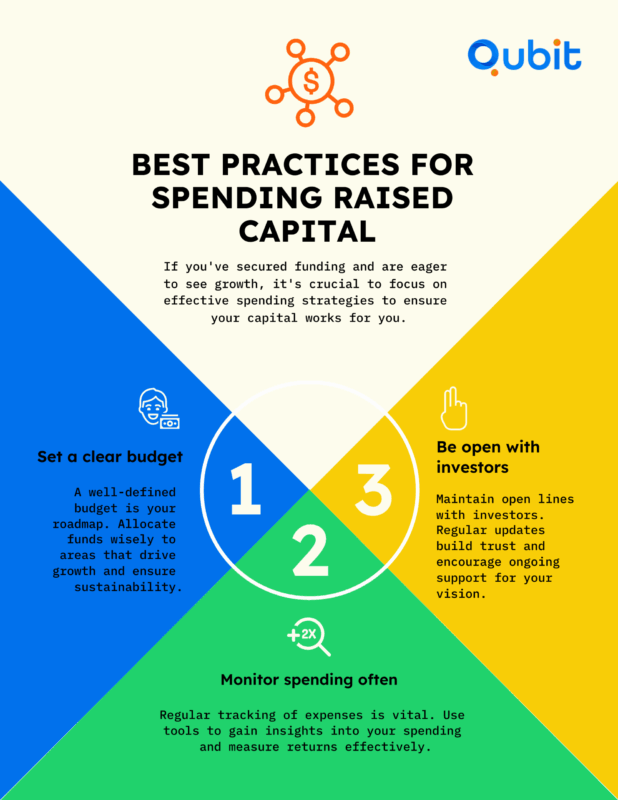
- Budget for growth initiatives
- Track every expenditure
- Communicate spending to investors
1. Stick to a Well-Defined Budget
A clear budget serves as the foundation for responsible fund utilization. Startups should allocate funds to critical areas such as product development, marketing, and operational costs, ensuring every dollar contributes to growth. Regularly revisiting the budget allows teams to adapt to changing circumstances without compromising financial discipline.
Planning budgets around real market data sharpens discipline. In Q1 2025, the median Series A funding round stood at $7.9 million. Setting priorities based on such benchmarks helps teams pace spending and measure progress responsibly.
2. Track Expenditures Regularly
Monitoring expenses is vital for maintaining control over fund usage. Implementing tools like dynamic dashboards can simplify this process, providing real-time insights into spending and return on investment (ROI). For example, integrating a dedicated dashboard or monthly report ensures transparency and helps identify areas where adjustments may be needed.
3. Transparent Communication with Investors
Building trust with investors requires consistent updates on fund utilization. Providing routine, transparent updates, such as through Fund Utilization Updates, strengthens relationships and fosters long-term support. Investors appreciate knowing how their contributions are driving progress, making transparency a cornerstone of successful capital management.
Harnessing Digital Tools for Scalable Fundraising
Integrating technology into fundraising processes can revolutionize the way startups attract and manage capital. By leveraging digital tools, founders can automate repetitive tasks, streamline investor outreach, and gain deeper insights into financial performance. Advanced analytics platforms, for instance, enable real-time tracking of key performance indicators, allowing startups to adjust strategies based on up-to-date data. This digital integration not only enhances transparency but also fosters a proactive culture of continuous improvement.
Key benefits include:
- Automated Investor Relations: Tools that manage communications, track engagement, and schedule regular updates reduce manual workload.
- Data-Driven Insights: Robust analytics help identify trends and predict future financial needs, informing better decision-making.
- Enhanced Reporting: Digital dashboards provide investors with clear, concise visual representations of progress, building trust and confidence.
- Improved Scalability: Technology platforms can easily adapt as the startup grows, ensuring that operational efficiency is maintained over time.
Embracing these digital solutions equips startups with the agility required to navigate a competitive funding environment. By prioritizing technological innovation, companies can not only attract new investors but also ensure that every funding round is supported by robust, actionable data.
This approach transforms traditional fundraising into a dynamic, scalable process that drives sustained growth and long-term success.
Staying informed about where smart money is moving now helps founders target the right investors and tailor their outreach based on current market appetite.
Strategic Partnerships: Expanding Networks for Continued Growth
Beyond internal strategies, forging strategic partnerships is critical to sustaining momentum post-seed funding. Collaborations with industry leaders, accelerators, and even complementary startups can create a powerful ecosystem that supports both financial and operational growth. These partnerships offer access to new markets, specialized expertise, and additional capital sources, which are essential as startups scale their operations.
Benefits of strategic partnerships include:
- Access to Expertise: Collaborating with established firms can provide mentorship and guidance in navigating complex market challenges.
- Market Expansion: Partnerships open doors to new customer segments and geographic regions, accelerating growth.
- Resource Sharing: Sharing technology, data, and market insights can lead to more efficient operations and cost savings.
- Enhanced Credibility: Association with reputable partners bolsters investor confidence and positions the startup as a serious market contender.
To capitalize on these advantages, startups should actively seek out opportunities for collaboration. Networking events, industry conferences, and accelerator programs serve as effective platforms to build these relationships.
By integrating strategic partnerships into their overall growth strategy, startups not only diversify their funding avenues but also build a robust support network that drives sustainable, long-term success.
Conclusion
Raising seed funding is a milestone, but it is not momentum. Momentum comes from what you do after the wire hits. With cash burn and poor planning among the top reasons startups fail, founders need disciplined operations, dynamic financial modeling, and investor communication that stays consistent even when things get messy. Treat fundraising as a system, not an event.
Build scenarios, track spend weekly, and report progress with clarity so investors stay confident and future rounds do not become a panic sprint. The founders who win post-seed are the ones who stay predictable in execution, even when the market is not.
Need help with raising fund? Use Qubit Capital’s fundraising consulting services, powered by our AI startup fundraising platform, to connect with the right investors and move faster.
Key Takeaways
- Seed funding is a start, not a finish, momentum comes from disciplined execution after the raise.
- 90% of startups fail, and running out of cash is a top cause, so burn control is non-negotiable.
- Build dynamic financial models with scenario planning so you can answer “what if” questions fast.
- Track core metrics like MRR, churn, CAC, runway, and payback, then adjust budgets based on reality.
- Strong lead investors accelerate rounds by validating terms and pulling in other checks faster.
- Fundraising is slower now, with success rates down 40% since 2021 and time-to-close stretching to 5–7 months.
- Maintain investor trust with scheduled, data-driven updates, clear dashboards, and transparent spend reporting.
Get your round closed. Not just pitched.
A structured fundraising process matched to your stage and investor fit.
- Fundraising narrative and structure that holds up
- Support from strategy through investor conversations
- Built around your stage, model, and timeline
Frequently asked Questions
What are the most effective startup fundraising best practices?
The most effective startup fundraising best practices include crafting dynamic financial models, maintaining transparent investor communication, and strategic fund allocation.