

 Back
Back








Table of Contents

Blockchain fundraising has seen remarkable growth, with crypto projects raising $16.1 billion in 2024, a 53% increase from the previous year, according to Cryptorank. This surge underscores the growing investor confidence in blockchain ventures, even as regulatory risks continue to evolve. For startups, understanding blockchain compliance is crucial to navigating this dynamic landscape and ensuring sustainable growth.
This blog aims to guide blockchain startups in integrating compliance strategies for successful fundraising while addressing regulatory complexities. Let’s jump right in.
Avoid Compliance Pitfalls: Blockchain Fundraising Regulation & Global Compliance Risks
Blockchain startups can overcome regulatory obstacles by understanding global compliance risks and adopting proactive strategies such as AML/KYC, privacy, and legal planning. The global regulatory environment for blockchain startups is complex and ever-evolving. It presents unique challenges that demand proactive strategies.
Recent global reviews provide scale to this complexity. In 2024, crypto policy coverage spanned 24 jurisdictions, representing almost 70% of global crypto exposure. This demonstrates how dispersed regulatory requirements affect compliance planning for startups.
Jurisdictional Challenges: A Patchwork of Regulations
Blockchain startups often face jurisdictional hurdles that can complicate compliance efforts. These jurisdictional hurdles are among the most significant regulatory obstacles for blockchain startups.
Blockchain startups often face jurisdictional challenges stemming from the fragmented nature of global regulations. Different countries impose varying rules on cryptocurrency operations, token sales, and blockchain technology, creating a patchwork of compliance requirements. For example, while the United States emphasizes securities laws like Reg D and Reg CF, other jurisdictions may prioritize consumer protection or anti-money laundering measures.
Startups must carefully assess where they operate and ensure compliance with local mandates. For deeper insights into how securities rules impact token sales, explore token sale regulations, which highlight the specific securities rules guiding token sales within the evolving blockchain ecosystem.
Regulatory Distinctions for Non-Custodial Developers
Building on jurisdictional challenges, startups must recognize that non-custodial blockchain developers, such as miners and validators, often face distinct regulatory treatment compared to custodial service providers. This separation can exempt non-custodial actors from certain money transmission or licensing requirements, reducing compliance burdens. Understanding these differences is crucial for structuring operations and mitigating unnecessary legal risks. Startups should assess their technical roles early to align compliance strategies with relevant regulations.
Data Privacy Conflicts: Balancing Transparency and Protection
Blockchain technology inherently promotes transparency, but this can clash with stringent data privacy laws such as the General Data Protection Regulation (GDPR) in Europe. Startups must navigate the delicate balance between maintaining blockchain’s open ledger and protecting user data. Non-compliance with privacy laws can lead to severe penalties, reputational damage, and loss of investor confidence.
To mitigate these risks, startups should implement robust data encryption protocols and ensure that their operations align with regional privacy standards. This approach not only safeguards user information but also demonstrates a commitment to ethical practices, fostering trust among stakeholders.
Smart Contract Enforceability: Legal Gray Areas
Smart contracts, a cornerstone of blockchain innovation, often operate in legal gray areas. While they offer automated and tamper-proof execution of agreements, their enforceability in traditional legal systems remains uncertain. Jurisdictions differ in recognizing smart contracts as legally binding, creating potential risks for startups relying on these technologies.
To address this, startups should consult legal experts to draft smart contracts that align with enforceable terms under applicable laws. This proactive measure reduces the likelihood of disputes and ensures smoother operations across borders.
Liability Risks in Fundraising Promotions
Beyond legal gray areas in smart contracts, startups must be cautious with social media promotions and public statements during fundraising. Misleading or overly optimistic claims can trigger liability under securities laws, especially for founders and promoters. Clear, accurate disclosures are essential to avoid enforcement actions and reputational harm. Engaging legal counsel to review promotional materials helps mitigate these risks.
KYC/AML Measures: Building Investor Confidence
Know Your Customer (KYC) and Anti-Money Laundering (AML) compliance are critical for blockchain startups aiming to attract investor trust. Regulatory bodies worldwide demand stringent KYC/AML measures to prevent illicit activities and ensure market integrity. Startups that fail to implement these frameworks risk losing credibility and access to funding opportunities.
Recent enforcement demonstrates the stakes. Paxful Holdings received a $4 million criminal fine in December 2025 for failing to enforce anti-money laundering policies. This underscores how lapses in KYC/AML expose platforms to severe penalties.
This trend underscores the importance of established compliance measures in securing investment. For a detailed exploration of how robust AML/KYC measures contribute to enhanced investor confidence, refer to blockchain AML KYC investors.
Proactive Compliance: A Strategic Imperative
Compliance is not merely a regulatory requirement, it’s a strategic imperative for blockchain startups. By proactively addressing jurisdictional challenges, data privacy conflicts, smart contract enforceability, and KYC/AML measures, startups can build a solid foundation for growth and investor trust.
As the blockchain industry continues to mature, startups must adapt their operations to meet local mandates and cross-border compliance standards. This approach not only minimizes risks but also positions them as trustworthy players in a competitive market.
Your exploration of funding methods gains depth through the framework of blockchain startup fundraising strategies, which provides an overarching perspective on trends and challenges faced by blockchain start-ups.
Startups like yours already closed their rounds with us.
Founders across every stage and industry. Here's what it took.
- Raised $7.6M for Swiipr Technologies
- Raised $0.5M for Ap Tack
- Raised €0.5M for Ivent Pro

Proactive Strategies for Blockchain Fundraising Regulation Compliance
Regulatory changes are driving practical enhancements. In 2025, streamlined market access protocols have simplified product launches and enabled more agile compliance planning for blockchain fundraising. Startups must adapt quickly to leverage these regulatory shifts.
Ensuring compliance in blockchain fundraising is not just a regulatory necessity, it’s a strategic advantage that builds investor confidence and paves the way for funding success.
Effective blockchain fundraising regulation strategies help startups build investor confidence and achieve funding success. By embedding blockchain regulatory compliance into operational frameworks, businesses can proactively address regulatory challenges.
This section explores actionable strategies, including regulatory planning, advanced RegTech tools, and practical checklists, to seamlessly integrate compliance into business operations.
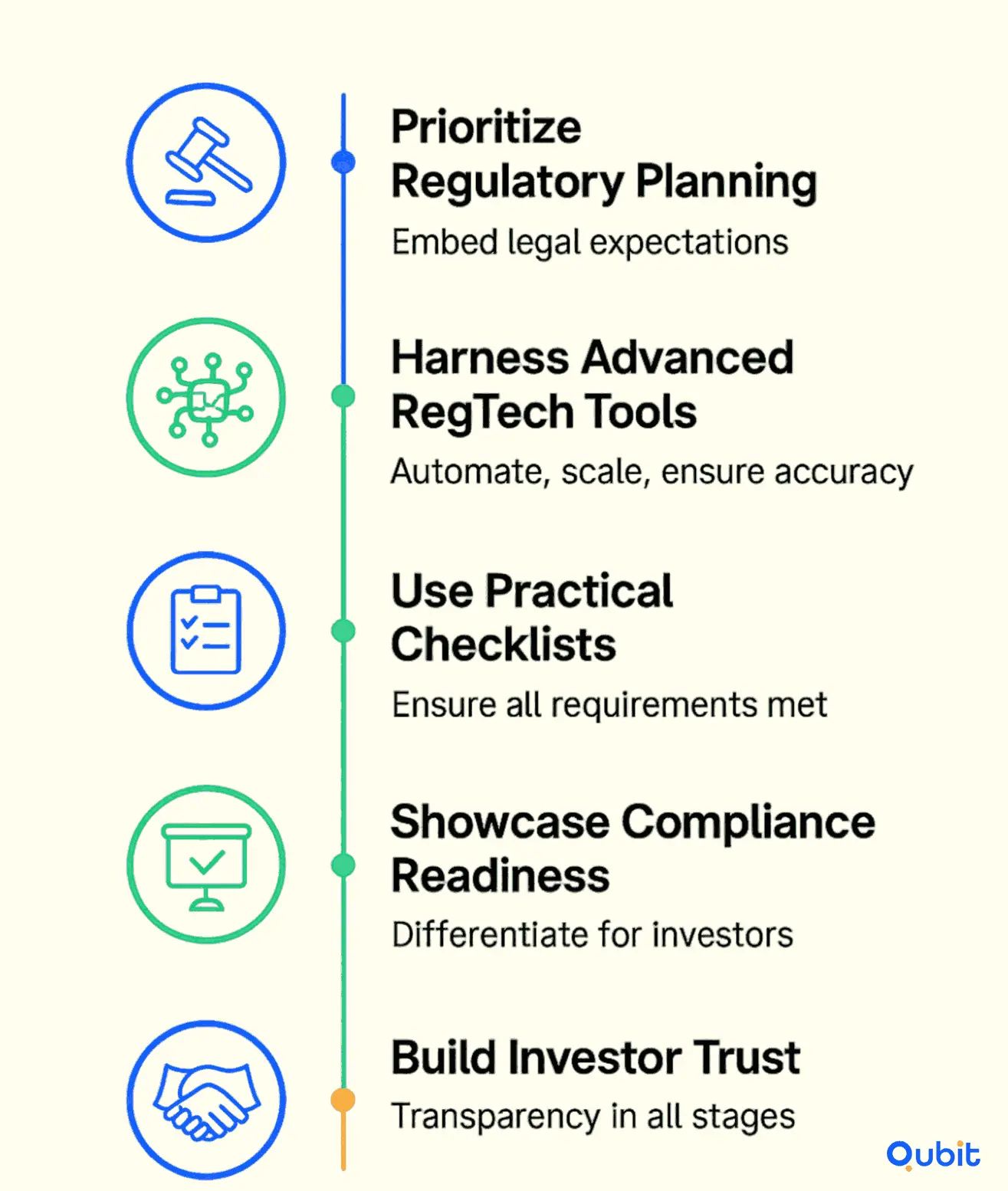
1. Prioritize Regulatory Planning
Effective regulatory planning begins with understanding the legal landscape surrounding blockchain fundraising. Businesses must identify applicable laws, such as anti-money laundering (AML) requirements, securities regulations, and data privacy standards, to ensure their fundraising activities align with jurisdictional expectations.
One practical approach is integrating compliance into business plans. By embedding regulatory guidelines into operational and financial plans, startups can demonstrate their commitment to transparency and accountability. For example, strategic compliance planning can include provisions for AML checks, investor due diligence, and reporting mechanisms. This proactive integration not only mitigates risks but also enhances the credibility of the business in the eyes of potential investors.
Engage Specialized Legal Counsel Early
Building on regulatory planning, startups benefit from engaging specialized legal counsel at the outset of fundraising. Legal experts help structure token offerings and documentation to align with securities regulations, reducing the risk of enforcement actions. Early involvement ensures compliance is integrated into every stage of the fundraising process. This approach also reassures investors that regulatory obligations are being met.
2. Harness Advanced RegTech Tools
RegTech (Regulatory Technology) solutions have revolutionized compliance management by automating complex processes and providing real-time insights. Tools like IdentityPass and AMLRadar can streamline identity verification, monitor transactions for suspicious activity, and ensure adherence to AML regulations.
These technologies offer several benefits:
- Efficiency: Automating compliance tasks reduces manual errors and saves time.
- Scalability: RegTech tools can adapt to the growing needs of blockchain businesses as they expand their operations.
- Accuracy: Advanced algorithms ensure precise monitoring and reporting, minimizing the risk of non-compliance.
Compliance Requirements by Fundraising Method
| Fundraising Method | Compliance Focus | Investor Eligibility |
|---|---|---|
| ICO (Initial Coin Offering) | Disclosure, KYC/AML, securities law risk | Often open to public, varies by jurisdiction |
| STO (Security Token Offering) | Strict securities compliance, investor protections | Typically accredited or qualified investors |
| Regulation Crowdfunding | Regulatory filings, investment limits, disclosures | Retail and accredited investors allowed |
By incorporating RegTech solutions into their operations, businesses can stay ahead of regulatory changes while maintaining investor trust.
3. Use Practical Compliance Checklists
A compliance checklist is a valuable tool for ensuring all regulatory requirements are met during fundraising activities. These checklists can include:
- Verifying investor identities and conducting AML checks.
- Documenting fundraising activities and maintaining transparent records.
- Ensuring token offerings comply with securities laws.
- Incorporating data protection measures to safeguard investor information.
Embedding these checklists into strategic documents, such as pitch decks and business plans, demonstrates a proactive approach to compliance. This not only reassures investors but also positions the business as a trustworthy and responsible entity in the blockchain space.
4. Showcase Compliance Readiness to Investors
Compliance readiness directly impacts investor interest. According to PitchBook data, there were 405 crypto VC deals in Q1 2025, highlighting the growing interest in blockchain ventures. However, businesses that fail to address compliance concerns risk losing out on funding opportunities.
By integrating compliance measures into their fundraising strategies, businesses can differentiate themselves in a competitive market. This includes presenting clear compliance policies in investor pitch decks and highlighting the use of RegTech tools to ensure regulatory adherence.
5. Build Investor Trust Through Transparency
Transparency is a cornerstone of successful blockchain fundraising. By openly communicating compliance measures and demonstrating a commitment to ethical practices, businesses can build lasting relationships with investors. This involves:
- Regularly updating investors on regulatory developments.
- Providing detailed reports on fundraising activities.
- Ensuring open channels of communication for addressing investor concerns.
Such practices not only enhance trust but also contribute to the long-term success of the business.
Real-World Success Stories in Compliance-Driven Fundraising
Strategic compliance planning has become a cornerstone for blockchain fundraising success. By prioritizing regulatory measures, projects not only safeguard their operations but also build investor trust, ensuring long-term growth. Below, we explore two compelling case studies that highlight how proactive compliance measures have transformed fundraising outcomes.
Case Study 1: European DeFi Project Attracts Investor Confidence
A European decentralized finance (DeFi) project demonstrated how robust compliance measures can directly impact fundraising success. By adhering to stringent regulatory frameworks, the project instilled confidence among investors, ultimately securing substantial funding.
This case underscores the importance of aligning fundraising strategies with regulatory requirements. The project’s success was not solely based on its innovative technology but also on its ability to present a transparent and legally sound investment opportunity. Such measures reassure investors that their contributions are protected, fostering trust and encouraging participation.
Case Study 2: Layer-2 Scaling Solution Raises $20M
Another standout example is a Layer-2 scaling solution (secondary protocols that improve blockchain scalability) project that raised $20 million under Regulation D 506(c). This U.S.-based initiative prioritized rigorous investor vetting and strategic compliance planning, ensuring its fundraising process adhered to legal standards. By focusing on compliance from the outset, the project minimized risks and maximized investor confidence.
The involvement of legal experts, such as Moschetti Law in May, further solidified the project’s credibility. This case highlights how early engagement with regulatory professionals can streamline fundraising efforts, making it easier to attract high-value investors.
Transparency as a Key Driver
Transparency plays a pivotal role in compliance-driven fundraising. For example, the use of proof of reserves blockchain ensures clear and accountable audit practices, further validating the integrity of fundraising campaigns. By incorporating such measures, projects can enhance their appeal to investors who prioritize accountability and security.
Contrasting successful compliance outcomes, the SEC brought a $48.5 million lawsuit against VBit Technologies for alleged investor fraud. Regulatory actions like these highlight the fundraising risks tied to inadequate transparency and compliance.
These real-world examples illustrate how compliance success is not just a regulatory checkbox but a strategic advantage. By embedding compliance into their fundraising strategies, blockchain projects can unlock new opportunities and build lasting investor relationships.
Emerging Regulatory Trends in Blockchain Regulatory Compliance
The blockchain industry is evolving rapidly, and regulatory frameworks are striving to keep pace with its growth. Emerging regulatory trends are shaping how businesses approach compliance, while advanced technologies like artificial intelligence (AI) and automation are redefining the compliance process. This dynamic intersection of regulation and innovation presents unique opportunities for organizations to gain a competitive edge.
One sign of regulatory momentum was a 207-page tokenization framework submitted to the SEC in September 2025, aiming to formalize fundraising and asset management channels. This comprehensive proposal signals ongoing commitment to regulatory innovation.
These technologies are transforming blockchain regulatory compliance, making it more efficient and adaptable.
Shifting Regulatory Guidelines
Governments and regulatory bodies worldwide are introducing new measures to address the complexities of blockchain technologies. For instance, the European Union’s Markets in Crypto-Assets (MiCA) regulation aims to standardize crypto-asset rules across member states, fostering greater transparency and consumer protection. Similarly, the U.S. Securities and Exchange Commission (SEC) continues to refine its stance on digital assets, focusing on investor safeguards and market integrity.
These evolving frameworks highlight the importance of proactive compliance strategies. Businesses that anticipate regulatory changes and adapt early can mitigate risks and position themselves as industry leaders.
The Role of AI and Automation in Compliance
AI-driven analytics and machine learning are revolutionizing compliance monitoring. These technologies enable real-time analysis of blockchain transactions, identifying anomalies and potential risks with unparalleled accuracy. Compliance automation further streamlines processes, reducing manual intervention and ensuring adherence to complex regulations.
For example, automated systems can track transactions across decentralized networks, flagging suspicious activities and generating detailed reports for auditors. This not only enhances efficiency but also minimizes human error, a critical factor in maintaining regulatory compliance.
Competitive Advantages of Early Adoption
Adopting cutting-edge compliance technologies early offers significant strategic benefits. Companies that integrate AI and automation into their operations can reduce costs, improve accuracy, and build trust with stakeholders. Moreover, early adoption signals a commitment to innovation and regulatory integrity, strengthening brand reputation in a competitive market.
The global expansion of blockchain use cases is further driving the demand for advanced compliance solutions. According to the Data Insights Market, blockchain applications are projected to reach $500M in 2025. This underscores the growing need for robust compliance frameworks that can scale with industry growth.
By embracing these technologies now, businesses can stay ahead of regulatory changes and capitalize on the opportunities presented by blockchain’s rapid evolution.
Conclusion
Success in blockchain fundraising depends on understanding and adhering to blockchain fundraising regulation throughout the process.
Blockchain fundraising thrives when compliance is seamlessly integrated into every stage of the process. From addressing regulatory risks to implementing strategic solutions, this article has highlighted the importance of aligning legal frameworks with innovative fundraising methods. Real-world case studies further demonstrate how clarity and adherence to regulations can transform challenges into opportunities.
A compelling narrative, built on transparency and compliance, not only protects your venture but also instills confidence in potential investors. By prioritizing these elements, startups can pave the way for sustainable growth and long-term success in the blockchain space.
If you’re looking to align legal structure with innovative raise mechanics, at Qubit we understand tokens, entities, and cross-border constraints. Accelerate decisions using our blockchain fundraising assistance services. Schedule a free compliance readiness session with Qubit today.
Key Takeaways
- Blockchain startups must integrate robust compliance measures to secure funding.
- Understanding global regulatory challenges is essential to avoid operational pitfalls.
- Proactive use of RegTech tools streamlines compliance and builds investor trust.
- Real-world case studies illustrate the benefits of early, strategic regulatory engagement.
- Staying ahead of emerging trends ensures long-term success in a competitive market.
Get your round closed. Not just pitched.
A structured fundraising process matched to your stage and investor fit.
- Fundraising narrative and structure that holds up
- Support from strategy through investor conversations
- Built around your stage, model, and timeline
Frequently asked Questions
How do regulatory obstacles affect blockchain fundraising regulation?
Regulatory obstacles can delay or restrict blockchain fundraising by creating complex compliance requirements. Addressing them early ensures smoother fundraising and builds investor trust.